
Paver-laying methods can significantly affect removal costs. These are removal benchmarks, not a site-specific quote: the price depends on the job, including the laying method, site access and existing surfaces.
It’s understandable to want a clear figure before planning the work. But the material, how firmly it’s fixed and the space available for removal and loading all affect what the job involves.
This guide explains what affects paving stone disposal in Sydney, how to sort pavers for reuse or disposal, and how access and existing surfaces can change the work. You’ll also learn how to plan removal and manage the materials responsibly.
Key Takeaways
- Concrete, bricks, pavers, tiles and similar materials can go in concrete skip bins; keep green waste separate.
- Restricted access and existing slabs or paving can add demolition, cartage and disposal work, so assess the site as well as the surface area.
- Loose-laid cobblestones are typically easier to lift than glued paving, which can take more removal effort.
- Separate reusable pavers where practical, and sort the remaining hard waste for recycling or disposal.
Accepted concrete, bricks, rocks and ceramic tiles
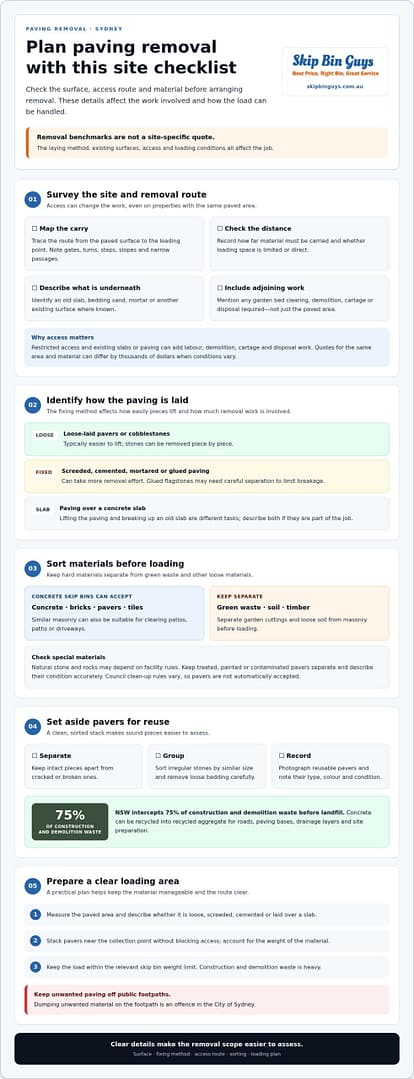
Concrete skip bins can accept concrete, bricks, pavers, tiles and similar masonry, making them suitable for clearing patios, paths or driveways with mixed hard materials. Keep green waste separate in a green waste bin. Sort loose soil, timber and garden cuttings away from masonry before loading. Natural stone pavers and rocks are also hard materials, but acceptance depends on the facility’s rules.
These are surface-treatment costs, not paver-disposal charges. Grinding removes or smooths a concrete finish, while coating removal tackles a layer applied over the surface. If your project involves lifting paving as well as treating an exposed slab, plan the two tasks separately. The removal method, coating and site access all affect the work involved.
Can paving stones go in a household council clean-up in Sydney? Council clean-up rules vary by local area, so pavers aren’t automatically accepted. Treat them as heavy construction material unless the council’s rules specifically include them. Are there restrictions on disposing of treated, painted or contaminated paving stones in NSW? Acceptance can differ from that of clean concrete or masonry because coatings and residues affect how material is handled. Keep these pavers separate and describe their condition accurately when arranging disposal.
What are the disposal fees for paving stones at Sydney waste facilities? There’s no single fee across Sydney; charges depend on the facility and the material it accepts. Do Sydney waste facilities charge by weight, volume or load size for pavers? Charging methods vary, and the weight of masonry can matter even when the load looks modest. Ask about the facility’s charging basis before transporting pavers, and keep materials separated so the load can be assessed clearly.
Concrete is recyclable and can be reused repeatedly. Recycling centres and transfer stations can process concrete and masonry into recycled aggregate for roads, paving bases, drainage layers and site preparation. NSW intercepts 75% of construction and demolition waste before landfill, supporting recovery of materials such as concrete. To give sound pavers another use, separate intact pieces from cracked or broken ones, then photograph the reusable stack and describe its type, colour and condition in a local reuse listing. A clean, sorted pile is easier to assess than mixed rubble, and avoids sending useful pavers for crushing unnecessarily.
Site access and removal of existing surfaces
Access can change the work involved, even when two Sydney properties have the same paved area. A narrow side passage, steps, a sloping garden or a long carry to the loading point can make removal more labour-intensive. Map the route from the paved surface to the collection point, noting gates, turns and changes in level. These details help you describe the job when arranging removal.
The existing surface matters too. Lifting loose pavers differs from breaking up a concrete slab or removing paving fixed with mortar. A job that includes an old slab or existing pavers can also involve demolition, cartage and disposal. Quotes for the same area and material in Sydney can differ by thousands of dollars because access and removal conditions vary. A small residential courtyard may have limited loading space, while a larger construction site may offer a more direct route.
Removal benchmarks also depend on how the pavers were laid. These figures describe removal methods, not the total cost of a paving project. The area, existing surface and access route affect the work, alongside the laying method.
How do I prepare and transport paving stones for disposal in Sydney? Separate pavers from soil, garden waste and other materials, then stack them near the collection point without blocking access. Before loading, plan how the material will travel from the surface to the vehicle or bin, and account for its weight. Skip bins have weight limits because construction and demolition waste is heavy, so keep the load within the relevant limit.
- Measure the paved area and describe whether it is loose, screeded, cemented or laid over a slab.
- Identify steps, narrow passages, gates and the distance to the loading point.
- Separate reusable pavers and keep soil, timber and garden cuttings apart.
- Plan a clear place for loading that doesn’t obstruct access.
Don’t leave unwanted paving on a public footpath. Dumping unwanted material on the footpath is an offence in the City of Sydney. A clear removal plan also helps avoid mixing pavers with other materials and makes the site easier to manage. For a residential clear-out, plan your hard-waste removal around the available access and the volume of material.
That listing is a useful reminder to describe both the paving and any adjoining work when seeking a quote, rather than giving only the paved area. Say whether the garden bed also needs clearing, and identify what lies beneath the pavers if you know.
Describe the route to the loading point, the existing surface and whether demolition, cartage or disposal is required. Putting these details together makes it easier to compare quotes for the same scope and flag access constraints before removal begins.
Cobblestone and crazy paving
Cobblestones and crazy paving can take longer to sort than uniform rectangular pavers. Their irregular shapes create mixed sizes, edges and gaps, so remove them carefully if you want to reuse sound pieces. First identify whether the stones sit loose on bedding sand or are attached to a firm base. This affects how easily each piece lifts and how much material remains stuck underneath.
These figures show how the fixing method can affect removal, but the shape and condition of crazy paving matter too. A loose cobblestone path can be lifted piece by piece; glued flagstones may need more careful separation to limit breakage.
Plan what you’ll do with the stones before starting demolition. If you want to reuse them for an outdoor path or landscaping feature, stack intact pieces separately from cracked ones. Group similar sizes and remove loose bedding without damaging the edges. For crazy paving, photograph the surface first. The image can help you recall the original arrangement during installation, especially where distinctive stone shapes fit together.
It illustrates that transport can be a separate part of a paving-stone project, especially when reusable materials need moving between properties. Keep the stones accessible for loading and describe their quantity, shape and condition clearly when arranging transport. Don’t mix reusable pavers with broken rubble, soil or garden waste.
Check the base after lifting the stones. Bedding sand may remain beneath loose-laid paving, while glued pieces can leave residue on the underlying surface. Recycled bedding sand is suitable for installing pavers and bricks, so clean, usable material may have another role in landscaping. Separate it from soil and debris before deciding whether to reuse it.
- Group cobblestones by size and condition before moving them.
- Keep glued stones separate from loose-laid pieces.
- Store reusable paving on stable ground, clear of drainage paths.
- Plan the loading route across the property before demolition begins.
Across Sydney, the right approach depends on whether you prioritise quick clearance, careful reuse or preparing the surface for new paving. Sorting first helps protect salvageable stone and keeps the remaining waste stream clearer. For a garden path, for example, keep whole cobbles for edging and set chipped pieces aside for appropriate disposal.
Where can I dispose of paving stones in Sydney?
For paving stone disposal in Sydney, take broken concrete pavers and masonry to a facility that accepts construction materials. Recycling centres and transfer stations can process concrete waste for reuse in other projects. Sort the load by material and describe it clearly before arranging transport, as acceptance rules vary between facilities.
A concrete skip bin can suit a renovation or landscaping clear-out. Concrete bins can accept bricks, pavers, tiles and similar materials too. Keep garden cuttings in a separate green waste bin rather than mixing them with masonry. Separating materials makes the load easier to handle and keeps waste streams apart.
Choose a disposal route based on the pavers’ condition and the amount to remove. Intact cobblestones or natural stone may be suitable for reuse. Broken or cemented pieces are better directed to a facility that handles concrete and masonry. For example, separate sound patio pavers from cracked pieces and mortar before moving either load.
Before transport, prepare the material:
- Separate paving stones from soil, timber, garden waste and household rubbish.
- Remove loose bedding material where practical, keeping it apart from rubble.
- Estimate the load and check the facility’s accepted materials and loading process.
- Secure heavy pavers during transport and contain the load.
These checks matter because paving stones are dense. A compact pile can still be heavy, and skip bins have weight limits for construction and demolition waste. Plan the quantity and loading method before filling a bin or vehicle. Keep green waste separate, even when clearing it from the same garden.
A household council clean-up isn’t automatically suitable for paving stones. Local collection rules vary, and heavy construction materials may not be accepted. Use a clean-up only if the council’s instructions specifically include pavers. Otherwise, choose a construction-waste recycling or disposal route.
Planning paving stone disposal in Sydney also means deciding what can be reused before arranging removal. Stack intact pavers safely on stable ground, group similar sizes and photograph their condition. A clear description helps others assess whether the stones suit a path, garden edge or outdoor project. Then direct damaged masonry to a facility that accepts concrete waste. Separating reusable material from waste that needs processing makes the remaining load easier to manage.
Can paving stones be recycled or reused in Sydney?
Yes. Sound paving stones can often be reused directly, while broken concrete pavers can enter a recycling stream. These are different pathways: reuse keeps the original stone intact for another job, while recycling processes masonry into material for new construction. For example, whole cobbles may suit a garden edge, while cracked concrete pieces can be sorted for recycling.
Start by checking each paver’s condition. Set aside pieces that are intact, stable and free from heavy mortar build-up. Group them by material, size and shape so a future project can use a consistent stack. Matching rectangular pavers may suit a small courtyard, while irregular natural stone can work for a stepping-stone path. Separate damaged pieces instead of mixing them with reusable stock.
Clean bedding material can also be reused. Recycled bedding sand is suitable for paver and brick installation, concrete preparation, landscaping and hardscaping. Keep sand separate from soil, leaves and broken masonry during removal. This simple step gives clean material a better chance of reuse and prevents mixed debris from reducing its usefulness.
Concrete that cannot be reused as paving can be taken to recycling centres and transfer stations, where construction materials can be processed into recycled aggregate. That aggregate can be used in construction projects, including paving and road bases. The material may serve a new purpose even when its original surface has reached the end of its useful life. Separate clean concrete from timber, green waste and general rubbish before transport.
Use this sorting sequence during a Sydney paving project:
- Lift intact pavers carefully and stack them on stable, level ground.
- Separate natural stone, concrete pavers, bricks and tiles where practical.
- Remove loose bedding sand and store it apart from soil or rubble.
- Keep cracked, chipped or mortar-covered pieces in a separate hard-waste pile.
- Describe the material and its condition before arranging reuse or recycling.
Reuse depends on practical fit, not just appearance. A paver needs suitable dimensions and a sound surface for its next job. Chipped pieces, for instance, may still work as garden edging, while uneven stones could create trip points on a walkway. Match each stack to a realistic project before storing it, and keep drainage paths clear while the materials wait.
If broken masonry remains after sorting, organise paving waste removal as part of your clean-up. Separating reusable pieces first helps keep the remaining load focused on material that needs recycling or disposal.
Separate reusable pavers from other materials before deciding what to do with the remaining landscaping products. Recycled turf underlay supports lawn growth and drainage and is used for lawn and turf installation. Keeping it apart from rubble and soil can help preserve it for that purpose. Household recycling services are separate from paving-waste pathways, so check that an item is accepted before taking it to a collection point.
The City of Sydney offers recycling stations at 20 locations in its local area for household batteries, empty medication blister packs, light bulbs and small electronics. The City of Sydney offers free doorstep recycling collections weekly for clothes, batteries, polystyrene, electronics and other items. The City of Sydney holds free Recycle It Saturday drop-offs Quarterly for items including clothes, electronics, bicycles and polystyrene. These services can help with eligible household items during a clean-up, but do not assume they accept paving stones or construction debris.
Skip Bin Guys: Residential Skip Bin Hire
Skip Bin Guys offers Residential Skip Bin Hire for household paving clear-outs, alongside Hard Waste Recycling for material recovery. If you’re removing a patio or path, separate reusable pavers from broken pieces and other renovation debris before loading. A range of bin sizes helps suit different project volumes, while choosing the right size also matters because masonry is heavy.
For larger commercial or building projects, Commercial Skip Bin Hire and Construction Skip Bin Hire can support site clean-ups. Keep garden cuttings separate through Green Waste Disposal rather than mixing them with paving waste. Same-day delivery is available for orders placed before 10:30 am, helping you plan the timing of a scheduled clear-out.
Visit skipbinguys.com.au to discuss your paving clean-up and next steps.
Plan your paving clean-up with confidence
Before work begins, decide which pavers you’ll keep and how you’ll manage the rest. A clear sorting and loading plan makes paving stone disposal in Sydney easier to organise, whether you’re refreshing a home courtyard or clearing a commercial site.
Skip Bin Guys offers Residential Skip Bin Hire and Commercial Skip Bin Hire for project waste, plus Green Waste Disposal for garden cuttings. These options can help keep paving debris and green waste in separate streams. For a practical next step, outline the material and access available at your property, then contact Skip Bin Guys about your paving clean-up.
With the right preparation, you can clear the old surface and make room for what comes next.
Frequently Asked Questions
How Much Does Paver Removal Cost Per Square Metre?
These rates describe removal, not replacement paving. For example, a small courtyard with cemented stones may require different work from an equally sized loose-laid path.
Which Sydney council waste facilities accept concrete pavers and paving stones?
Concrete recycling centres and transfer stations are relevant destinations for broken pavers, but acceptance varies by facility. Council household clean-ups don’t automatically include paving stones. The City of Sydney’s recycling stations are for items such as batteries, light bulbs and small electronics, not paving materials. Set intact stones aside for reuse, then sort broken masonry before arranging transport to a facility that handles construction waste.
Can Sydney skip bin companies accept concrete pavers, and what limits apply?
Concrete skip bins can accept pavers, bricks, tiles and similar materials. Skip Bin Guys offers concrete skip bins for paving and masonry clear-outs. Construction waste is heavy, so a compact load of stone can reach a bin’s weight limit before it looks full. Keep pavers within the bin’s fill line and weight limit, and separate green waste. For example, don’t add garden cuttings to a load of concrete pavers.