
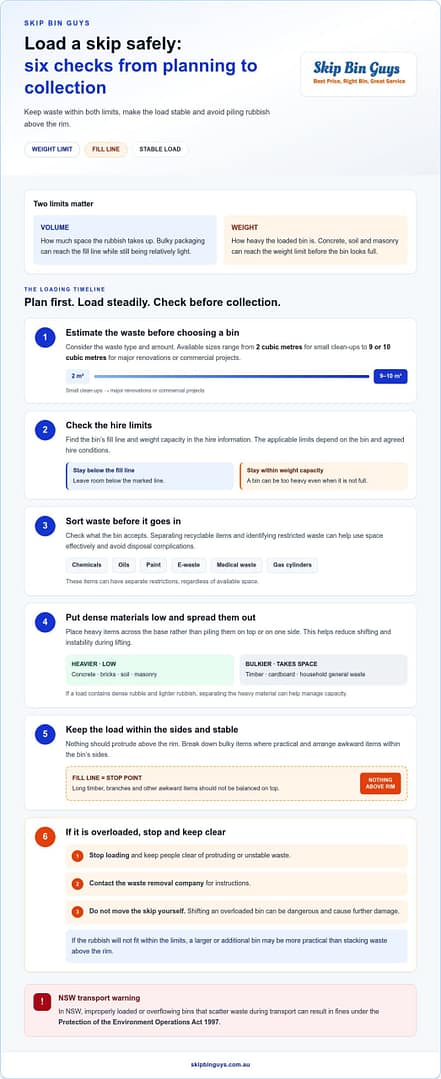
An overfilled skip can turn a tidy clean-up into a costly delay. The consequences of overloading a skip bin can include extra charges, a refused or delayed collection, damage to the bin and debris falling during transport. In NSW, improperly loaded or overflowing bins that scatter waste during transport can result in fines under the Protection of the Environment Operations Act 1997.
It’s easy to focus on whether the rubbish fits, but a skip bin’s weight limit and fill line both matter. This guide explains how each limit affects collection, why unstable or protruding loads create safety risks, and how to load waste more efficiently. You’ll also learn when a second bin or a different size may be a safer, more practical choice, so you can keep your Sydney project moving without piling waste above the rim.
Key Takeaways
- Keep waste below the fill line and within the bin’s weight limit to help avoid extra charges and collection delays.
- If your clean-up produces more rubbish than expected, consider a second or larger bin rather than piling waste above the rim.
- Load heavy, bulky items at the bottom and spread waste evenly to reduce shifting and falling-debris risks.
- Sort recyclable materials and identify restricted waste before loading to use space more effectively and avoid disposal complications.
- In NSW, overflowing loads that scatter waste during transport can result in fines under the Protection of the Environment Operations Act 1997.
1. Is Overfilling Your Skip Bin Costing You More In The Long Run?
Yes. Overloading a skip bin can disrupt collection and create safety risks. Skip Bin Guys’ bins must not exceed their weight limit or be filled above the rim, and no material may protrude over the top. Overloaded bins are illegal and dangerous. If a bin is overloaded, an additional bin may be arranged at the customer’s cost. Keeping the load within the stated limits helps avoid delays and unsafe handling.
Extra charges can also arise when the load exceeds the agreed weight limit or requires another truck to collect excess waste. Heavy materials, such as concrete or soil, can reach a weight limit before a skip looks full. A bin packed with bulky, lighter items may instead exceed its volume. Either way, the cost consequences of overloading a skip bin can include more handling, another collection or a second skip, adding to the overall waste disposal expense.
What should you do if your skip bin is already overloaded? Stop loading it, keep people clear of protruding or unstable waste, and contact the waste removal company as soon as possible for instructions. Don’t try to move the skip yourself; shifting an overloaded bin can be dangerous and cause further damage. If incorrect sorting has added to the problem, separate recyclable items or waste that can be disposed of separately, but only if you can do so safely.
Choosing the right capacity early can help prevent these extra steps. Skip bins are hired by volume, and available sizes range from 2 cubic metres for small clean-ups to 9 or 10 cubic metres for major renovations or commercial projects. Estimate the waste type and amount before booking: a small bathroom refresh may produce a different load from a construction job with concrete, timber and general waste. If the expected rubbish won’t fit below the fill line or within the weight limit, a larger skip or an additional bin may be more practical.
A second skip can also make sense when a clear-out produces more waste than expected. Keep excess rubbish out of the first bin rather than stacking it above the rim, where it can create collection problems or fall during handling. Check what waste the bin accepts before loading, too. Prohibited materials, including chemicals, oils, paint and e-waste, can create costly disposal complications or fines. Separating these items from general waste helps keep the load suitable for collection and avoids turning a simple overfill into a sorting and disposal issue.
2. Skip bin weight and volume limits
What weight limits apply to skip bins in Australia? There isn’t one weight limit for every bin: each hire has a maximum capacity and a fill line, and the applicable limits depend on the bin and the agreed hire conditions. Keep to both, even if the load looks as though it could fit.
Volume and weight are separate limits. Volume measures the space rubbish takes up; weight measures how heavy the loaded bin is. Bulky packaging can reach the fill line while remaining relatively light. A smaller amount of concrete, soil or masonry can become too heavy before reaching the rim. Keep the bin within both limits, rather than assuming that a load is safe because it hasn’t reached the top.
Weight limits help keep a bin safe to lift and transport. Overloaded bins can be unsafe to handle and transport. The risk can increase when heavy items sit high in the load or gather on one side. Keep materials within the bin’s weight limit and don’t place anything above the rim.
Use these checks while loading:
- Check both limits. Find the bin’s fill line and weight capacity in the hire information, then leave room below the line.
- Consider the material. Concrete, bricks and soil are dense; timber, cardboard and household general waste take up more space for their weight.
- Distribute heavy items. Place them low and spread them across the base, rather than piling them on top.
- Keep the load stable. Don’t let items protrude above the rim or shift as the bin is lifted.
Height matters because material above the fill line can catch, shift or fall during collection. Long timber, branches and other awkward items shouldn’t be balanced on top to make them fit. Break down bulky items where practical, and arrange them within the bin’s sides. Prohibited waste also needs attention: chemicals, oils, paints, e-waste, medical waste and gas cylinders can have separate restrictions, regardless of the available space.
If your project includes both dense building rubble and lighter rubbish, separating the heavy material helps you manage the appropriate capacity for each load. Don’t try to move a skip that may be overloaded; stop loading and arrange a safe next step. Before booking, choose an appropriate skip bin for your waste type and expected volume.
3. Risks of materials falling out and causing injury
An overfilled skip creates risks before the truck reaches the road. A protruding plank can catch someone walking past, while loose offcuts may fall as someone adds another item. Uneven ground and restricted visibility can make hazards harder to see on a renovation site. Stop loading if waste is sticking out or shifting, and keep people clear of the bin.
Load stability matters during lifting, too. Heavy items placed on lighter rubbish can press it down, shift the load or make the skip unstable. If weight gathers on one side, the bin may tilt during pickup. Keep dense materials low and distribute them evenly, rather than balancing concrete or bricks above softer waste.
Transport adds another hazard: debris can fall onto a road and endanger other drivers, cyclists and pedestrians. A tarpaulin may cover a load, but it may not stop heavy or unsecured waste from dislodging. Covering a load may not prevent loose waste from falling during transport. The safe approach starts before collection, with nothing sticking above the rim.
In NSW, improperly loaded or overflowing bins that scatter waste during transport can result in fines under the Protection of the Environment Operations Act 1997. Spilled waste can also pollute nearby land or waterways. Plastic, timber and other debris can harm local flora and fauna, while scattered food waste may attract pests and vermin around homes or work sites.
Pets and wildlife can be injured by sharp or hazardous rubbish. Broken glass, metal edges and exposed nails can cut or injure animals that investigate debris. Keep prohibited materials out of skip bins: waste liquids, hazardous waste, food stuffs, asbestos, paints, poisons, oils and gas bottles are not allowed. Don’t leave dangerous items loose beside an overflowing bin, where people or animals can reach them.
Capacity and bin size affect how safely a load can be collected. A bin that’s too small for a construction clean-up encourages waste to rise above its sides; an oversized load can also become difficult to contain if materials are packed unevenly. During hiring, estimate the waste type and volume, then choose a suitable capacity and keep the fill line visible.
If waste has spilled, keep people and animals away from the area. Don’t climb into an unstable skip or pull items from beneath a shifting load. Handle only accessible debris that can be moved safely, and leave sharp or hazardous materials alone. This helps reduce immediate risks and prevents a spill from becoming a larger safety problem.
4. Efficient loading and space planning
Plan the load before the first item goes in. Estimate the amount and type of rubbish, then separate recyclable materials from general waste where practical. A renovation might produce timber, cardboard, metal and broken fixtures. Sorting suitable materials can help make better use of the bin and support responsible waste processing at EPA-approved recycling yards.
Check the available space for the bin and how you’ll carry waste to it. A clear path from the work area reduces awkward lifts and makes loading easier. If the bin sits near a driveway or footpath, keep access clear for people and vehicles. Also consider council rubbish collection dates when planning a clean-up, since household collection may affect how much waste needs to go in the skip.
Load heavy and bulky items first. Place concrete, bricks or large timber flat across the base, then add smaller rubbish to fill gaps. This creates a more stable load than putting heavy pieces on top of lighter material. Break down furniture or packaging where practical, and lay wood flat rather than standing long pieces upright or resting them above the sides.
- Keep weight even. Spread dense materials across the base instead of building a heavy pile in one corner.
- Use gaps carefully. Fill spaces between larger objects with suitable smaller waste, not prohibited items.
- Watch the fill line. Stop before rubbish reaches or rises above the bin’s marked limit.
- Keep access safe. Don’t climb into a skip or lift awkward items over protruding debris.
For mixed renovation waste, separating heavy rubble from lighter household rubbish can help you manage the load. Don’t fill the bin with dense material without considering its weight limit. A skip can look only partly full yet still be too heavy. Keep the load within the weight limit and below the rim as you add each layer.
Leave dangerous or restricted materials out of the load. Chemicals, oils, paints, e-waste, medical waste, gas cylinders and flammable materials can have separate disposal restrictions. Mixing them into general waste may complicate handling and disposal. Keep those items apart while sorting, rather than trying to make them fit into gaps at the end.
Review the bin before finishing. Check that nothing protrudes, the surface is reasonably even and the load remains below the fill line. If the waste is already overfilled, don’t push down loose material or climb in to rearrange it. Stop loading and arrange a safe way to handle the extra rubbish. A measured estimate and orderly loading help maximise usable space without creating avoidable collection or safety problems.
5. Legality of transporting overloaded bins in Australia
What Australian state or local council rules apply to overloaded skip bins? In NSW, improperly loaded or overflowing bins that scatter waste during transport can result in fines under the Protection of the Environment Operations Act 1997. Some Australian councils also require a permit when a skip sits on public property, such as a street or footpath.
Where you place a skip bin can affect what permissions are needed. A bin on a private driveway differs from one on council-controlled land. If you plan to place a skip on a street or footpath in Sydney, check the relevant council’s permit requirements and follow its placement conditions. Wherever the bin sits, keep the load within its weight limit and below the rim.
An overloaded skip creates transport risks. Debris can fall onto roads and endanger other road users. A cover does not make an overloaded bin safe: no material may protrude over the top, and the load must remain within the bin’s weight limit. Check the load before collection, and stop adding waste if it reaches the rim or exceeds the limit.
Before collection, look at the full load from ground level. Check that items don’t protrude over the sides, the waste sits evenly, and heavy objects aren’t balanced on top. Timber projecting above the rim or rubble piled high can shift during lifting. Don’t climb into the skip to rearrange an unstable load; stop adding waste and arrange a safe way to deal with it.
- Check the location. Confirm whether the bin is on private property or public land, such as a council street.
- Keep within capacity. Follow the fill line and weight limit so the load can be lifted and transported safely.
- Secure the waste. Keep loose debris contained; a cover alone may not hold heavy items in place.
- Separate restricted waste. Keep hazardous materials out of general waste unless the disposal arrangement accepts them.
Good waste management starts before pickup. If the load reaches the rim or exceeds the weight limit, don’t assume a cover will make it safe to transport. Stop loading, keep people away from unstable materials, and contact Skip Bin Guys for guidance. Sorting recyclable items may reduce general waste, provided you can do so safely.
For a clean-up involving recyclable hard waste, arrange hard waste recycling as part of a safer disposal plan. A contained load helps protect road users and keeps waste from escaping during transport.
Skip Bin Guys: Residential Skip Bin Hire
Skip Bin Guys offers residential skip bin hire in Sydney for household clean-outs, garden projects and renovation debris. Estimate the amount and type of waste before choosing a bin, and keep the load within its weight limit and below the rim. If the waste exceeds the bin’s capacity, keep the excess separate rather than stacking it on top.
For other projects in Sydney, Skip Bin Guys offers commercial and construction skip bin hire, green waste disposal and hard waste recycling. Waste is processed at EPA-approved recycling yards to support material recovery. Sorting suitable items before loading can help make disposal more efficient.
Visit Skip Bin Guys online to plan a skip bin for your clean-up.
Plan your next clean-up with confidence
A smoother waste project starts before the first item goes into the bin. Consider what the site will produce as work progresses, not only what’s visible at the start. Planning ahead can help you choose a suitable bin and avoid excess rubbish ending up above the rim. Understanding the consequences of overloading a skip bin also helps you make safer decisions as your Sydney clean-up changes.
Skip Bin Guys offers residential and commercial skip bin hire for home and business projects, along with green waste disposal for garden clean-ups in Sydney. Match the service to your materials and project, and sort waste early where practical. Keep prohibited items out of the bin and the rest of the load within its weight limit and below the rim.
Take the next step with a clear idea of your rubbish and project needs. Contact Skip Bin Guys today to discuss your skip bin hire needs and make a confident start.
Frequently Asked Questions
What is Overloading?
Overloading means exceeding a bin’s weight limit or filling it above the rim. For Skip Bin Guys, no material may protrude over the top, even if the rest of the rubbish appears to fit within the bin. A mattress balanced across the rim is not acceptable. Overloaded bins are illegal and dangerous.
How to Avoid Weight Limit Issues?
Plan for the heaviest materials before loading, rather than judging by how full the bin looks. Concrete, bricks and soil can use up weight capacity quickly, so keep these materials low and distribute them across the base. Separate heavy waste from lighter household rubbish where practical, and follow the bin’s weight limit. Don’t move a loaded bin yourself to test or adjust its weight.
Is Overfilling Your Skip Bin Costing You More In The Long Run?
It can. An overfilled skip may not be collected until the load is made safe, which can disrupt a clean-up or work schedule. If an overloaded Skip Bin Guys bin needs an additional bin, that bin can be arranged at the customer’s cost. For example, if a garage clear-out produces more rubbish than expected, keep the excess separate instead of stacking it above the rim.
Is it legal to stack waste above the bin rim?
No. Skip Bin Guys states that overloaded bins are illegal and dangerous, and no material may protrude over the top. A box, branch or plank balanced above the rim can shift during lifting, even if the rest of the load sits below the line. Remove protruding material safely before collection, and don’t climb into a bin or move it to rearrange the load.
What Happens If the Weight Limit Is Exceeded for General Waste?
Exceeding the weight limit can make a general-waste bin unsuitable for safe lifting and transport. Collection may be delayed while the load is made compliant, and additional handling or another bin may be needed. Heavy materials such as bricks or soil can cause this problem before the bin looks full. Keep track of what goes in, not just the visible height of the rubbish.
Will I get a warning before a surcharge is applied?
A warning before an overload-related charge isn’t guaranteed. Skip Bin Guys states that if a bin is overloaded, an additional bin may be arranged at the customer’s cost. To reduce the chance of an unexpected extra, read the hire conditions before loading and stop if the waste reaches the rim or approaches the weight limit. Don’t assume the driver can safely collect an overloaded load.
What counts as overloading a skip bin in Australia?
A skip is overloaded if its contents exceed the allowed weight or volume, or rise above the bin’s marked rim. These are separate limits: dense rubble can breach weight capacity while leaving space, while light packaging can reach the rim without weighing as much. For Skip Bin Guys, waste must stay at or below the rim, with nothing protruding over the top.
What happens if a skip bin is overloaded?
An overloaded bin can be unsafe to lift or transport, and collection may be delayed until the load is corrected. In NSW, improperly loaded or overflowing bins that scatter waste during transport can result in fines under the Protection of the Environment Operations Act 1997. If your bin is already overloaded, stop adding waste, keep clear of unstable items and arrange a safe way to manage the excess.