
Could choosing a bigger skip bin make your dirt removal job harder, not easier? Soil is heavy, so the right choice depends on more than how much space your pile takes up. A dirt removal skip bin in Sydney needs to suit the material, its likely weight and the conditions at your property. Planning these details helps avoid problems with delivery, loading or collection.
Before booking, identify what your load contains, estimate its volume and weight, and decide where the truck can safely place the bin. These steps make it easier to choose a suitable bin and prepare your site. This guide covers how to plan for soil and dirt removal, organise access and time your hire for a Sydney project.
Skip Bin Guys provides skip bin hire for residential, commercial and construction projects across Sydney. Waste is processed through EPA-approved recycling yards, and same-day delivery is available for orders placed before 10:30 am. Use the practical checks below to plan your dirt removal and get the right bin in place.
Key Takeaways
- Identify what your excavation or landscaping project has produced before choosing a bin, so the disposal approach suits the load.
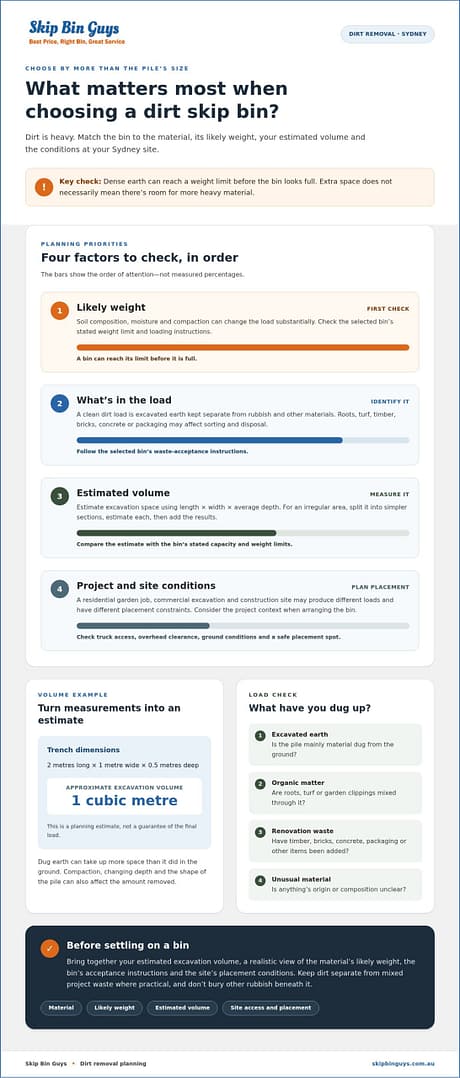
- Estimate both the pile’s volume and its likely weight. Dense earth can reach a weight limit before a bin looks full.
- Plan a dirt removal skip bin Sydney hire around the material, project scale and site conditions, not volume alone.
- Keep dirt separate from mixed project waste where practical to support appropriate sorting and material recovery.
- Prepare a clear delivery spot by checking truck access, overhead clearance, ground conditions and safe bin placement.
Dirt removal skip bin Sydney: identify your load before choosing
A dirt removal skip bin suits a load made up mainly of excavated earth, rather than a general mix of household or renovation rubbish. Before booking, work out what’s in the pile and how it was produced. A garden re-levelling job may leave a different load from digging a trench or removing old turf, and those differences can affect sorting and disposal.
Describe the load accurately to help choose a suitable bin and avoid mixing in items that need a different disposal approach. This is also a useful starting point when planning dirt removal in Sydney. If you’re unsure what a soil description means, soil classification systems explain how soils can be grouped by their characteristics. For skip hire, the bin’s waste-acceptance instructions are the practical guide to what can go in.
What counts as a dirt load for skip bin hire?
Excavating a garden bed, levelling a yard or preparing a small construction area can produce a mostly earth-based load. It may include different soil types, clods, roots or surface material, depending on the site and how the digging was done. Don’t assume every material dug from the ground belongs in the same bin. Follow the selected bin’s waste instructions, particularly when the load includes more than excavated earth.
For planning purposes, a clean dirt load is excavated earth kept separate from rubbish and other materials that could change how it needs to be sorted. This description helps you identify the load, but the bin’s acceptance instructions determine what can be loaded. Pay particular attention if the ground has been disturbed by earlier building or landscaping work.
Why separate dirt from soil and mixed rubbish?
People often use “dirt” and “soil” interchangeably, but a load can contain more than mineral earth. Topsoil may include organic matter such as roots or plant fragments, while a renovation pile can combine soil with timber, packaging or broken building materials. A mixed load may need a different disposal approach from a separated earth load. Check the selected bin’s instructions rather than relying on the material’s name alone.
Separating materials makes the load easier to identify and can support appropriate sorting and recovery. Before booking, use this checklist:
- Excavated earth: Is the pile mainly material dug from the ground?
- Organic matter: Are roots, turf or garden clippings mixed through it?
- Renovation waste: Have timber, bricks, concrete, packaging or other items been added?
- Unusual material: Is there anything in the load whose origin or composition you can’t identify?
If the pile is mixed, separate what you can before loading. Don’t bury other rubbish beneath dirt or assume a small amount will be suitable. Describe the load accurately and follow the selected bin’s instructions about inclusions and exclusions. Checking the material before booking helps you choose an appropriate disposal approach.
Choose a dirt skip bin by volume, weight and project needs
A pile can look modest and still be heavy enough to affect your bin choice. Volume indicates how much space the dirt may occupy; weight indicates how much load the bin and truck will need to handle. When planning a dirt removal skip bin in Sydney, consider both rather than choosing by appearance alone.
Estimate how much dirt your project will produce
Start with the excavation’s length, width and average depth. Multiply the measurements to estimate the space the soil occupies. For example, a trench 2 metres long, 1 metre wide and 0.5 metres deep produces an approximate excavation volume of 1 cubic metre. For an irregular garden bed or sloping area, divide it into simpler sections, estimate each one, then add the results.
This is a planning estimate, not a guarantee of the final load. Dug earth loosens and may take up more space than it did in the ground, while compacted material can occupy less. The amount you remove can also differ if the excavation depth varies. Note your assumptions and consider the shape of the pile when discussing bin capacity.
Compare your estimated volume with the selected bin’s stated capacity and weight limits. Avoid converting cubic metres into tonnes using a single assumed figure: soil composition, moisture and compaction can change the load substantially. For a broader look at factors that influence hire costs, see the skip bin hire prices guide.
Match the bin to heavy material and site constraints
Dense dirt can reach a load limit before it fills the bin to the top. A volume-only estimate can therefore lead to an unsuitable choice, even when the pile appears to fit. Read and follow the selected bin’s fill and loading instructions, including any stated weight limit. Extra space does not necessarily mean there’s room for more heavy material.
Consider the project as well as the soil. A small residential garden job, a commercial excavation and a construction site can produce different loads and have different placement constraints. Skip Bin Guys supports residential, commercial and construction projects across Sydney, so you can factor in your project’s context when arranging skip hire.
For construction work, planning what can be reused or separated from the start can help reduce unnecessary waste. The Australian Government’s construction and demolition waste minimisation guidance explains ways to reduce, reuse and recycle materials. Keep the dirt load separate where practical, then choose a bin for the material intended for disposal.
Before settling on a bin, bring together your estimated excavation volume, a realistic view of the material’s likely weight, the bin’s stated limits and the available delivery space. When you’re ready to plan the hire around your project, explore Skip Bin Guys skip bin hire.
Dirt, soil or mixed waste? Compare the right disposal approach
Choose a disposal approach that matches the whole load, not just its largest component. A pile of excavated earth, soil with plant matter and renovation debris may look similar from a distance, but each can require different sorting and handling. The right dirt removal skip bin in Sydney depends on keeping the material within the selected bin’s stated waste category.
| Load type | Typical project context | Practical disposal approach |
|---|---|---|
| Dirt | Earth removed during digging, excavation or levelling | Consider a dedicated dirt bin if the load matches its stated acceptance instructions. |
| Soil | Garden or surface soil that may include roots or other organic matter | Keep it separate from general rubbish and follow the selected bin’s instructions for soil and organic material. |
| Mixed project waste | A combination of earth, green waste, building materials or renovation debris | Separate materials where practical and plan a suitable route for each stream rather than treating the whole pile as dirt. |
When a dedicated dirt bin makes sense
A dedicated dirt bin can suit a project focused on removing excavated material, such as levelling an area or digging for landscaping or construction. The deciding factor isn’t simply that the material came from the ground. Check that the load matches the bin’s stated waste category, especially if it includes surface growth, fill from a previous project or other material. Don’t assume every soil or fill load is suitable.
Separating waste streams helps materials reach more appropriate sorting and recovery routes. Keeping materials apart supports responsible processing and makes the contents easier to identify. Skip Bin Guys processes waste through EPA-approved recycling yards, where suitable materials can be handled through the relevant pathways. Start by identifying each material stream, then choose the disposal approach that fits it.
When a project contains more than dirt
Landscaping can leave soil alongside turf, roots, branches and other green waste. Renovation or building work may also produce timber, packaging, bricks or concrete. When these materials are tipped together, it can be harder to sort the load and direct each component appropriately. Keep distinct materials in separate piles as work proceeds, even if you’re still planning how to dispose of each one.
For example, a yard project might produce one pile of excavated earth and a separate pile of branches and turf. A renovation could leave soil from outdoor work alongside building debris. Treat each stream according to its waste category and follow the selected bin’s instructions before loading. For wider building-site waste planning, the construction skip bin hire guide covers considerations beyond an earth-only load.
Keeping materials apart from the outset gives you a clearer view of what needs removing and helps you select a suitable disposal route. If the load changes as the project progresses, reassess its contents rather than assuming the original bin category still fits.
Prepare your Sydney site for dirt skip bin delivery
Preparation can make delivery and collection more straightforward. Before booking a dirt removal skip bin in Sydney, choose a placement spot and check whether a truck can reach it safely. Work through these steps with whoever is coordinating the excavation, especially if access or placement could change during the project.
- Choose a practical placement area. Pick a spot close enough for loading, with a clear approach for delivery and collection. Consider how workers will move dirt to the bin without blocking essential access around the property.
- Check the route in. Look for narrow driveways, tight turns, gates, parked vehicles and slopes that could affect truck access. Measure or clear the route where possible, and note obstacles that can’t be moved. A clear space at the end of the driveway won’t help if the truck can’t reach it.
- Look above and around the site. Identify overhead branches, awnings, power lines and other obstructions near the approach and placement area. Check nearby fences, walls and parked cars too. The delivery route needs to be clear above and around the truck, not just along the ground.
- Consider the ground and placement. Choose a stable, accessible area that can support the bin and activity around it. Avoid soft, uneven or visibly damaged ground where practical, and consider how wet weather could affect the surface. Keep the bin clear of everyday access points wherever possible.
- Check whether placement involves public land. If the only suitable location may be a road, footpath or other public space, consult current requirements from the relevant Sydney council before arranging placement. Rules and processes can vary by council. The Sydney skip bin permits guide explains what to consider when a bin may need to go on public land.
Check delivery access and bin placement
Walk the planned route and check whether a truck can get through. Consider whether a low branch, steep section or tight turn could affect access. A stable placement spot and clear path help make delivery and collection easier to organise. If site conditions are likely to change, such as vehicles moving in and out of a construction area, include that in your placement plan.
Plan the booking and delivery timing
Arrange delivery for the stage of the job when you’ll be ready to load dirt. If the bin arrives before excavation begins, it may occupy a useful work area. If it arrives after digging starts, you’ll need a safe temporary place for the material. Same-day delivery is available for orders placed before 10:30 am, which can help when timing is tight. Have the site ready, with the route clear and the placement area accessible.
Before arranging a dirt removal skip bin Sydney hire, tell the people on site where the bin will go and keep that space clear. For help organising skip bin delivery around your project, arrange your skip bin hire.
Book dirt removal skip bin hire with Skip Bin Guys
Once you know what the material is, have estimated the load and chosen a delivery spot, bring those details together for your booking. A clear brief helps match the skip bin to the project and plan delivery, loading and collection. Use this checklist when arranging a dirt removal skip bin in Sydney:
- Material: Describe what the load contains and whether it’s one material or a mix.
- Estimated amount: Share your excavation measurements or a practical estimate of the pile, considering weight as well as volume.
- Site address: Provide the project location so delivery can be arranged for the right site.
- Access and placement: Note the approach, any tight access or overhead obstacles, and where you intend the bin to sit.
- Loading guidance: Follow the selected bin’s waste-acceptance and loading instructions, including its fill and weight limits.
What to have ready when booking
These details describe the job more clearly than guessing at bin dimensions, weight limits or hire periods. If the work is underway, explain what you expect to remove and whether the load could change as digging progresses. Keep different materials separate where practical, and load only what fits the selected bin’s waste category and instructions.
After arranging the booking, plan the work around delivery and collection. Make sure the placement area is accessible when the bin is due, then load it according to the instructions for the hire. Including collection in your plan gives the project a clear next step once loading is complete.
Why choose a local Sydney skip bin team?
Skip Bin Guys supports residential, commercial and construction projects across Sydney, backed by more than 13 years’ experience. The team provides friendly support throughout the hire process and a satisfaction guarantee. Waste is processed through EPA-approved recycling yards, supporting responsible handling and sorting.
Delivery timing can matter if excavation is already scheduled. Same-day delivery is available for orders placed before 10:30 am, so include your preferred timing in your project plan and prepare the site for the bin’s arrival. Allow for both loading and collection in your work sequence rather than leaving placement until excavation is underway.
Before booking, have the load description, estimated amount, address and access notes ready. These details give you a sound basis for arranging hire without guessing about capacity or waste acceptance. If your project details are in hand, book a dirt removal skip bin with Skip Bin Guys and organise skip hire around your Sydney site.
Get your dirt removal project moving
Make the bin plan part of your site schedule before work begins. A quick handover with everyone involved can prevent last-minute changes: agree where the bin will sit, keep that area clear and make sure the team knows what belongs in it. If the excavation scope changes, revisit the plan before adding new materials to the load.
With those arrangements in place, organising a dirt removal skip bin Sydney project becomes a practical step rather than another job to sort out mid-project. Choose a delivery time that suits your work sequence and prepare the site for the bin’s arrival. A little coordination up front can help keep the work area organised as the project progresses.
Ready to put your plan into action? Arrange your dirt removal skip bin with Skip Bin Guys and take the next step towards a tidier, more manageable site.
Frequently Asked Questions
What can go in a dirt removal skip bin in Sydney?
Accepted materials depend on the selected bin’s waste conditions. Clean excavated earth is typically the main focus, but not every soil type or material from a digging job will be suitable. For a dirt removal skip bin Sydney booking, describe the load accurately, including anything mixed through it. Keep separate waste streams apart and follow the bin’s acceptance and loading instructions before adding material.
Can I put soil, turf or garden waste in a dirt skip bin?
Don’t assume these materials can all go in the same bin. Dirt, soil and garden materials may be treated as different waste streams. Turf, roots or clippings can change the makeup of a load, so identify them rather than treating them as excavated earth. Keep unlike materials separate and follow the selected bin’s waste instructions to plan the appropriate disposal route.
How do I choose the right skip bin size for dirt?
Estimate the excavation’s length, width and depth, then consider how dense the material is and the selected bin’s capacity and weight limits. Your volume estimate helps describe the job, but it can’t tell you the load’s exact weight. Follow the bin’s loading instructions and don’t assume it can be filled to the rim. Soil type and moisture can affect how heavy a load becomes.
Can a skip bin be delivered on the same day in Sydney?
Skip Bin Guys offers same-day delivery for orders placed before 10:30 am. To help delivery run smoothly, prepare the placement area and provide accurate site access details when arranging delivery. Include tight turns, gates or overhead obstacles that could affect the approach. Plan your work sequence around the delivery timing and the site’s readiness.
Do I need a council permit for a dirt skip bin in Sydney?
Permit requirements can depend on where the bin will be placed and the rules of the relevant local council. A driveway on private property may involve different considerations from a road, footpath or other public land. Before choosing a placement spot, check the current requirements for your council and location. The Sydney skip bin permits guide outlines the local details to consider.
What happens to dirt after the skip bin is collected?
Skip Bin Guys processes waste through EPA-approved recycling yards, where suitable materials can be sorted and recovered. Processing depends on what the load contains, so not every load follows the same recovery pathway. Describing the contents accurately and keeping separate materials apart helps the load be handled appropriately. Don’t add unrelated waste to an earth load unless it fits the selected bin’s acceptance instructions.
How much does dirt removal skip bin hire cost in Sydney?
The hire fee depends on the bin and waste requirements for your project, so one price won’t apply to every dirt removal job. Give a clear description of the material, estimated amount and site when arranging hire, so the booking reflects the work involved. For an overview of factors that affect cost and value, see the Skip Bin Hire Prices Sydney guide.