
Could the wrong skip bin slow down an already stressful flood clean-up? If you’re searching for a flood damage clean up skip bin Sydney residents can use, don’t start by guessing the size. First, sort the waste safely and check what the bin can accept.
Flooding can leave you with bulky, mixed materials that are difficult to move and may not all belong in the same bin. Some items need specialist advice or separate disposal. A skip bin can help with suitable solid waste, but confirm acceptance with the provider before booking.
This guide explains how to separate flood-damaged items, estimate a practical bin size and prepare a safe, accessible delivery spot. It also covers what to check about placement, collection and waste processing. Same-day delivery may be available for orders placed before 10:30 am, subject to confirmation, so ask about timing early if your clean-up is urgent.
Key Takeaways
- Check whether a flood damage clean up skip bin Sydney is suitable by separating ordinary solid waste from items that need specialist advice.
- Sort items before booking and confirm with the provider that each waste type is accepted.
- Compare skip-bin hire with other options, including checking with your local council about any collection services that may be available.
- Check access and placement, and tell the provider about site restrictions when booking to help avoid delivery issues.
- Choose a bin based on the confirmed waste and available space, then check delivery and collection arrangements.
Flood damage clean-up in Sydney: when a skip bin can help
A flood can leave a home or business with bulky damaged belongings, building debris and other waste that’s difficult to manage during repairs. A skip bin may help contain confirmed, non-hazardous solid waste on site, but it won’t suit every material left behind. To use a flood damage clean up skip bin Sydney residents can rely on for suitable waste, first establish what’s safe to handle and confirm what the provider will accept.
Flood recovery starts with safety, not waste removal. Don’t enter a building that may be structurally unsafe or handle material you can’t identify. Follow emergency services’ instructions and seek advice from a suitably qualified professional if you encounter hazards or aren’t sure whether an area is safe. The broad principles of Flood management include reducing flood impacts, but post-flood clean-up decisions still need to reflect the conditions at your property.
What a skip bin can do during a flood clean-up
Once the site is safe, a skip bin can provide a central place for suitable solid waste at a residential or business property. Keeping confirmed waste together can make a staged clean-up easier to organise and reduce scattered piles around work areas. Before booking, describe the waste and check the provider’s current acceptance policy. Don’t assume an item is allowed just because it’s solid or commonly treated as general rubbish.
Match delivery and collection arrangements to your clean-up plan. For example, you could clear one safe area first, then load confirmed waste as repairs progress. Think about where the bin can sit without blocking access, and confirm how long it will be available. Check the arrangements with the provider rather than relying on an assumed delivery or collection time.
What to do before handling flood-damaged materials
Pause before lifting, moving or sorting anything that could pose a risk. If you see immediate danger, keep clear and contact emergency services. For uncertain or specialist hazards, seek advice from the relevant professional. Don’t put unidentified materials into a bin or mix them with waste you’ve already confirmed as acceptable.
Contaminated floodwater and other liquid waste aren’t skip-bin contents. A standard skip bin is for suitable solid waste, not water, sewage, chemicals or other liquids. Skip Bin Guys doesn’t provide hazardous waste disposal or liquid waste removal, so seek appropriate specialist advice for these materials. Once any concerns are addressed, you can sort confirmed solid waste and plan the next stage of the clean-up.
Sort flood-damaged waste safely before booking a skip bin
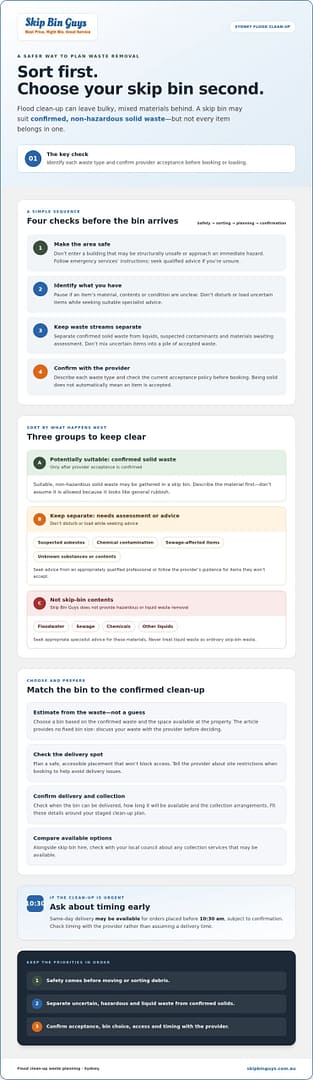
Before arranging a flood damage clean up skip bin Sydney, work through the clean-up in stages: make the area safe, identify the materials, separate waste streams and confirm acceptance with the provider. This helps prevent unsuitable materials going into the bin and makes it clearer which items need specialist advice.
Separate ordinary solids from items needing specialist advice
Keep potentially suitable solid debris separate from liquids and anything that could be hazardous. A material isn’t automatically accepted just because it’s solid. Acceptance depends on the material and the provider’s waste policy, so describe each type of waste before loading. If an item’s contents or condition are unclear, follow the provider’s advice and keep it apart from confirmed waste.
Check Sydney flood and waste advice before handling debris
For immediate flood-related safety information, check current guidance from NSW SES and follow directions relevant to your situation. For waste and environmental questions, consult the NSW EPA and verify its current advice before handling or disposing of material. The NSW Government’s Safe disposal options can also help you understand what to check after a flood, including whether to contact your local council.
Use this simple sorting sequence:
- Make the area safe: Don’t enter an unsafe building or approach an immediate hazard. Follow emergency advice.
- Identify materials: If you can’t tell what something is or what it may contain, leave it alone and seek specialist advice.
- Separate streams: Keep confirmed solid waste apart from liquids, suspected contaminants and materials awaiting assessment.
- Confirm acceptance: Describe the waste clearly to the provider before booking or loading, and ask how to handle anything they won’t accept.
Once you’ve identified the solid waste and set uncertain items aside, discuss the suitable material with Skip Bin Guys’ skip bin team before booking. Confirming acceptance first helps you plan the next clean-up stage without guessing what can go in the bin.
Compare skip-bin options for flood clean-up waste in Sydney
Once you’ve identified which waste may be suitable for a bin, compare disposal options by material, timing and access. A skip bin can be practical when you have a substantial volume of confirmed solid waste at one property and a safe place for delivery. Council collection may suit some items, while waste that needs specialist handling requires a different option. Choose a flood damage clean up skip bin Sydney based on the waste you actually have, rather than assuming one method will suit everything.
Match the bin to the waste and clean-up scale
Estimate the amount of confirmed waste and note any especially bulky or heavy items. Share those details with the provider before choosing a bin. Ask about suitable capacity, accepted materials and any weight limits, which depend on the provider’s options and waste policy. Check that the bin can be placed where you need it and that the delivery route is accessible. Avoid choosing based only on the size of the property.
Different waste streams may need different arrangements, so don’t assume all mixed flood debris can go into one bin. Confirm each material before loading, particularly if the waste is heavy, mixed or potentially contaminated. For general cost considerations without assuming a quote, see the Sydney skip-bin hire price guide.
Check whether another disposal option suits specific items
Your local council may offer collection for some items, but eligibility, scheduling and accepted materials can vary by area. Check directly with your council before relying on a collection, especially if timing matters. Council collection may not suit every waste type or the pace of a staged repair.
For suspected hazardous materials, liquids or waste the bin provider won’t accept, seek advice from an appropriate specialist rather than placing them in a standard skip bin. This keeps unsuitable waste separate and helps you identify a suitable option for each material. If you’re weighing up a bin for a household clean-up, the residential skip-bin hire guide offers further points to consider.
Before booking, prepare a short list of waste types, estimated volume, heavy or bulky materials and the available placement area. This gives the provider the information needed to help confirm a suitable option and discuss delivery and collection around your clean-up plan.
Prepare your Sydney site for skip-bin delivery and collection
A clear delivery plan can make a flood clean-up easier to manage. Before booking a flood damage clean up skip bin Sydney, consider where it could sit, how the delivery vehicle will reach that spot and what could obstruct access. Share these details with the provider so they can help assess whether your proposed placement is suitable.
Choose a safe and accessible placement spot
Look for a stable, accessible area and check its suitability with the provider before delivery. Keep driveways, entrances and emergency access clear, and consider how people will move around the bin while clean-up work continues. Conditions at your property affect placement, so discuss the proposed spot rather than assuming it will work.
Tell the provider about narrow access, sloping ground, overhead branches and other obstacles, as well as any site restrictions. These details can affect delivery and placement. If the bin may need to occupy public land, check with the relevant Sydney council about requirements for your exact location before booking. For further guidance, see the Sydney skip-bin permit guide.
Confirm timing, access and collection arrangements
Before confirming your booking, agree on the delivery date, provide clear access instructions and ask how collection will be arranged. Share a contact number for someone who can respond to delivery questions, and let the provider know if site access changes. Confirm the hire period and collection arrangements directly instead of assuming how long the bin will remain on site.
Same-day delivery may be available for orders placed before 10:30 am, subject to confirmation. If your clean-up is urgent, check availability when you enquire and wait for the timing to be confirmed before making plans around it. You can also ask how collection can fit with the expected progress of the clean-up.
Use this quick pre-delivery checklist:
- Access: Is the route clear, and have you disclosed narrow or restricted entry?
- Placement: Have you discussed a stable, accessible spot with the provider?
- Obstructions: Have you flagged slopes, overhead obstacles and other site conditions?
- Public land: If relevant, have you checked requirements with your council?
- Arrangements: Have you confirmed delivery timing, contact details and collection plans?
Ready to discuss placement and delivery? Contact Skip Bin Guys about skip-bin hire and share your site details before booking.
Book a flood damage clean-up skip bin with Skip Bin Guys
Once you’ve sorted the waste, identified anything that needs specialist advice and considered access to your site, share those details with the provider before choosing a capacity. For a flood damage clean up skip bin Sydney, confirm the waste is suitable, discuss its volume and weight, and check that delivery and collection can work with your site conditions.
Skip Bin Guys provides residential, commercial and construction skip bin hire across Sydney. With over 13 years’ industry experience, the team can help you discuss the practical details of a clean-up. Waste is processed through EPA-approved recycling yards to maximise material recovery, though recycling outcomes depend on the material and aren’t guaranteed for every item.
What to tell the team when requesting a bin
Give the team a clear picture of the job so they can discuss suitable options and confirm current arrangements. Have these details ready:
- Your Sydney suburb and whether the job is at a home, business or construction site.
- Site access and placement information, including narrow entry, slopes, overhead obstacles or other restrictions.
- Expected waste types and volume, noting any bulky or heavy material so capacity and weight limits can be checked.
- Clean-up timing, including when you hope to have the bin delivered and collected.
- Any suspected contamination or unidentified material. Describe the concern and ask what to do before booking. Don’t place uncertain or potentially hazardous items in the bin.
Ask the team to confirm whether the proposed waste is accepted, which bin capacity is suitable, and what delivery and collection arrangements are available. Same-day delivery may be available for orders placed before 10:30 am, subject to confirmation, so check availability if timing is pressing.
Arrange a clean-up with clear expectations
Before confirming, make sure you understand the agreed hire and collection details. Skip Bin Guys offers a satisfaction guarantee throughout the hire process. Ask the team if you need clarification about how it applies to your booking. Clear communication about waste and access helps set practical expectations from the outset.
Once the details are confirmed, you can organise the clean-up knowing the bin choice is based on the waste you’ve described and the site you’ve prepared. Talk to the Skip Bin Guys team about your Sydney clean-up.
Plan your next clean-up step with confidence
A smoother flood clean-up starts with a few careful decisions: make sure the area is safe, separate ordinary solid waste from items needing specialist advice, and confirm accepted materials before booking. Then choose capacity based on the waste you’ve identified and check that delivery access and placement will work at your site.
If you’re arranging a flood damage clean up skip bin Sydney, Skip Bin Guys can help you discuss residential, commercial or construction hire options. The team brings over 13 years of industry experience, and waste is processed through EPA-approved recycling yards to maximise material recovery, though outcomes depend on the material. Same-day delivery may be available for orders placed before 10:30 am, subject to confirmation.
Have your suburb, waste types, access details and preferred timing ready when you get in touch. Clear information helps the team confirm suitability, availability and collection arrangements, so you can plan the clean-up with fewer surprises.
Talk to Skip Bin Guys about a suitable Sydney clean-up bin and take the next step towards a safer, more organised recovery.
Frequently Asked Questions
Can I put flood-damaged items in a skip bin in Sydney?
Yes, a skip bin may suit flood-damaged items if they’re confirmed, non-hazardous solid waste accepted by the provider. Acceptance depends on the material and the provider’s waste policy, so don’t assume an item is allowed just because it’s solid. Describe the waste to Skip Bin Guys before booking, especially if it’s mixed, unusually heavy or may be contaminated. Keep anything uncertain aside until you’ve received suitable advice.
Can a skip bin take floodwater, sewage or contaminated liquid?
No. Skip bins are for suitable solid waste, not floodwater, sewage or other liquids. Skip Bin Guys doesn’t offer liquid waste removal, so don’t pour liquids into a bin or load items containing free-flowing liquid. If water or another substance may be contaminated, keep clear if it’s unsafe and seek advice from the appropriate authority or a qualified specialist about suitable next steps.
How do I choose a skip-bin size for flood clean-up?
Estimate the volume of confirmed waste and tell the provider about bulky or heavy materials before choosing a bin. Ask which capacity suits the material, whether weight limits apply and what waste types are accepted. The right option depends on your waste and site access, so avoid guessing based only on property size. For a flood damage clean up skip bin Sydney, confirm suitability with the provider before booking.
Can I get same-day skip-bin delivery in Sydney after flooding?
Same-day delivery may be available from Skip Bin Guys for orders placed before 10:30 am, but it depends on confirmation and current availability. Contact the team as early as you can, share your suburb and site access details, and ask them to confirm a delivery time before making plans around it. Don’t assume urgent demand means a bin can be delivered the same day.
Do I need a council permit for a skip bin in Sydney?
Permit requirements can depend on where the bin will be placed. A permit is generally not required if it sits entirely on private property, while placing it on public land, such as a road or nature strip, generally requires a council permit. Requirements and costs vary between councils, so check with the council responsible for your exact location before arranging placement on public land.
Can asbestos or chemical waste go in a flood clean-up skip bin?
No. Don’t place suspected asbestos, chemical waste or unidentified substances in a standard skip bin. Avoid disturbing material you can’t identify and seek advice from a suitably qualified professional about safe handling and disposal. Tell the provider if you suspect contamination, but don’t treat that as acceptance. Skip Bin Guys doesn’t offer hazardous waste disposal, so arrange specialist advice for these materials.
What should I tell a skip-bin provider before booking after a flood?
Share your Sydney suburb, the site type, expected waste materials and approximate volume, plus any heavy or bulky items. Explain access conditions such as narrow entry, sloping ground or overhead obstacles, and mention any suspected contamination so the provider can advise what to do. Ask them to confirm waste acceptance, suitable capacity, availability, delivery details and collection arrangements before you book.