
What if the biggest hazard during your home cleanout isn’t the rubbish itself, but the immense pressure placed on your pristine paving? Setting up the right driveway protection for skip bins is often treated as an afterthought, yet watching several tonnes of heavy steel touch down on fresh exposed aggregate or stencilled concrete is enough to make anyone anxious. You shouldn’t have to risk cracked slabs, gouged asphalt, or stubborn rust stains just to clear out household waste.
Fortunately, preventing surface damage is remarkably simple once you understand how to disperse concentrated point loads. In this guide, you’ll discover practical methods to shield your driveway, including the exact timber board dimensions and cushioning materials required for different surfaces. We’ll walk through essential site preparation tips and delivery checks so you can complete your project with complete peace of mind, leaving your driveway just as flawless as you found it.
Key Takeaways
- Understand how heavy steel contact points and delivery truck stabilisers concentrate downward pressure, creating avoidable structural strain on residential surfaces.
- Select the most effective driveway protection for skip bins, using structural timber planks and plywood sheeting matched to your specific concrete, paver, or asphalt profile.
- Master the straightforward preparation routine, from sweeping abrasive grit to marking out runner footprints before the truck arrives.
- Identify critical placement hazards to avoid, including steep gradients, hidden utility pits, and council verge regulations.
- Collaborate smoothly with your delivery driver to ensure protective boards are aligned accurately for a clean, scratch-free placement.
Why Driveway Protection for Skip Bins Is Essential
A standard suburban driveway is engineered for passenger vehicles, not industrial metal containers packed with dense renovation rubble. Implementing practical driveway protection for skip bins protects your property from deep gouges, structural fractures, and unsightly rust rings before the drop-off even occurs. Many property owners don’t realise that heavy marrel delivery trucks generate significant ground pressure through their rear dual tyres and hydraulic stabiliser legs. Taking a few proactive steps to prepare the landing zone prevents costly concrete resurfacing and extensive paving repairs.
Understanding Downward Point Loads and Surface Stress
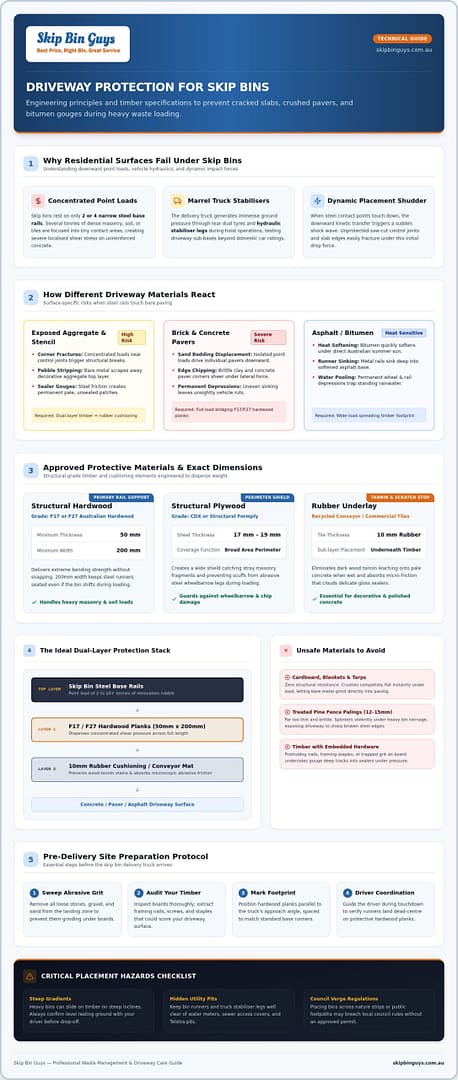
Skip bins rarely sit completely flat. Instead, the entire container rests on two or four narrow steel base rails. Without targeted driveway protection for skip bins, these concentrated contact zones focus several tonnes directly onto a few square centimetres of paving. According to established pavement engineering principles, rigid residential slabs tolerate dispersed loads well, but sharp point loads generate severe localised shear stress. Filling a bin with dense materials like clay soil, sandstone, masonry, or bathroom tiles drastically magnifies this pressure. When the delivery driver lowers the bin, the dynamic impact creates a sharp shudder that easily fractures unreinforced slabs.
How Different Driveway Materials React to Heavy Bins
Driveway finishes respond to concentrated weight in very different ways, making tailored protection necessary:
- Exposed Aggregate and Decorative Concrete: Placing metal rails near saw-cut control joints or slab edges triggers corner breaks and hairline fissures. Bare metal can also scrape away decorative pebble coatings, leaving pale, unsealed patches.
- Brick and Concrete Pavers: Sand-bedded pavers rely on mutual friction to remain level. Point loads drive individual pavers downward, spreading the bedding sand, chipping brittle clay edges, and creating permanent depressions.
- Asphalt: Bitumen remains flexible and softens quickly under direct Australian summer heat. Steel skip runners will sink directly into hot asphalt, leaving deep indentations and distorted surfaces that collect pooling rainwater.
Choosing the Right Protective Materials for Your Driveway Surface
Improvised barriers like old cardboard, flattened moving boxes, or discarded blankets offer zero structural resistance under several tonnes of waste. They crush flat instantly, allowing steel bin rails to grind straight into your paving. Reliable driveway protection for skip bins demands load-bearing materials that bridge surface imperfections, absorb dynamic placement shocks, and distribute downward weight across a broader footprint.
Hardwood Timber Planks vs Plywood Sheets
Structural timber remains the premier choice for protecting residential driveways during bin hire. For heavy renovation loads containing rubble, brick, or tiles, structural hardwood planks (such as F17 or F27 Australian hardwood) provide exceptional bending strength without snapping. Aim for boards at least 50mm thick and a minimum of 200mm wide. This substantial width ensures the steel runners remain fully seated on the wood, even if the bin shifts slightly as it settles.
For broader coverage, structural CDX or formply sheets measuring at least 17mm to 19mm thick work brilliantly. Plywood creates a wide protective footprint that catches stray masonry chips and shields surfaces from abrasive steel wheelbarrow legs during loading. If you are organising residential skip bin hire Sydney homeowners frequently pair two long hardwood planks for the base runners with a plywood perimeter to protect surrounding pavers.
Specialist Protection for Decorative and Coloured Concrete
- Rubber Underlay Cushioning: Unsealed hardwood can leach dark tannins when wet, leaving permanent brown outlines on pale concrete. Placing strips of heavy-duty recycled rubber conveyor matting or 10mm commercial rubber gym tiles beneath your timber eliminates tannin transfer while absorbing microscopic friction scratches.
- Clean, Hardware-Free Boards: Inspect all timber thoroughly prior to delivery. Protruding nails, framing staples, or embedded gravel on the underside of a board will grind deep grooves into clear sealers under pressure.
- Avoid Brittle Pine: Thin treated pine fence palings (typically 12mm to 15mm thick) lack the density required for bin loads; they splinter violently under load, allowing raw metal edges to strike your driveway.
If you have questions about positioning your waste container or selecting the best drop zone on your property, feel free to reach out to the friendly team at Skip Bin Guys for practical advice before your delivery day.
How to Prepare and Lay Driveway Protection: Step-by-Step
Setting up your landing zone ahead of time turns delivery day into a fast, stress-free routine. Taking ten minutes to properly position your driveway protection for skip bins ensures the heavy container touches down precisely where you want it. It also shields your sub-base from accidental scrapes while the delivery truck reverses in. Following a structured preparation sequence prevents frantic adjustments once the driver arrives.
Step 1 & 2: Surface Sweeping and Layout Measurement
Begin by thoroughly sweeping the designated parking footprint. Even tiny blue-metal chips or loose gravel trapped beneath heavy timber will act like high-pressure chisels when loaded, punching holes through concrete sealers or cracking brittle clay bricks. Use a stiff outdoor broom to clear every pebble, seed pod, and stray grit particle.
Next, map out your timber placements based on the skip bin’s footprint. Standard skip bin base runners sit roughly 1.2 to 1.6 metres apart, depending on bin volume. Lay two parallel hardwood planks along the anticipated landing track. Make sure these boards extend at least 300mm beyond both ends of the bin’s expected footprint. That extra length provides a welcoming margin of error for the driver, ensuring the metal rails land squarely on timber rather than catching bare edge concrete.
Step 3 & 4: Outrigger Placement and Truck Access Setup
While most people focus exclusively on the bin, delivery trucks present their own set of ground pressures. A loaded marrel truck deploys hydraulic stabiliser arms (outriggers) to keep the chassis level during lifting operations. Address this often-overlooked factor with these essential steps:
- Stabiliser Footing Pads: Keep two square offcuts of thick hardwood or heavy ply handy near the rear of the truck’s planned wheel positions. As the driver readies the lifting arm, slide these pads directly under the steel outrigger feet to protect your paving from direct hydraulic bite.
- Kerb and Garden Edging Guards: If your driveway features curved edging, soft turf borders, or raised garden kerbs, lay sacrificial plywood sheets across the boundary. Dual rear truck tyres can crush decorative garden bricks or rut moist lawn edges during tight turning manoeuvres.
- Clearance Checks: Look upward before the truck backs up. Marrel hoist arms swing high into the air during unloading, so prune back overhanging tree limbs and verify that the drop zone sits comfortably clear of guttering, solar arrays, eaves, and overhead powerlines.
Key Placement, Gradient, and Council Verge Considerations
Finding the right spot involves more than picking the shortest walking distance to your front door. Slope angles, sub-surface plumbing, and site topography directly dictate whether your driveway protection for skip bins holds firm or introduces new safety risks. When physical site limitations make private driveway placement impractical or risky, shifting to the road verge offers an ideal alternative.
Managing Slopes, Gradients, and Drainage Hazards
Steep driveways complicate both delivery and stability. When placing smooth steel bin runners onto dry timber across an incline, friction decreases significantly. Under full load, a bin can slowly creep downhill if the interface lacks grip. To counter this, place textured, high-traction rubber mats directly beneath and on top of your timber planks to lock both surfaces together. Always confirm that your driveway gradient allows delivery trucks to deploy their hydraulic arms safely without exceeding operational tilt limits.
Sub-surface utilities present another hidden danger. Never position timber supports or heavy bins over domestic sewer inspection openings, water meters, or shallow stormwater lines. Concentrated tonnage can crush PVC drainage pipes or fracture cast-iron utility caps below the slab, creating subterranean plumbing repairs that easily eclipse surface damage.
Driveway vs Nature Strip: When to Seek a Council Permit
What happens if your driveway is simply too steep, narrow, or structurally fragile to support a loaded container? Moving the placement out to the public nature strip or road verge preserves your private paving completely. However, public land use comes with legal obligations.
Placing a bin on public land almost always requires formal council authorisation. Navigating local council rules for Sydney skip bin permits ensures you remain fully compliant regarding required road clearances, reflective tape rules, and pedestrian access. Council approvals generally take several business days, so factor this buffer into your project schedule rather than rushing at the final hour.
If you aren’t sure whether your property gradient suits private placement, book your skip bin with Skip Bin Guys to receive straightforward advice on safe positioning before your project kicks off.
Working with Your Skip Bin Driver for Flawless Delivery
Seamless delivery relies on teamwork between you and your delivery driver. Experienced drivers navigate tricky suburban access corridors every single day, but they appreciate clear site guidance before reversing in. Partnering with a specialist waste operator ensures your chosen driveway protection for skip bins stays aligned exactly beneath the bin runners, preventing costly alignment errors before the container settles.
Briefing the Driver and Pre-Marking the Drop Zone
Being present during the drop-off makes a world of difference. Stand at a safe distance where the driver maintains continuous eye contact, guiding their approach. Keep two extra timber planks nearby so the driver can slip them under the truck’s rear hydraulic feet before engaging the hoist. With over 13 years of waste management experience across Sydney, the drivers at Skip Bin Guys routinely assist property owners with placing timber supports to guarantee a pristine landing.
Safe Loading Practices to Prevent Mid-Hire Driveway Shifts
Even with substantial boards in place, improper loading practices can compromise your driveway protection for skip bins over the hire period. Uneven weight distribution alters point load physics, causing one side of the bin to dig deeper into the supporting timber:
- Distribute Density Evenly: Heavy rubble, concrete pavers, and sandstone blocks should sit evenly across the base of the container. Stacking masonry entirely at one end creates unbalanced pressure that can split underlying timber boards or cause paver shifting beneath.
- Maintain Level Waste Lines: Never overload your container past the rim. Unbalanced heaps shift during heavy rain, increasing the risk of structural tilt.
- Select Purpose-Built Bins: If you are renovating a kitchen or stripping masonry, partnering with specialists in construction skip bin hire Sydney ensures you receive heavy-duty bins designed specifically for dense loads.
- Budget with Complete Transparency: Reviewing upfront skip bin hire prices Sydney helps you choose the correct volume immediately, avoiding overloaded bins that stress both your budget and driveway.
Keep Your Driveway Pristine During Your Next Cleanout
Protecting your property during a major renovation or cleanout is remarkably straightforward with a little foresight. Implementing reliable driveway protection for skip bins ensures that heavy steel rails never compromise your decorative concrete, pavers, or asphalt. By simply pairing structural hardwood timbers with rubber underlays, clearing stray grit, and distributing heavy waste evenly across the bin base, you keep your residential surfaces intact from start to finish.
At Skip Bin Guys, we bring over 13 years of trusted local delivery experience across Sydney. Our friendly drivers happily work with you on-site to position your container accurately onto your protective timber boards, giving you total peace of mind while your waste heads directly to EPA-approved recycling processing facilities.
Don’t let surface worries hold back your next home project. Book your careful Sydney skip bin delivery with Skip Bin Guys today and experience a smooth, worry-free cleanout from start to finish.
Frequently Asked Questions
Will a skip bin crack my concrete or paved driveway?
Yes, an unprotected skip bin can crack concrete or dislodge sand-bedded pavers if it is filled with heavy waste. Steel base rails focus several tonnes onto very narrow contact zones. Installing proper driveway protection for skip bins, such as thick structural hardwood planks, spreads this weight across a wider area and prevents edge breaks, gouges, and sub-base subsidence entirely.
What is the best wood to put under a skip bin?
Structural Australian hardwood planks and thick exterior-grade structural formply provide the best protection. Hardwood timbers withstand massive compressive stress without splintering under dynamic drop shocks. Avoid using soft treated pine fence palings or thin packing timber, as these brittle boards split almost instantly once heavy demolition materials land inside the steel container.
Do skip bin delivery trucks damage residential driveways?
Delivery trucks rarely damage driveways if the surface is structurally sound and the site is prepared properly. The biggest risk stems from hydraulic stabiliser legs, which press into the ground to balance the truck during lifting. Experienced Sydney drivers routinely place protective timber offcuts directly beneath these metal stabiliser feet to protect pavers and decorative concrete from excessive point pressure.
Can I put a skip bin on an asphalt driveway during summer?
Yes, but you must avoid placing bare steel runners directly onto the asphalt during warmer months. Sydney summer heat softens bitumen significantly, making it vulnerable to deep gouges and wheel ruts under heavy downward loads. Laying wide timber planks beneath the bin rails bridges the softened surface and ensures the container does not sink into your driveway.
How thick should timber boards be for heavy concrete or dirt skips?
For heavy loads such as masonry, clay soil, and concrete rubble, select structural hardwood planks that are at least 50mm thick and 200mm wide. Thinner timber can snap under concentrated pressure, allowing bare metal to hit the ground. Heavy-duty timber planks provide the structural rigidity necessary for dependable driveway protection for skip bins across demanding cleanout projects.
What happens if my driveway is too steep for a skip bin?
If your driveway incline is too steep, the delivery driver may recommend an alternative placement zone to prevent serious safety hazards. Smooth steel bin runners can slide along timber supports on sharp gradients, and delivery trucks cannot safely deploy hydraulic lifting hoists beyond specific tilt thresholds. In such situations, street or nature strip placement is usually the safest route.
Can I place a skip bin on the council grass verge instead?
Yes, placing your container on a council nature strip or road verge is a great alternative if your private driveway is narrow or delicate. However, placing a bin on public land almost always requires a council permit. Sydney local councils set strict rules regarding footpath clearances and traffic visibility, so you will need council approval before delivery day.