
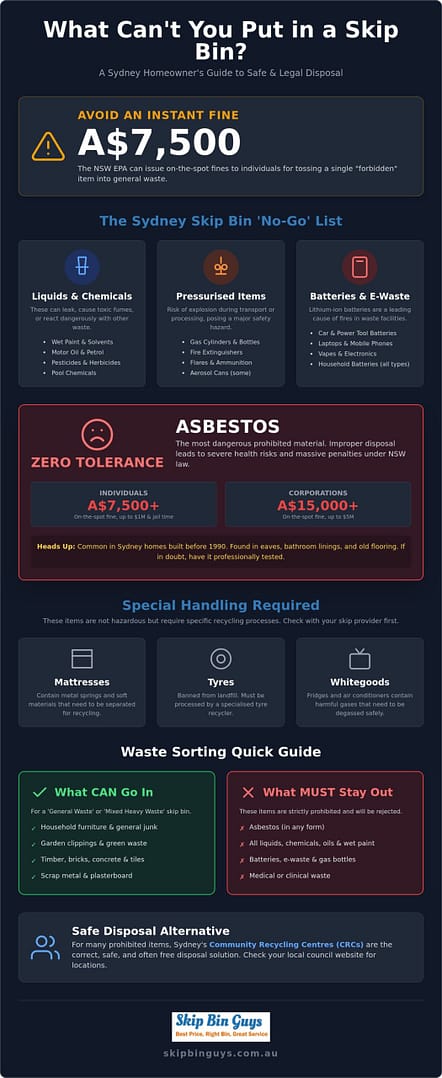
Did you know that tossing a single “forbidden” item into your waste could trigger an on-the-spot A$7,500 fine from the NSW EPA? Most Sydney homeowners and tradies assume a skip bin is a simple catch-all for renovation junk, but the reality is that mixing the wrong materials can turn a routine clean-up into a legal and financial headache. It’s perfectly natural to feel a bit anxious about hidden contamination fees or the strict rules surrounding hazardous materials. If you are currently staring at a pile of rubbish and wondering exactly what can’t you put in a skip bin Sydney, we have the answers you need.
We’re here to simplify the process so you can hire with total peace of mind. This guide provides a definitive list of prohibited items, explains the latest 2026 NSW regulations, and offers practical local solutions for disposing of chemicals and asbestos safely. Let’s ensure your project stays on budget and remains environmentally responsible. By understanding these rules, you can avoid unexpected costs and ensure your waste is handled by EPA-approved facilities without any nasty surprises.
Key Takeaways
- Identify the strictly banned hazardous materials, such as chemicals and gas bottles, that lead to immediate skip bin rejection and heavy contamination surcharges.
- Understand the severe NSW EPA penalties for improper asbestos disposal, which can include on-the-spot fines of A$7,500 for individuals.
- Clarify exactly what can’t you put in a skip bin Sydney when it comes to “grey area” items like mattresses and tyres that require specialised recycling.
- Discover how to utilise Sydney’s Community Recycling Centres (CRCs) to dispose of paint, batteries, and oils safely and often free of charge.
- Learn how to categorise your waste correctly before your hire begins to ensure a smooth, stress-free experience with EPA-approved recycling yards.
The Sydney Skip Bin ‘No-Go’ List: Prohibited Items Explained
Understanding the rules isn’t just about following the law; it’s about keeping our local Sydney community and environment safe. When you hire a bin, it’s easy to assume it’s a “toss-it-all-in” solution. However, knowing exactly what can’t you put in a skip bin Sydney is the first step toward a successful project. Prohibited items are banned because they pose immediate risks to our drivers, the general public, and the staff at recycling facilities. We want your clean-up to be as smooth as possible, and that starts with clear communication about what stays out of the bin.
There is a clear distinction between ‘General Waste’ and ‘Prohibited Waste’. General waste typically includes household furniture, garden clippings, and renovation debris like timber or tiles. Prohibited waste, on the other hand, consists of anything toxic, flammable, or environmentally damaging. A Waste container is built for durability, but it isn’t designed to safely hold volatile chemicals. If prohibited items end up in a standard bin, they contaminate the entire load. This means materials that could have been recycled at our EPA-approved yards often end up in landfill instead, which is an outcome we all want to avoid. Proper sorting ensures that Sydney stays green and your hire remains affordable.
- Liquids: Wet paint, motor oil, petrol, and brake fluid.
- Chemicals: Pool chlorine, pesticides, herbicides, and strong cleaning solvents.
- Explosives and Pressurised Gasses: Gas cylinders, fire extinguishers, flares, and ammunition.
- Medical Waste: Syringes, needles, and clinical waste.
Liquids and Hazardous Chemicals
Wet paint, motor oil, and petrol are major environmental hazards that don’t belong in a skip. If these containers rupture during transport, the liquid leaks through the bin and onto Sydney roads, creating a massive mess and a safety hazard. It doesn’t just stop there. Cleaning solvents and pool chemicals are often highly reactive. If they mix with other rubbish, they can create toxic fumes or even spontaneous combustion. If a bin is returned contaminated with liquids, you’ll likely face heavy cleaning fees to cover the cost of professional decontamination and specialised disposal.
Batteries and Electronic Waste (E-Waste)
Lithium-ion batteries are currently the leading cause of fires in the waste industry. These batteries, found in laptops, power tools, and vapes, can ignite if they are crushed by the machinery inside a collection truck or at a sorting facility. While standard alkaline batteries are also discouraged, rechargeable units are strictly banned from all skip bins. Most Sydney councils offer dedicated e-waste drop-off days or permanent collection points to handle old tech safely. Separating these items ensures they are processed through the right channels rather than causing a dangerous blaze in a residential street.
Asbestos in Skip Bin Fine NSW: The High Cost of Non-Compliance
Asbestos is the most dangerous material we encounter in the waste industry. In New South Wales, it’s classified as a top-tier prohibited item because its microscopic fibres can cause fatal respiratory diseases. Because of these extreme health risks to our drivers, facility staff, and your neighbours, Sydney recycling centres and tips maintain a strict “Zero Tolerance” policy. If even a small fragment of asbestos is found in a mixed waste load, the entire bin is treated as hazardous waste. When people ask what can’t you put in a skip bin Sydney, asbestos is always at the top of the list.
The financial penalties for getting this wrong are staggering. As of 2026, the NSW EPA can issue on-the-spot fines of A$7,500 to individuals and A$15,000 to corporations for illegal dumping or improper disposal. If the offence is found to be willful, individuals can face fines up to A$1,000,000 and seven years in prison, while businesses can be hit with penalties up to A$5,000,000. Just last year, in May 2025, a skip bin company was fined A$60,000 for illegally dumping waste containing asbestos. These aren’t just empty threats; they are actively enforced to protect the Sydney community.
Identifying Potential Asbestos in Your Renovation
If you live in one of Sydney’s many classic “fibro” homes built before 1990, asbestos is likely hiding in plain sight. It’s commonly found in eaves, bathroom linings, kitchen splashbacks, and even under old vinyl flooring. Identifying it with the naked eye is impossible, which is why “if in doubt, leave it out” is the only rule you should follow. The NSW EPA states that any waste contaminated with asbestos must be managed as asbestos waste, meaning it can never be mixed with general rubbish. If you’re unsure about a material, chat with our friendly team before you start loading your bin.
Legal Consequences and Prosecution
The NSW EPA uses sophisticated tracking systems to monitor waste movements across Sydney. If a skip bin is found to contain asbestos at a recycling yard, the bin is immediately quarantined. This process stops all operations at the facility while the area is decontaminated. You, as the hirer, will be held responsible for these massive “quarantine fees,” which can run into thousands of dollars on top of the government fines. Professional asbestos removalists are the only legal and safe solution for handling this material. They ensure it’s wrapped, sealed, and transported to a licensed facility that charges around A$760 per tonne for correct disposal.
The ‘Grey Area’ Items: Mattresses, Tyres, and Whitegoods
While chemicals and asbestos are strictly off-limits, some objects fall into a confusing middle ground. These “grey area” items are technically manageable, but they aren’t considered standard waste. If you’ve ever wondered what can’t you put in a skip bin Sydney without paying extra, you’re likely looking at mattresses, tyres, or old fridges. These items require specialised processing at recycling facilities, which means they often come with a surcharge or might be banned by certain providers entirely. Understanding these nuances helps you avoid surprise bills on pick-up day.
The surcharge isn’t just a random fee; it covers the additional labour and equipment costs required to break these items down. For example, professional mattress recycling services in Sydney, such as Soft Landing, charge from A$78 per piece as of July 2026. If these items are hidden at the bottom of your bin, the facility will identify them during the sorting process at our EPA-approved yards, and the cost will be passed back to you. Being transparent about your waste from the start is always the most cost-effective approach.
Mattress and Tyre Disposal Rules
Mattresses are a nightmare for standard waste machinery. The internal steel springs can easily tangle in the shredders used at tips, causing expensive breakdowns and delays. Similarly, tyres are strictly regulated in NSW because they don’t decompose and can trap methane gases, making them a fire risk in landfills. Car tyres typically cost between A$20 and A$31 each to dispose of at a waste facility. If you’re planning a major house clean-out, check our guide on Residential Skip Bin Hire Sydney for tips on how to manage these bulky items efficiently.
Whitegoods and Heavy Appliances
Old appliances like washing machines and dryers are generally accepted because they are high in recyclable metal. However, refrigerators and air conditioners are different. These units contain refrigerant gases that must be professionally degassed before the metal can be recycled. At many Sydney waste facilities, whitegoods incur a fee of around A$25 per unit. For safety, always remove the doors from old fridges before placing them out for collection to prevent children from getting trapped. If you want to save money, many Sydney councils offer free scheduled clean-up days for large appliances, which is a fantastic alternative to using your skip space.
Sydney Disposal Alternatives: Where to Take Banned Items
Discovering exactly what can’t you put in a skip bin Sydney is only the first half of a successful clean-up. Once you’ve separated your hazardous chemicals, old paint tins, or gas bottles, you need a legal and safe way to move them off your property. Dumping these items in the bush or leaving them on the kerbside isn’t just bad for the environment; it’s a fast track to those heavy NSW EPA fines we discussed earlier. Fortunately, Sydney is well-equipped with specialised facilities designed to handle high-risk waste responsibly, often at no cost to residents.
The most effective way to clear your prohibited waste is through the NSW EPA “Chemical CleanOut” program. these are free mobile collection events hosted across various Sydney suburbs throughout the year. They accept everything from pool chemicals and solvents to floor care products and acids. If you miss a local event, your next best move is a permanent collection point. These facilities ensure that toxic materials are treated or recycled rather than leaching into our local waterways or soil.
Finding Your Nearest Community Recycling Centre
Sydney is home to several Community Recycling Centres (CRCs) that offer free drop-off services for common household problem waste. These centres are a lifesaver for tradies and homeowners who want to keep their skip bin costs down by reducing the weight of their load. Major CRC locations across the Sydney basin include:
- Artarmon: Serving the Lower North Shore.
- Belrose: Ideal for Northern Beaches residents.
- Casula and Liverpool: Convenient for those in the South West.
- Penrith and Jamisontown: Perfect for Western Sydney locals.
These centres typically accept household quantities (up to 20kg or 20L) of paint, gas bottles, fire extinguishers, motor oils, and batteries. By taking these items to a CRC yourself, you eliminate the risk of contamination fees and ensure these materials are recycled into new products. If your remaining rubbish is purely general waste, book your Sydney skip bin hire with us for a stress-free experience.
Specialist Asbestos Disposal Services
As we’ve established, a skip bin is never the right tool for fibro or asbestos disposal. If you’ve identified asbestos during your renovation, you must engage a licensed asbestos removalist. These professionals have the training and equipment to seal the site and transport the waste to specific landfills licensed to accept it. Some Sydney councils participate in the “Household Asbestos Disposal Scheme,” which provides residents with discounted disposal bags and collection services for small quantities. Always check your local council’s website first; they often provide clear, step-by-step instructions on how to manage this high-risk material without breaking the law.
Hassle-Free Skip Hire with Skip Bin Guys
Our commitment to sustainability is at the heart of everything we do. We exclusively use EPA-approved recycling yards to ensure that your waste is processed responsibly. This dedication to the environment is why we are so transparent about waste restrictions. By helping you understand exactly what can’t you put in a skip bin Sydney, we ensure that as much material as possible is diverted from landfill and turned into something new. If you are in a rush to get started, we offer same-day delivery across Sydney for all orders placed before 10:30 am.
Expert Support for Your Cleanout
If you’ve found a “mystery” container in the back of the shed or you’re unsure about a specific building material, don’t guess. Give our friendly team a call. We’re here to help you categorise your waste before the bin even arrives on your driveway. For builders and tradies, this expert advice is a lifesaver for staying compliant on busy Sydney construction sites where NSW EPA inspectors are often active. We stand by our work with a satisfaction guarantee on every hire, ensuring a smooth experience from the moment we drop the bin to the final pick-up.
Ready to Clear the Clutter?
Starting your project is easier than ever with our simple online booking process. We service all Sydney suburbs, providing a range of bin sizes to suit everything from a small garden tidy-up to a full-scale demolition. Selecting the right size is crucial; it helps you avoid overloading the bin, which can lead to safety risks and additional fines during transport. We take the guesswork out of the process so you can focus on your project while we handle the heavy lifting. Book your Sydney skip bin today!
Get Your Sydney Project Moving Safely
Managing a clean-up shouldn’t feel like a legal minefield. Now that you’ve mastered exactly what can’t you put in a skip bin Sydney, you’re ready to tackle your project with total confidence. Remember, keeping hazardous chemicals and asbestos out of your bin isn’t just about avoiding those massive NSW EPA fines; it’s about protecting our drivers and ensuring our local environment stays healthy for everyone. By utilising Sydney’s Community Recycling Centres for your “no-go” items, you keep your costs down and your conscience clear.
With over 13 years of local waste experience, we’re here to make the process as easy as possible. We use EPA-approved recycling yards and offer same-day delivery across Sydney to keep your project on track. If you’re ready to clear the clutter without the stress, our friendly team is standing by to help you choose the perfect bin size for your needs.
Book your skip bin with the Sydney experts today!
Let’s get that space cleared and sorted the right way.
Frequently Asked Questions
What happens if I accidentally put a prohibited item in my skip?
If a prohibited item is spotted during collection, our driver may have to leave the bin behind until the item is removed. If the item is discovered later at the recycling yard, you will be charged a “contamination fee” or a specific surcharge to cover the cost of specialised disposal. To keep your project running smoothly, it’s always best to double-check exactly what can’t you put in a skip bin Sydney before you start loading.
Can I put old car tyres in a skip bin in Sydney?
No, tyres are strictly banned from standard skip bins because they require a specialised recycling process and cannot go to landfill in NSW. If tyres are found in your bin, you will face a surcharge of approximately A$20 to A$31 per tyre. Most local tyre shops or waste transfer stations will accept them for a small fee, which is often cheaper than the penalty for hiding them in a skip.
Is it okay to put a mattress in my skip if I pay extra?
Yes, most providers allow mattresses if you disclose them upfront and pay a specific surcharge. Because they are difficult to crush and require manual stripping for recycling, they aren’t included in standard “General Waste” pricing. Expect to pay between A$60 and A$150 per mattress depending on the size. Always let us know before your hire so we can include this in your booking and avoid surprise fees later.
How much is the fine for putting asbestos in a skip bin in NSW?
The penalties for improper asbestos disposal are incredibly high in New South Wales. The NSW EPA can issue on-the-spot fines of A$7,500 to individuals and A$15,000 to corporations. In more serious cases involving willful dumping, fines can reach A$1,000,000 for individuals or A$5,000,000 for businesses. Beyond the fines, you will also be responsible for the massive costs associated with decontaminating the bin and the recycling facility.
Can I put gas bottles or fire extinguishers in a skip?
No, these items are highly explosive and pose a major safety risk to our drivers and facility staff. Even if you think a gas bottle is empty, it can still ignite or explode when crushed by heavy machinery. These must be taken to a Community Recycling Centre or returned through a “Swap ‘n’ Go” service. Keeping these out of your waste ensures everyone stays safe during the transport and sorting process.
What should I do with old paint tins and engine oil?
Liquid waste like paint and oil must never be placed in a skip bin as it leaks and contaminates the entire load. Instead, take these to your nearest Community Recycling Centre (CRC) or a “Chemical CleanOut” event. Most Sydney CRCs will accept up to 20 litres of household paint or oil free of charge. This is the only legal way to handle these materials while protecting our local Sydney waterways.
Can I put food waste or organic kitchen scraps in the bin?
No, skip bins are designed for “dry” waste only and cannot accept food scraps or putrescible waste. Decaying food creates foul odours, leaches liquids, and attracts vermin, which creates a health hazard at our recycling yards. If you have large amounts of organic waste, look into local council green lidded bins or commercial composting services rather than using a standard skip hire for your kitchen rubbish.
Are there weight limits for different types of waste in Sydney?
Yes, every bin size has a specific weight limit to ensure the truck can safely lift and transport the load on Sydney roads. If you are wondering what can’t you put in a skip bin Sydney regarding weight, it’s usually a matter of volume. Filling a large bin entirely with heavy materials like concrete or soil will likely exceed the limit. We offer specific “heavy waste” bins for these materials to help you avoid overloading fees.