
Tossing a few tonnes of old driveway into a standard skip isn’t just a heavy lift; it’s a legal and financial minefield that catches even the most experienced Sydney renovators off guard. You likely already know that asphalt is incredibly dense, but the stress of dodging massive overweight fees and navigating strict EPA disposal regulations can make any project feel like it’s stalled. It’s frustrating when you’re ready to work but can’t find a bin that can actually handle the load without hidden costs popping up later.
This guide will show you how to master asphalt disposal Sydney wide, ensuring you stay 100% compliant while keeping your project budget firmly under control. We’ve simplified the process so you can focus on the job at hand rather than worrying about landfill levies or paperwork. We’ll walk you through selecting the right heavy waste bins for your specific tonnage, the simple way to organise same-day delivery, and how your old road base is recycled into high-quality sustainable materials at EPA-approved facilities. By the end, you’ll have the confidence to clear your site quickly and responsibly.
Key Takeaways
- Learn why asphalt’s high density requires specialised “Heavy Waste” skip bins to prevent dangerous overloads and site delays.
- Stay on the right side of the law by mastering the 2026 EPA regulations and council permit requirements for asphalt disposal Sydney.
- Save money and the environment by ensuring your old asphalt is sent to approved recycling yards for processing into new road materials.
- Discover why smaller bins (2m to 6m) are the gold standard for heavy waste and how to avoid the trap of overfilling larger containers.
- Optimise your project timeline with same-day delivery insights and professional support from a team with 13 years of local expertise.
Understanding Asphalt Disposal: Why it is Classified as Heavy Waste
In the world of skip bins, asphalt is the ultimate heavyweight. While it might look like just another piece of rubble, it’s actually a high-density composite of stone, sand, and bitumen. This density is exactly why asphalt disposal Sydney requires a specialised category of service. If you try to toss old road base into a standard general waste bin, you’ll quickly find that the bin becomes impossible to lift safely. General waste bins are designed for bulky but relatively light items like old furniture or household junk; heavy waste bins are built for the sheer mass of construction materials.
Sydney’s waste management system relies on source-separation to keep the city running efficiently. Landfill levies are set by the state to discourage companies from burying recyclable materials in the ground. Because asphalt is such a dense and valuable resource, separating it from your other rubbish isn’t just a suggestion, it’s a financial necessity. Mixing heavy asphalt with light rubbish often results in heavy-load surcharges that can blow your project budget apart. By keeping your asphalt clean and separate, you’re ensuring it can be processed correctly without unnecessary costs.
Environmental responsibility is at the heart of modern construction. When asphalt is dumped in a landfill, it’s a massive waste of energy and materials. Thankfully, Asphalt concrete recycling has become the industry standard. This process involves crushing old slabs into Reclaimed Asphalt Pavement (RAP), which is then used to build new roads and car parks across the city. It’s a sustainable cycle that reduces the need for new quarrying and keeps our local Sydney environment healthier for everyone.
The Weight Factor: Why Density Matters
How heavy is a typical driveway? You might be surprised to learn that a single cubic metre of asphalt can weigh well over 2 tonnes. That’s the equivalent of a large 4WD vehicle packed into a very small footprint. Most skip bin trucks in Sydney have a maximum lifting capacity of around 8 to 10 tonnes. If you fill a large 10-metre bin with asphalt, the truck simply won’t be able to lift it off the ground. This leads to the dreaded “overfilled bin” trap, where you’re forced to manually unload the bin on-site before the driver can take it away. It’s a back-breaking mistake that causes massive delays and extra call-out fees.
Common Asphalt Waste Sources in Sydney
In our 13 years of experience across the Sydney metro area, we’ve helped thousands of clients manage asphalt from various projects. We typically see three main sources of this waste:
- Residential Driveways: Homeowners ripping up old, cracked surfaces to make way for modern pavers or fresh hot-mix.
- Commercial Car Parks: Business owners resurfacing their parking lots to maintain safety and curb appeal.
- Council and Civil Works: Small-scale repairs to footpaths, nature strip crossings, and community park paths.
Each of these projects generates a significant amount of weight, making it vital to choose a skip bin provider that understands the logistics of heavy waste management. Getting the bin size right from the start is the best way to keep your site moving and your costs down.
Choosing the Right Skip Bin for Asphalt in Sydney
Selecting a bin for asphalt disposal Sydney isn’t just about volume; it’s about the physics of weight. Unlike light household rubbish, asphalt hits the weight limit of a truck long before it fills the physical space of a large container. This is why you’ll rarely see a reputable provider offering anything larger than a 6-cubic-metre bin for heavy waste. If you’re tackling a massive car park removal, the most efficient strategy is organising a swap-over service with multiple smaller bins rather than attempting to overstuff a single large one. This keeps your site compliant and ensures the truck can actually lift the load.
Site access is the next big hurdle. A truck carrying a full 6m skip of asphalt is incredibly heavy. You need to ensure the drop-off point is on a solid surface like concrete or a compacted road base. Placing a heavy-duty bin on soft grass or a thin driveway can lead to cracked surfaces or a bogged truck. If you’re unsure which size fits your project, our team can help you hire a construction skip bin that matches your specific site requirements.
The Best Bin Sizes for Asphalt Projects
Most asphalt disposal Sydney tasks fall into three main categories. A 2-cubic-metre skip is perfect for small patch repairs or removing a tiny garden path. For a standard single-car residential driveway, a 4-cubic-metre skip is usually the gold standard. It provides enough room for the slabs without exceeding the truck’s safe lifting capacity. If you’re pushing into a double driveway or a small commercial space, the 6-cubic-metre bin is the absolute maximum limit. Anything larger risks being abandoned on-site because it’s too heavy to transport legally.
Loading Your Bin for Safe Transport
How you pack the bin is just as important as the size you choose. You must keep the load level with the rim. If asphalt slabs are poking out the top, it creates a hazard for other drivers and can result in significant transport fines. Try to distribute the weight centrally and keep the load as flat as possible. Adhering to NSW EPA waste transport rules ensures your waste is moved safely and legally through Sydney’s streets. If a bin is found to be too heavy, you’ll likely face an overweight fee or be asked to unload the excess material yourself, which is a situation nobody wants to deal with on a busy workday.
EPA Regulations and Sydney Council Permits
Staying on the right side of the law is non-negotiable for asphalt disposal Sydney projects. The NSW EPA has strict rules about where construction waste ends up, and for good reason. If you hire a provider who dumps your load in the bush or a random paddock, you could be held legally responsible as the waste generator. Always look for a skip bin provider that uses EPA-approved recycling yards. This ensures your waste is tracked and processed according to environmental standards, protecting you from massive fines that can easily climb into the thousands.
How do you spot a dodgy operator? They’re often the ones offering prices that seem far too low to cover legal tipping costs. If a company can’t provide a waste tracking receipt or won’t name the specific recycling centre they use, it’s a major red flag. Fly-tipping is a serious problem, and the NSW EPA has significantly increased its oversight of construction waste documentation in 2026. Choosing a family-owned business with 13 years of local experience ensures you get a proper paper trail that keeps your site audit-ready.
Do You Need a Council Permit?
If you can fit your skip bin entirely on your own driveway or private property, you generally won’t need a permit. However, things change once you move onto the nature strip or the street. Councils like Parramatta, Sydney, and Penrith have specific rules about public space usage. Fines for non-compliance can exceed $1,000, so it’s a risk that isn’t worth taking. We can help you navigate this bureaucracy by identifying the specific requirements for your suburb. In many cases, we can help organise the application so your project doesn’t hit a sudden roadblock.
Restricted Materials: What to Keep Out of Your Asphalt Bin
To keep your asphalt disposal Sydney costs low and the recycling process smooth, you must keep the load clean. Mixing green waste like grass clippings or soil with asphalt makes the entire load unrecyclable at a standard yard. Even more critical is the danger of asbestos. Some older road bases or coal-tar materials can contain hazardous substances. Never put asbestos in an asphalt bin; it requires specialised hazardous waste removal that we don’t provide. If your asphalt has been contaminated by a major oil spill, it also needs to be treated differently to prevent polluting the recycling stream.
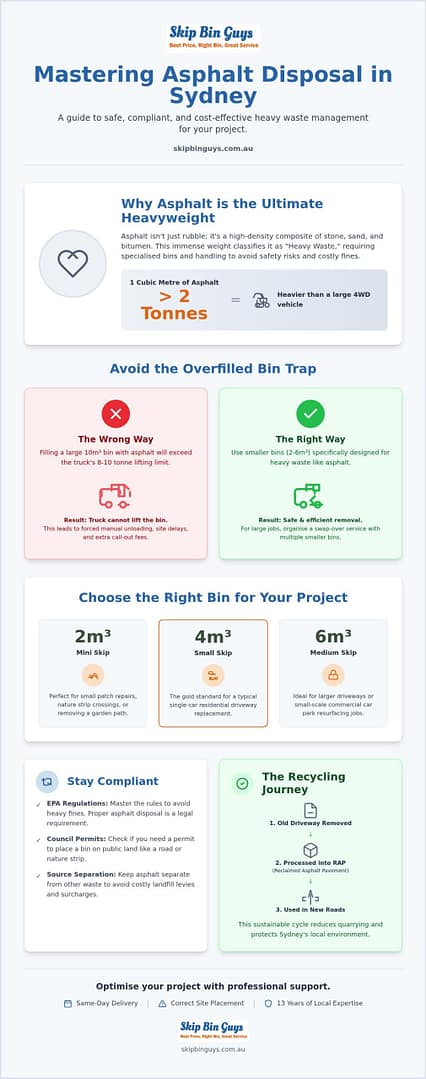
The Recycling Journey: Transforming Waste into New Roads
Once our trucks leave your site, the real work begins at the recycling facility. Your old driveway or car park isn’t just “rubbish” anymore; it’s a valuable raw material destined for a second life. The first step in this journey involves rigorous sorting and screening. Workers and machines remove any contaminants like dirt, clay, or stray vegetation that might have been scooped up during the demolition. This cleaning process is vital because the higher the purity of the load, the more effectively it can be repurposed into high-grade construction materials.
Next comes the crushing phase, where large slabs of asphalt are fed into industrial crushers. These machines break the material down into specific aggregate sizes, creating a product known as Recycled Asphalt Pavement (RAP). In Sydney, RAP is a critical component for modern infrastructure. It’s often mixed with virgin bitumen to create fresh road surfaces that are just as durable and reliable as those made from entirely new materials. By choosing a responsible partner for asphalt disposal Sydney, you’re ensuring your waste stays out of the ground and back on the road.
Embracing this circular economy is a win for everyone involved. It keeps your project costs down and reduces the strain on our local environment. If you’re ready to clear your site and support these local recycling efforts, you can book your hard waste recycling bin today and let us handle the logistics of the recycling journey for you.
Benefits of Recycled Asphalt Pavement (RAP)
RAP is a game-changer for local infrastructure projects. It generally offers a lower cost profile compared to virgin aggregates, which helps keep large-scale construction overheads manageable. From a performance standpoint, RAP has a proven track record in Sydney’s fluctuating weather conditions. It offers excellent thermal stability and water resistance, making it a preferred choice for everything from suburban streets to heavy-duty industrial hardstands. Because the bitumen in the old asphalt is reactivated during the mixing process, the final product maintains incredible durability.
How You Support Sustainability
By choosing to recycle, you’re helping conserve Australia’s natural bitumen and stone resources. Every tonne of RAP used is a tonne of virgin aggregate that doesn’t need to be quarried from the earth. This significantly lowers the carbon footprint of asphalt disposal Sydney by reducing the energy required for mining and long-distance transport. For commercial contractors, using recycled materials is often a mandatory requirement for “Green Building” tenders. Meeting these sustainability targets not only helps the planet but also positions your business as a socially responsible leader in the Sydney construction market.
Booking Your Asphalt Disposal with Skip Bin Guys
Finding a partner for asphalt disposal Sydney projects shouldn’t feel like a gamble. We’ve spent over 13 years refining our services to meet the specific needs of the Sydney construction industry. Our team understands that when you’re ripping up a driveway or repairing a car park, you don’t have time to wait around for a bin that might never arrive. We’ve built our reputation on being the reliable, family-owned choice for heavy waste skips that other companies often find too difficult to manage. You get the peace of mind that comes with local expertise and a genuine passion for service.
Timing is everything on a busy worksite. If you realise mid-morning that you’ve got more rubble than expected, don’t panic. Our same-day delivery service is a genuine game-changer for local tradies and homeowners. As long as you place your order before 10:30 am, we’ll do our absolute best to get a bin to your Sydney metro site that very same day. This speed ensures your project stays on track and your site remains clear and safe for your crew, preventing unnecessary downtime.
We also believe in complete transparency. There’s nothing worse than getting a bill at the end of a job that’s loaded with hidden “heavy weight” surcharges. Our pricing is straightforward and honest. We’ll help you select the right bin size from the start so you know exactly what to expect. Our friendly local experts are always just a phone call away to provide the guidance you need. We’ll ensure you never pay for space you don’t use or get caught out by weight limits.
Our Sydney Service Area
Our delivery network covers a massive range of suburbs, with a particular focus on Western Sydney, Parramatta, Penrith, and the Hills District. Whether you’re working on a sprawling commercial site or a residential project with a narrow driveway, our experienced drivers have the skills to place your bin exactly where you need it. We understand the logistics of tight urban sites and offer flexible hire durations that can be tailored to your specific project timeline. This flexibility makes asphalt disposal Sydney wide easier than ever before.
How to Book Your Skip Today
Getting your waste sorted is as simple as a quick phone call or a few clicks online. Before we arrive, make sure your site is ready by clearing a flat, solid space for the bin and checking for any low-hanging branches or power lines. If you’re ready to get started, you can Get a quote for your asphalt disposal today! and experience the difference that 13 years of local expertise makes for your next project. We’re here to help you get the job done right.
Ready to Clear Your Site and Start Your Next Project?
Managing a construction project is tough enough without the headache of waste logistics. By choosing the right bin size and sticking to EPA-approved recycling yards, you’ve already won half the battle. You now know that asphalt disposal Sydney doesn’t have to be a source of hidden fees or legal stress. It’s about partnering with experts who understand the weight of the job and the importance of sustainability. Each load we collect supports a circular economy that keeps our city moving forward.
With over 13 years of local expertise, we’re here to make your site cleanup as smooth as possible. We ensure every load goes to an EPA-approved recycling centre, turning your old driveway into tomorrow’s roads. If you’re ready to get moving, remember that we offer same-day delivery for all orders placed before 10:30 am. Don’t let heavy waste slow down your progress. Book Your Asphalt Skip Bin Now and experience a hassle-free service that keeps your project on track. We’re looking forward to helping you get the job done right.
Frequently Asked Questions
Can I mix concrete and asphalt in the same skip bin?
Yes, you can definitely mix concrete and asphalt in the same bin as they both fall under the heavy waste category. This is common for driveway renovations where both materials are present. While mixing them is allowed, ensure no other “light” waste like timber or plastic is added. Keeping the load clean ensures it can be processed efficiently at the recycling yard, helping you avoid extra sorting fees.
What is the maximum weight limit for an asphalt skip bin?
Most heavy waste trucks in Sydney have a lifting capacity between 8 and 10 tonnes. This is why we limit asphalt bins to a maximum size of 6 cubic metres. If you fill a larger bin with dense asphalt, the truck physically won’t be able to lift it off the ground. Always keep your load level with the rim to ensure we can transport it safely and legally on public roads.
How much notice do I need to give for an asphalt skip delivery in Sydney?
We pride ourselves on being fast and responsive. If you call us before 10:30 am, we can usually provide same-day delivery for your asphalt disposal Sydney project. For bookings made later in the day, we generally guarantee delivery within 24 hours. Providing as much notice as possible is always helpful during peak periods, but we’ll always do our absolute best to accommodate your urgent site requirements and keep your project moving.
Will the heavy skip bin damage my driveway or the nature strip?
Heavy skip bins can place significant pressure on surfaces, especially when full of asphalt. To protect your driveway or nature strip, we recommend placing timber planks underneath the bin to distribute the weight more evenly. Our drivers are highly experienced at navigating tight spaces, but placing a heavy bin on soft soil or cracked concrete is risky. It’s always best to choose the most solid, level ground available for the drop-off.
What happens if I accidentally put hazardous material in the asphalt bin?
If hazardous materials like asbestos or chemicals are found in the bin, we cannot legally collect it. The load will be rejected, and you’ll need to hire a specialised hazardous waste removalist to clear the bin before we can take the asphalt. This can lead to significant delays and extra costs. Always double-check your waste before loading it to ensure your project stays compliant with local environmental regulations.
Do I need to be home when the skip bin is delivered or collected?
You don’t need to be on-site for delivery or collection as long as our driver has clear, unobstructed access to the drop-off point. Just ensure there are no locked gates, parked cars, or low-hanging branches in the way. If you have specific instructions for bin placement, let us know during the booking process or leave a clear marker on the ground. This makes the process hassle-free for everyone involved.
How long can I keep the skip bin on my site for an asphalt project?
Our standard hire period is typically 7 days, which provides plenty of time for most residential and commercial projects. However, we understand that site delays happen and timelines can shift. If you need the bin for a longer duration, just give us a call to organise an extension. We’re committed to being a flexible partner for your asphalt disposal Sydney needs, so we’ll always work with you to suit your project’s unique schedule.
Is recycled asphalt as good as new asphalt for my driveway?
Recycled asphalt, or RAP, is an excellent choice that offers comparable durability to virgin materials for many applications. It’s particularly effective for driveway bases and hardstands because it compacts well and handles Sydney’s weather conditions effectively. While it might have a slightly different texture than fresh hot-mix, it’s a cost-effective and sustainable alternative. Many large-scale civil projects across the city now prefer recycled aggregates for their impressive performance and lower environmental impact.