
Did you know that demolishing even a small structure without the correct paperwork in Sydney can now lead to fines exceeding A$50,000? It’s a sobering figure that highlights just how serious local authorities have become about site management in 2026. If you’re feeling overwhelmed by the maze of council permits or the fear of hidden costs for heavy materials like concrete and dirt, you’re certainly not alone. It’s frustrating to watch your project budget get eaten up by waste levies and disposal fees when you simply want a clean site ready for its next chapter.
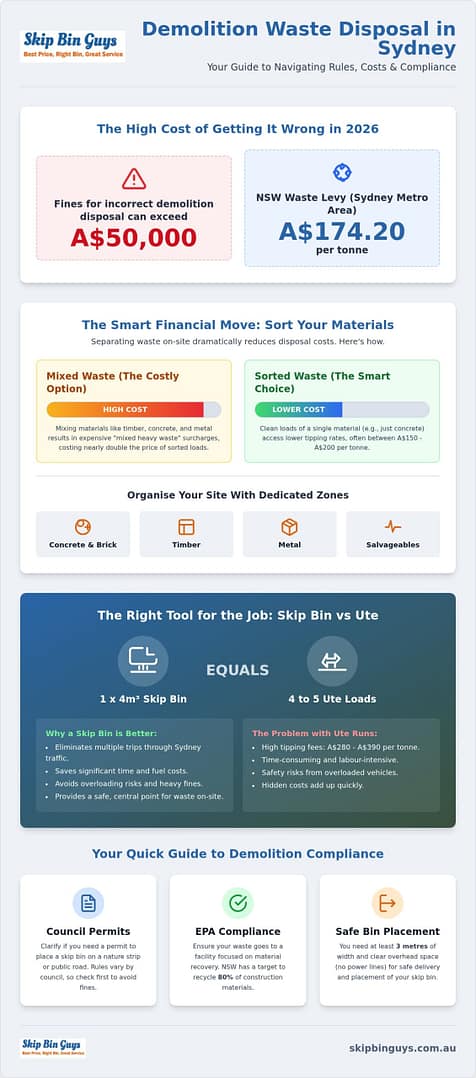
This guide is designed to take the guesswork out of demolition waste disposal Sydney, giving you a clear roadmap to manage your materials efficiently while staying fully compliant with the latest EPA regulations. We’ll explore how to navigate the current A$174.20 per tonne NSW Waste Levy, distinguish between DA and CDC requirements, and implement sorting strategies that maximise your recycling rates to protect both the environment and your bottom line. Whether you’re clearing a backyard shed or a multi-storey site, we’ll help you get the job done right.
Key Takeaways
- Organise your site with dedicated zones for concrete, brick, and timber to significantly reduce mixed-waste surcharges and streamline your cleanup.
- Clarify whether you need a council permit for your skip bin and learn how to navigate the 2026 rules for placing bins on nature strips or public roads.
- Master the logistics of demolition waste disposal Sydney by accurately estimating your waste volume and selecting the right skip size for heavy, high-density materials.
- Ensure your project stays EPA-compliant by tracking where your waste goes and prioritising facilities that focus on genuine material recovery.
- Avoid the hidden costs of heavy waste by understanding the specific weight limits and disposal requirements for site-clearing debris like dirt and rubble.
Understanding Demolition Waste in Sydney: What You Need to Know
Ever wondered why your neighbours meticulously sort bricks into one pile and timber into another during a renovation? It isn’t just about being tidy; it’s a strategic move to manage costs and comply with strict local laws. To put it simply, demolition waste disposal Sydney involves the systematic removal and recycling of debris from building sites, including materials like concrete, tiles, bricks, and metal. Because NSW generated a staggering 12.7 million tonnes of construction and demolition waste in recent years, the government has implemented rigorous rules to ensure as much as possible is diverted from landfill.
If you’re looking for a quick definition, here’s what you need to know: Demolition waste disposal is the process of collecting, transporting, and processing debris from the destruction of structures. In Sydney, this process is governed by the NSW EPA to maximise resource recovery, with a current state target of recycling 80% of all construction materials. Understanding what is demolition waste helps you identify which items can be salvaged for a lower fee and which require more expensive, specialised handling.
The financial incentive for sorting is significant. With the NSW Waste Levy for the Sydney metropolitan area set at A$174.20 per tonne for the 2025-2026 period, every kilogram of “mixed waste” you send to the tip costs you more. By separating heavy materials like clean concrete or bricks, you can often access lower tipping rates of A$150 to A$200 per tonne, compared to nearly double that for mixed loads.
The Difference Between Heavy Waste and General Rubbish
Why can’t you just throw everything into one big bin? Heavy waste, such as concrete, bricks, and dirt, is incredibly dense. A standard skip bin filled with these materials can quickly exceed the safe lifting capacity of a truck if it isn’t a dedicated “Heavy Waste” bin. Mixing light general rubbish like cardboard or old furniture with heavy rubble often leads to “mixed waste” surcharges. To keep your demolition waste disposal Sydney project on budget, it’s vital to use specific bins for high-density materials. This ensures your site stays safe and your disposal costs remain predictable.
Why a Skip Bin is Better Than a Ute Run to the Tip
You might think a few trips in the ute will save you money, but the maths rarely adds up. Consider the time spent driving through Sydney traffic, the fuel costs, and the A$280 to A$390 per tonne tipping fees for mixed demolition loads. A single 4m³ skip bin holds roughly the same as four or five level ute loads. By choosing a central disposal point on your site, you eliminate the risk of driving an overloaded vehicle, which is a major safety concern and a magnet for heavy fines. It’s about working smarter, not harder, to keep your site clear and your project moving.
Step-by-Step: How to Manage Your Demolition Site Waste
Managing a demolition project successfully is all about rhythm. If you let the debris pile up without a plan, your site quickly becomes a hazard. Effective demolition waste disposal Sydney starts long before the skip arrives. You need to walk the site and estimate the volume of material you’re dealing with. A standard single-storey house demolition can produce between 40 and 60 tonnes of waste, so having a strategy for where that material goes is vital for keeping the project on track and within budget.
Step 1: Sort Your Materials as You Go
Don’t wait until the end of the day to separate your debris. Creating dedicated piles for timber, metal, and masonry as you work saves hours of back-breaking double-handling later. This isn’t just about being neat; it’s a savvy financial move. Clean masonry loads, consisting of only bricks and concrete, are significantly cheaper to dispose of than mixed loads. While you’re at it, keep an eye out for salvageable items. Old hardwood beams, period windows, or copper piping can often be sold or donated, which reduces your overall waste volume and helps the environment.
Step 2: Choosing the Right Placement for Your Bin
Sydney’s tight streets and leafy suburbs present unique challenges for delivery trucks. You’ll need at least 3 metres of width and a clear approach for the driver to place the bin safely. If you’re putting the bin on your driveway, consider laying down some thick timber planks to distribute the weight and protect the surface from scratches or cracks. Always look up before the truck arrives. Low-hanging power lines or overhanging branches can prevent a driver from being able to lift or drop the bin, leading to frustrating delays and potential call-out fees.
Step 3: Loading the Bin for Maximum Efficiency
The “Heavy First” rule is the golden law of site cleanup. Always place your densest materials, like concrete blocks and bricks, at the very bottom. This keeps the skip stable during transport by lowering the centre of gravity. To get the most out of your construction skip bin hire, slide flat items like plasterboard along the internal sides and break down large timber offcuts to fill the gaps. Remember the “level load” rule; anything poking out above the rim is a safety risk and can lead to heavy fines if the truck is pulled over by the police or the EPA on the way to the yard.
A final site sweep is your last line of defence. Before the truck pulls away, ensure no hazardous materials have accidentally been tossed into the pile. Identifying these early prevents your entire load from being rejected at the recycling centre, which is an expensive and stressful mistake to fix. By following these logical steps, you ensure a cleaner site, a safer workplace, and a much smoother disposal process.
Selecting the Right Skip Bin for Concrete, Brick, and Dirt
Are you planning to fill a massive 10-cubic-metre bin with solid concrete? Think again. One of the most common mistakes in demolition waste disposal Sydney is assuming that bigger is always better. While a large bin might look like the perfect solution for a site clear-out, the reality of physics and truck lifting capacities often dictates otherwise. Because materials like concrete, brick, and dirt are incredibly dense, they require specialised handling and strict adherence to weight limits to ensure they can be safely transported across Sydney’s roads.
Most skip bin providers limit heavy waste loads to smaller or mid-sized bins, typically between 2m³ and 6m³. Why? A single cubic metre of wet soil or solid concrete can weigh up to 1.5 tonnes. If you were to fill a 10m³ bin to the brim with rubble, it would weigh well over 15 tonnes, far exceeding what a standard Marrel skip truck can legally lift. For larger projects, you might need a hook lift bin, which is slid off the back of a larger truck rather than lifted by chains. For more detailed advice on managing large-scale site debris, check out our Construction Skip Bin Hire Sydney Pillar guide.
Heavy Waste Bin Comparison: Concrete vs. Mixed Demo
Choosing the specific waste type for your bin is the secret to keeping your costs down. If you’re doing a small bathroom renovation, a residential skip bin for mixed heavy waste might be sufficient. However, for larger teardowns, separating your materials is vital. If your project involves a mix of structural debris and lighter materials from interior strip-outs, our guide to choosing the right skip bin for renovation waste can help you navigate the overlap between demolition and renovation rubbish to avoid costly surcharges.
| Waste Type | What’s Allowed | Best For |
|---|---|---|
| Concrete Only | 100% clean concrete (no rebar/mesh) | Driveway or slab removals. |
| Brick & Concrete | Bricks, roof tiles, and concrete | Wall demolitions and masonry work. |
| Mixed Heavy Waste | Dirt, bricks, concrete, and timber | Full site clear-outs and excavations. |
Estimating Your Waste Volume
How do you avoid the “second bin” blues? We use the “Wheelbarrow Rule” to help our customers visualise volume. A standard 100-litre builder’s wheelbarrow is roughly 0.1m³. This means a 4m³ bin will hold approximately 40 level wheelbarrow loads. It’s a simple way to gauge if your pile of rubble will actually fit. If you’re on the fence between two sizes, it’s almost always cheaper to go one size up initially. The cost of upgrading from a 4m³ to a 6m³ bin is significantly less than the price of hiring a second 2m³ bin later because you don’t have to pay for a second delivery and collection trip.
Don’t forget that air pockets are your enemy. When loading demolition waste disposal Sydney bins, place your flat materials like tiles or pavers at the bottom and fill the gaps with smaller rubble or dirt. This ensures you’re paying for waste removal, not for transporting Sydney air.
Navigating Sydney Council Permits and EPA Regulations
Navigating the legal side of demolition waste disposal Sydney doesn’t have to be a nightmare. One of the first questions we get asked is: “Do I actually need a permit?” The answer depends entirely on where your skip bin will sit. If you can fit the bin entirely within your private property, such as a driveway or front yard, you usually won’t need council approval. However, if that bin needs to occupy the nature strip, a parking bay, or the road, you’ll need to lodge an application with your local council.
In 2026, Sydney council permit costs for placing a skip on public land generally range between A$50 and A$200. These fees vary depending on your specific LGA and how long the bin stays on-site. Processing times can take anywhere from a few days to two weeks, so it’s vital to plan ahead. Beyond the paperwork, councils have strict safety requirements to protect the public. You’ll often need to ensure the bin has reflective tape or even flashing lights if it’s staying overnight on a busy street. Ignoring these rules isn’t just a safety risk; it’s an invitation for a compliance officer to issue a costly fine. The same permit rules that apply to demolition projects also affect homeowners managing a skip bin for renovation waste, so it pays to understand the requirements regardless of your project type.
Council Rules Across Sydney Suburbs
Rules aren’t uniform across the city. For instance, Parramatta Council might have different setback requirements compared to the Hills District. In many cases, we can help simplify this process by providing the necessary insurance certificates your council will ask for. If you’re working in the west, our Penrith skip bin guide offers a deeper dive into local specifics for that region. Knowing these quirks beforehand prevents your project from grinding to a halt because of a missing permit.
Avoiding Fines and EPA Penalties
The NSW EPA has ramped up its scrutiny of building sites in 2026. If you’re demolishing a structure without the proper DA or CDC, you could face fines exceeding A$50,000. It’s also your responsibility to ensure your waste is handled by a reputable provider. You need to keep detailed records of where your debris goes, including the disposal location and vehicle registration, as these documents are often required to secure your final Occupation Certificate. To fully understand what makes a provider legally compliant and how to protect yourself from dodgy operators, our guide to EPA compliant skip bin hire Sydney breaks down exactly what to look for in 2026.
A critical warning for any Sydney site: asbestos management. With the NSW Asbestos Plan of Action released in July 2026, there is zero tolerance for incorrect disposal. If you discover suspected asbestos during your demolition, you must stop work immediately and call a licensed specialist. Remember, standard skip bins are not for hazardous materials, and placing asbestos in one can lead to massive decontamination fees and legal trouble. If you’re ready to get your site cleared legally and safely, you can organise your construction skip bin hire with a team that understands the local landscape.
Why Skip Bin Guys is Sydney’s Go-To for Demolition Disposal
After navigating the maze of council permits and the physical demands of sorting heavy debris, you deserve a partner who makes the final step look easy. We’ve spent over 13 years refining our approach to demolition waste disposal Sydney, helping local builders and homeowners clear their sites without the usual stress. Our team doesn’t just drop off a box; we provide a reliable service backed by deep local knowledge and a genuine passion for efficient waste management. We understand that on a demolition site, time is literally money, and a delayed bin can throw an entire project off its rhythm.
Our commitment to the environment is at the heart of everything we do. We exclusively use EPA-approved recycling yards to ensure that your concrete, bricks, and timber are processed for material recovery rather than simply being buried. This focus on sustainability helps your project align with NSW’s ambitious recycling targets while giving you the peace of mind that you’re disposing of waste responsibly. Plus, our transparent pricing model means you won’t be hit with unexpected “heavy waste” surcharges at the end of your hire. We believe in clear communication and honest service from the moment you book until the bin is collected.
Reliable Service Across the Sydney Region
Whether you’re managing a tight-access renovation in the CBD, a suburban teardown in the Hills District, or a major project in Western Sydney, we’ve got you covered. Our drivers are experts at manoeuvring into those tricky Sydney driveways and narrow streets that often leave others scratching their heads. We’ve helped thousands of Sydneysiders manage their renovation and demolition waste, bringing a “can-do” attitude to every job. Our local expertise means we can often advise on specific council quirks or placement strategies that save you time and potential fines.
Ready to Clear Your Site?
We’ve made the booking process as simple as possible so you can get back to the work that matters. You can jump online and secure your bin in under two minutes, choosing the size and waste type that fits your specific needs. If things are moving faster than expected on-site, don’t panic. We offer a same-day delivery guarantee for orders placed before 10:30 am, ensuring your crew always has a central point to load their debris. We’re here to be your reliable ally in keeping your site safe, clean, and compliant. If you’re ready to experience a smoother way to manage your cleanup, Book your demolition skip bin today and let’s get that site cleared together.
Clear Your Site with Confidence
Ready to turn that pile of rubble into a clean, ready-to-build site? Managing demolition waste disposal Sydney effectively comes down to two things: smart sorting and choosing a partner who knows the local landscape. By separating your heavy masonry from general debris and staying on top of council permit requirements, you protect your budget and the environment. It’s about making the disposal process as seamless as possible so you can focus on the next phase of your build.
With over 13 years of local experience, our team is here to take the heavy lifting off your hands. We prioritise EPA-approved recycling facilities to ensure your waste is handled responsibly; we also offer same-day delivery for orders placed before 10:30 am to keep your project moving at pace. Don’t let site cleanup become a bottleneck for your renovation or construction project. You can order your Sydney demolition skip bin online today and experience a service that is as reliable as it is friendly. We’re looking forward to helping you clear the way for your next big project.
Frequently Asked Questions
What items are considered demolition waste in Sydney?
Demolition waste includes all materials generated during the destruction of a building or structure, such as bricks, concrete, roof tiles, timber, and scrap metal. It also covers internal components like plasterboard, floorboards, and glass. Because these items are often heavy and bulky, they require specialised handling and recycling processes at EPA-approved facilities to ensure maximum material recovery and compliance with NSW waste targets.
Do I need a council permit for a skip bin on my driveway in Sydney?
You generally don’t need a council permit if the skip bin is placed entirely within your private property, such as your driveway or front lawn. Permits are only mandatory when the bin needs to sit on public land, including the nature strip, parking bays, or the road. If you’re unsure about space, it’s best to measure your driveway width to ensure our delivery truck has at least 3 metres of clearance for a safe drop-off.
Can I put concrete and dirt in the same skip bin?
Yes, you can combine concrete and dirt in a single bin, but this is classified as a “Mixed Heavy Waste” load. While this is convenient for full site clear-outs, keep in mind that “Concrete Only” bins are often more cost-effective because the material is easier to process for recycling. If you have a large volume of both materials, hiring separate bins might actually reduce your total demolition waste disposal Sydney expenses.
How much does demolition waste disposal cost in Sydney?
The cost of disposal depends on the volume of waste, the type of material, and the total weight of the load. Major factors influencing the price include the NSW Waste Levy, which is A$174.20 per tonne for the 2025-2026 financial year, and tipping fees at recycling centres. To get the most accurate price for your specific job, it’s best to select the correct waste category and bin size during our online booking process.
What happens if I overfill my demolition skip bin?
Overfilling a skip bin creates a significant safety hazard for our drivers and other road users. If a bin is filled above the rim, the driver may be legally required to refuse the collection or ask you to remove the excess material before it can be transported. Overfilled bins can also lead to heavy fines from the police or the EPA if debris falls onto the road, so always aim for a “level load” to stay safe and compliant.
Can I put asbestos in a demolition skip bin?
No, you must never place asbestos or any hazardous materials in a standard skip bin. Asbestos requires specialised handling by licensed professionals and must be disposed of at specific facilities under strict EPA regulations. If asbestos is found in a demolition bin, the entire load will be rejected at the tip, and you’ll face substantial decontamination fees and potential legal action. Always have suspected materials tested before you start your teardown.
How long can I keep a skip bin for my demolition project?
Most demolition skip bins are hired for a standard period of 7 days, which gives you enough time to clear your site at a steady pace. However, we understand that demolition projects don’t always go to plan due to weather or council delays. If you need the bin for a longer period, you can easily organise an extension by contacting our team before your scheduled collection date to ensure your site remains clear and productive.