
Keep plasterboard clean and separate from other waste to help prevent contamination before processing. To understand how to dispose of plasterboard in NSW, sort it away from mixed site waste and arrange a separate collection or disposal route. This helps the material reach an appropriate recycling facility.
Offcuts and damaged sheets can easily end up mixed with general construction debris, especially on a busy site. A simple separation plan makes plasterboard easier to handle and keeps other materials out of the load.
This guide explains how to prevent contamination, set up a designated storage area and organise plasterboard collection from a construction site. It also covers what to consider when choosing a collection option, so you can plan the next step with confidence.
Key Takeaways
- Keep plasterboard separate from mixed waste and use a clearly designated storage area to reduce contamination.
- Plan site collection around the amount and condition of the material, access for loading and how it will be kept apart from other waste.
- Learn why household bin colours aren’t a substitute for a dedicated plasterboard disposal plan.
- Sort clean, wet and contaminated plasterboard carefully, as its condition affects how it can be handled for processing.
Contamination prevention and waste separation
To dispose of plasterboard in NSW, start by separating sheets and offcuts from mixed construction waste. Keep them clean, dry and in a designated storage area. Gyprock plasterboard contains gypsum, paper and small amounts of additives, including starch and detergent. Keeping other materials out helps facilities process it as a separate stream.
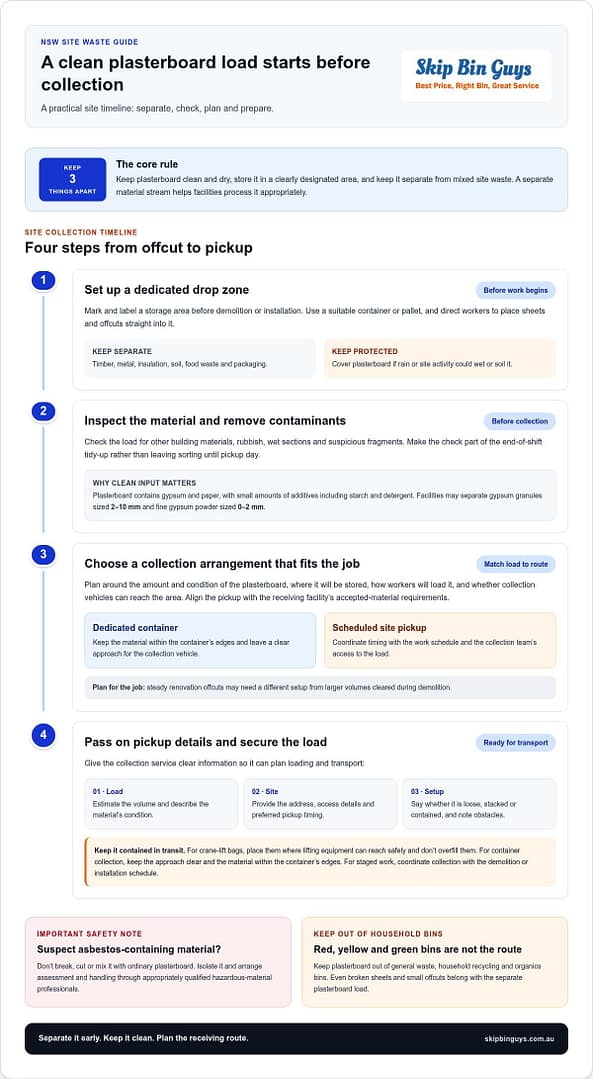
Set up a clearly marked area before demolition or installation begins. Place a suitable container or pallet there, and direct workers to put plasterboard offcuts straight into it. Keep timber, metal, insulation, soil, food waste and packaging separate. Cover the plasterboard if rain or site activity could wet or soil it.
Before collection, inspect the load and remove visible contaminants. Check for other building materials, rubbish, wet sections and suspicious fragments. A site supervisor can make this check part of the end-of-shift tidy-up, rather than leaving sorting until collection day. Recycling facilities may separate gypsum granules sized 2-10 mm and fine gypsum powder sized 0-2 mm, so cleaner input supports processing.
- Keep clean plasterboard in a dedicated, labelled storage area.
- Separate mixed materials as soon as workers remove them.
- Inspect the load before arranging collection.
Suspect asbestos-containing plasterboard or other hazardous material? Don’t break, cut or mix it with ordinary plasterboard. Isolate it and arrange assessment and handling through appropriately qualified hazardous-material professionals.
Illegal dumping can contaminate land and waterways, and unlawful waste disposal can result in penalties in NSW. Don’t leave plasterboard beside roads, in bushland or in an unauthorised pile. Use an appropriate disposal route. Fees for contaminated plasterboard depend on the receiving facility’s requirements and any extra sorting or handling needed. Keeping contaminants out from the start can help avoid a rejected or more complex load.
Plasterboard waste collection from construction sites
Plan collection around the plasterboard volume, site access and intended recycling route. Give the collection service clear information to help coordinate loading and transport.
Recycling facilities and collection options
Recycling facilities process plasterboard as a separate material stream, so organise collection based on the load’s condition and quantity. Options may include a dedicated container or a scheduled site pickup. Before choosing, consider where the waste will be stored, how workers will load it and whether collection vehicles can reach the area. These details help match the collection method to the job.
For example, a renovation site producing steady offcuts may need a different setup from a demolition project clearing larger volumes. Align the pickup plan with the facility’s accepted-material requirements, and don’t combine plasterboard with unrelated debris. The receiving route matters: transport alone doesn’t ensure the material can be recycled.
Collection and transportation
Before arranging collection, estimate the load and note its location, access conditions and preferred pickup timing. Describe whether the plasterboard is loose, stacked or contained, and mention obstacles that could affect vehicle access. This information helps the collection team plan the pickup and choose an appropriate transport arrangement.
Keep the load contained during transport so sheets and fragments don’t fall out. If using crane-lift bags, position them where lifting equipment can reach safely and avoid overfilling them. For a container collection, leave a clear approach for the vehicle and keep materials within the container’s edges.
A simple request process can follow these steps:
- Estimate the plasterboard volume and describe its condition.
- Provide the site address, access details and preferred collection timing.
- Prepare the load and keep the pickup area clear.
For staged work, coordinate collection with the demolition or installation schedule. This helps prevent plasterboard from piling up in active work areas and keeps the transport route clear.
Can plasterboard go in red, yellow or green bins in NSW?
Keep plasterboard out of household red, yellow and green bins. It needs to be separated from household waste and handled as a distinct material for processing. Even a broken sheet or a handful of offcuts belongs with the plasterboard load, not in kerbside recycling or garden organics.
Bin colours help sort common household materials, but they don’t make plasterboard suitable for those streams. Gypsum and paper are its main components, with small amounts of additives. Once mixed with food scraps, bottles or garden clippings, plasterboard is harder to recover as a clean material.
Set aside plasterboard from renovation or building work in a dedicated area. Keep it separate from cardboard, timber, metal and green waste. For example, put removed sheets and cutting offcuts together, and place packaging in its own recycling pile. This makes the plasterboard easier to identify when you arrange disposal.
- Don’t put plasterboard in red general waste bins.
- Don’t place plasterboard in yellow household recycling bins.
- Keep plasterboard out of green organics bins.
If a household project produces only a small amount, don’t break the plasterboard into smaller pieces to fit it into a bin. This can scatter dust and fragments and mix them with other rubbish. Keep the material contained and separate until you arrange an appropriate collection or disposal route.
On a construction site, label the plasterboard storage area clearly so workers don’t mistake it for general rubbish. Include separation in the site clean-up routine and assign someone to oversee it. If other materials get into the pile, remove them before collection. Clean separation helps keep plasterboard suitable for processing.
Household bin arrangements vary between NSW councils, so follow your council’s instructions for ordinary kerbside waste. In every case, keep plasterboard separate and use a disposal route designed to handle it.
How is clean plasterboard different from contaminated or wet plasterboard for disposal?
Clean plasterboard means dry, identifiable sheets or offcuts without unrelated rubbish attached. Its gypsum and paper components are easier to process when the load stays separate. Wet sheets, food-stained pieces or board mixed with timber and insulation may need extra sorting and may not suit the same recycling route.
Water changes plasterboard’s condition. A sheet left in the rain can become soft, heavier to handle and more likely to crumble during loading. Keep it covered and off wet ground. If some pieces get damp, separate them from dry board rather than letting moisture spread through the pile.
Contamination can come from demolition debris, packaging, soil, paint or other building materials. Before collection, inspect the load and remove anything that isn’t plasterboard. For example, take timber offcuts and plastic wrapping out of the stack and place them in separate waste streams. Don’t assume a facility will remove small amounts of mixed rubbish during processing.
Use this simple sorting check:
- Clean and dry: keep together as the preferred plasterboard stream.
- Wet or damaged: isolate from dry pieces and describe its condition when arranging disposal.
- Mixed or dirty: remove visible contaminants and separate materials before collection.
At a site, mark separate areas for dry board, damp pieces and other waste. This helps workers place each material correctly as they go, instead of sorting a mixed pile later. Keep green clippings apart too, as they aren’t plasterboard; arrange green waste disposal for that separate material.
Before pickup, check the material’s condition and accurately describe any wet or contaminated sections. The receiving facility’s requirements and the extent of contamination determine whether extra sorting or another handling route is needed. A careful inspection helps avoid presenting mixed or damp material as clean plasterboard.
Skip Bin Guys: Residential Skip Bin Hire
Skip Bin Guys helps manage renovation waste with Residential Skip Bin Hire, and offers Construction Skip Bin Hire for building projects. If your job produces plasterboard alongside other debris, plan a separate plasterboard stream first, then use a skip bin for suitable remaining waste. Sorting materials makes the site easier to manage and supports the right disposal route for each load.
For a home renovation, consider the mix and volume of waste before arranging collection. Skip Bin Guys offers a range of bin sizes, and orders placed before 10:30 am can benefit from same-day delivery. Keep plasterboard separate rather than assuming it belongs in a mixed load.
For practical help with renovation waste, contact Skip Bin Guys or visit skipbinguys.com.au.
Set up your next site waste plan
Make waste planning part of the job setup, not a task for the final clean-up. Decide who will manage collection, where materials will be staged and how access will stay clear as work progresses. Assigning one person to oversee these details can keep the site moving and help avoid rushed decisions at handover.
Knowing how to dispose of plasterboard in NSW is one part of a broader site plan. Consider other waste streams, such as general renovation debris or green waste, and arrange suitable handling for each. Skip Bin Guys offers residential and commercial skip bin hire, as well as green waste disposal, for different project needs.
For a practical next step, contact Skip Bin Guys about skip bin hire and discuss the waste needs of your project. A clear plan helps you start the work with greater confidence and keep the site organised as it progresses.
Frequently Asked Questions
How should plasterboard be disposed of in NSW?
Separate plasterboard from general renovation waste, then arrange a collection or disposal route that handles it as a distinct material. Keep the load dry and free of unrelated debris, and describe its condition when arranging transport. For a small home project, gather offcuts in one contained area rather than putting them in household bins. Keep suspected asbestos-containing material isolated from ordinary plasterboard.
Where can NSW residents take plasterboard for disposal or recycling?
Find a waste or recycling facility that accepts plasterboard, or arrange a collection suited to the project. Acceptance depends on the facility’s material requirements, so identify the load as plasterboard and describe whether it is clean, wet or mixed. Don’t assume a general household drop-off point is suitable simply because it accepts other renovation materials.
Which NSW waste facilities accept plasterboard, and what are their fees?
Plasterboard recycling facilities process this material, but acceptance requirements and fees differ. The load’s cleanliness, moisture, quantity and need for extra sorting can affect handling and charges. Before travelling, find a facility that accepts plasterboard and review its current conditions and fees. Keep the material separate during transport so it can be assessed more easily on arrival.
Can plasterboard be recycled in NSW, and how should it be prepared?
Yes, plasterboard can be recycled if it reaches a facility equipped to process it. Keep sheets and offcuts together, remove unrelated items such as timber or packaging, and protect the load from rain. Don’t mix clean board with wet or visibly contaminated pieces. If the material’s condition changes during storage, separate affected pieces before arranging transport.
What are NSW rules for disposing of plasterboard from home renovations or building sites?
For a renovation or building project, keep plasterboard separate and use a disposal route suited to the material. Household kerbside arrangements vary between NSW councils, so don’t assume a local bin accepts renovation offcuts. On a worksite, assign responsibility for sorting and storage so plasterboard doesn’t end up in mixed debris. Keep suspected asbestos-containing material separate from ordinary plasterboard.
Can plasterboard be disposed of in a skip bin in NSW, and what restrictions apply?
Whether plasterboard can go in a skip bin depends on the bin’s accepted-waste conditions. Don’t assume it is accepted alongside mixed renovation debris; keep it separate unless the bin’s terms allow it. Skip Bin Guys does not accept asbestos or other hazardous waste in its bins. Customers are responsible for the bin’s contents, and no material may protrude above the rim.