
A deceased estate clean-out needs more than one pile for everything. Sort belongings into items to keep or store, donate or give away, sell, and dispose of. Suitable furniture, household goods and construction debris can go in a skip bin. For deceased estate skip bin hire in Sydney, sorting carefully helps you identify what belongs in the bin and what needs a different kind of handling.
Clearing a home while making thoughtful decisions about personal belongings can feel challenging. A skip bin gives you a central place for suitable waste, while sorting first helps protect sentimental items and personal documents from being discarded by mistake.
This guide covers what can and can’t go in a skip bin, how to choose a size based on the rooms and property being cleared, and how to plan delivery and collection. You’ll also find practical steps for separating garden waste and identifying items that need different disposal arrangements, so you can organise the clean-out with greater clarity.
Key Takeaways
- Separate items that need different handling, such as paint, chemicals, batteries and gas bottles, from general clean-out waste.
- Estimate the volume and type of waste before choosing a bin, then adjust your choice for the property’s rooms, sheds and garden.
- Plan bin placement and access before delivery, and coordinate delivery and pickup with the clean-out schedule.
- Use residential skip bin hire for suitable household clean-out waste, and keep garden waste separate to support recycling.
What’s Involved in a Deceased Estate Clean-Up?
Sort belongings before removal to protect valuable items and keep restricted waste out of the bin. A clear timeline also helps you plan what the skip bin can collect.
Accepted estate items
Suitable furniture, household goods and construction debris can go in a skip bin. Before loading bulky pieces, assess their size and condition, and break them down where practical to use the space efficiently. First sort belongings into keep or store, donate or give away, sell, and dispose categories. This helps protect items the family wants to retain.
Hazardous, bulky and recyclable waste
Keep paint tins, chemicals, gas bottles, batteries and oils separate from general rubbish. Return BBQ gas bottles to a swap point; take paint, chemicals and liquids to a council Community Recycling Centre or chemical collection. Batteries belong at a B-cycle collection point because they pose a fire risk in bins and trucks. E-waste and appliances also need a council e-waste drop-off or recycling scheme point, not a skip.
Separate suitable garden waste from general rubbish to support recycling. Green waste disposal and hard waste recycling are options for suitable materials, while bulky furniture and household goods can be sorted for reuse or disposal. Where practical, avoid mixing recyclable material with rubbish.
Disposal timing and executor risks
Skip Bin Guys’ standard hire period is seven days, with collection on the eighth day. Extensions are at the company’s discretion and subject to bin availability. A council permit may be required if the bin is placed on a road, footpath or nature strip, so factor that into your timeline. Secure sentimental items and personal documents before disposal, and identify potentially hazardous materials before loading begins.
Older homes built before the late 1980s are a common place to find asbestos and fibro. Don’t disturb suspected material: asbestos disposal requires a licensed removalist. A deceased estate clean is safer when the family sorts belongings carefully, separates restricted waste, and keeps debris contained rather than scattered around the property.
Choosing a skip bin size for an estate clearance
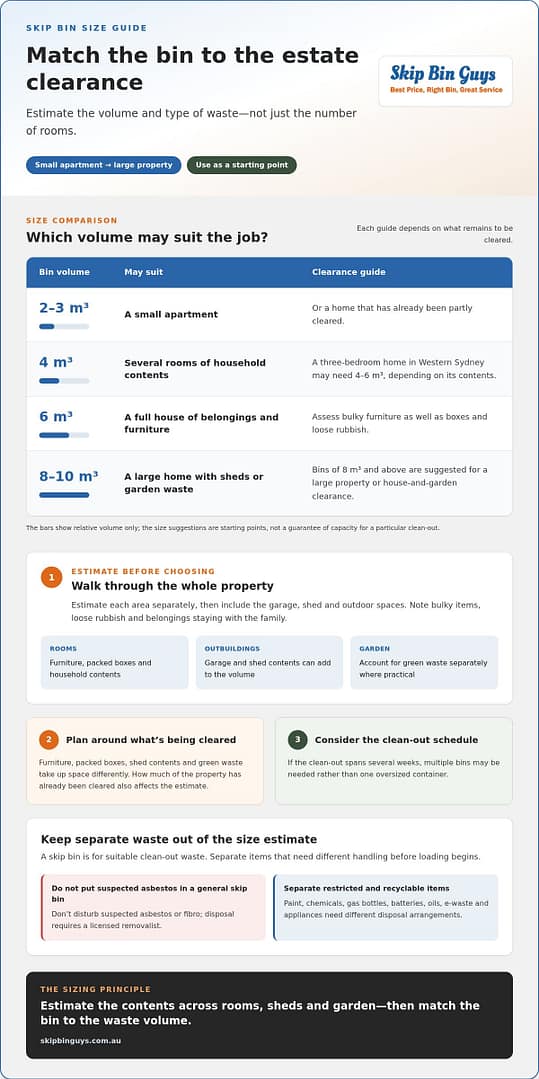
Choose a bin based on the volume and type of waste, not simply the number of rooms. Furniture, packed boxes, shed contents and green waste take up space differently. Estimate each area room by room to plan handling and disposal before clearing begins.
Use these size guides as a starting point, then consider how much of the property has already been cleared:
- A 2-3 m³ bin may suit a small apartment or a partially cleared home.
- A 4 m³ bin is suggested for clearing several rooms of household contents.
- A 6 m³ bin may suit a full house of belongings and furniture.
- An 8-10 m³ bin may suit a large home with sheds or garden waste. Bins of 8 m³ and above are suggested for a large property or house-and-garden clearance.
Walk through each room and note bulky items, loose rubbish and items staying with the family. Include the garage, shed and outdoor areas in your estimate. A three-bedroom home in Western Sydney may need a 4-6 cubic metre bin, but the contents matter as much as the number of bedrooms.
For an estate clean-out in Sydney, estimate the volume from the rooms, outbuildings and garden separately. If the clean-out spans several weeks, you may need multiple bins rather than one oversized container.
Keep suitable green waste separate from general rubbish where practical to support recycling. Never put asbestos in a general skip bin; suspected material needs separate, safe handling. Make sure everyone helping with the clearance knows what is and isn’t allowed in the bin before loading starts.
Once you’ve estimated the volume, review bin size options and match the choice to the waste you’re clearing.
Do I need to be at the property for delivery and pickup?
You don’t need to be at the property for delivery and collection if placement and access are arranged beforehand. In Sydney, a council permit may be required to place a skip bin on a road, footpath or nature strip.
Safe placement and delivery access
Choose a firm, level spot where the bin won’t block access. Before delivery, check the driveway, gates and turning space, and clear the route of vehicles and other obstacles. Keep the area clear of overhanging trees and power lines to help ensure safe delivery. If you prefer the garage, make sure its entrance and approach are unobstructed.
Keep the bin clear of entrances, paths and areas where people will carry materials. If there’s no suitable on-site position, plan for public-land placement and arrange any required council permit before delivery. Clear instructions about the drop-off point help the operator place the bin as intended.
Booking and delivery coordination
Coordinate delivery and collection with the estate clean-out. Book for when sorting is complete and suitable waste is ready, rather than leaving the bin unused while the family decides what to keep. Arrange collection after loading and leave clear access for the truck.
Same-day delivery is available for orders placed before 10:30 am. This can help when a clean-out moves quickly, but organise the drop-off location and access first. You can be elsewhere during delivery or pickup when the arrangements are clear and the site is ready.
Before delivery, share practical placement details, such as a locked gate or narrow driveway, with the person coordinating the booking. If someone else will be at the property, give them the agreed location and instructions. Clear vehicles, loose materials and household items from the access route, and make sure any obstructing vehicles can be moved.
A council permit may be needed for a bin placed on a Sydney street, footpath or nature strip. Plan for any permit before setting the clean-out timeline, and keep pedestrian access clear. Coordinating the booking, delivery and collection with the property’s access helps the estate clean-out run smoothly.
Skip bin sizes for small and full-property clean-ups
Skip bin hire gives you an on-site container to fill as the estate is cleared. Rubbish removal takes waste away without leaving a bin at the property. In Sydney, companies offering skip bin hire can support estate clean-outs; compare bin sizes, accepted materials, recycling practices, and delivery and pickup arrangements.
Choose capacity according to the rooms and belongings remaining, rather than the home’s bedroom count alone. A 2-3 m³ bin may suit a small apartment or partly cleared property. Several rooms may call for 4 m³, while a 6 m³ bin is suggested for a full house of belongings and furniture. A large property with sheds or a garden may suit 8-10 m³.
For a typical three-bedroom home in Western Sydney, a 4-6 cubic metre bin may be suitable. The contents still matter: packed boxes take less room than bulky furniture, and shed or garden material adds to the total. Estimate each area separately, then combine the volumes to guide your choice.
Time also shapes the plan. A typical estate clean-up may allow one week to sort and document belongings, then 2-3 weeks to arrange sales and donations, followed by one final week to clear what remains. The physical clean-up usually takes 4-6 weeks once probate is granted. If clearing stretches over several weeks, multiple bins may be more practical than one large bin sitting unused.
To keep the clean-out organised, clear one room at a time and record what remains for disposal. Keep suitable garden waste separate from general rubbish where practical to support recycling. Never put suspected asbestos in a general skip bin; it needs separate, safe handling.
For a property clean-out, match the bin volume to what’s left after sorting, then coordinate delivery and pickup with the clearance timeline. Choose a skip bin size for your clean-out.
Skip Bin Guys: Residential Skip Bin Hire
Skip Bin Guys offers residential skip bin hire for suitable household waste from an estate clean-out. Choose a bin size to match the furniture, general rubbish and other accepted material remaining after sorting. Green waste disposal keeps suitable garden material separate, while hard waste recycling supports responsible handling of suitable discarded items.
Skip Bin Guys also offers commercial and construction skip bin hire for clear-outs involving business or building waste. Orders placed before 10:30 am can benefit from same-day delivery, which may suit a clean-out with a tight schedule. Keep hazardous items separate from general skip-bin waste and arrange appropriate handling for them.
Once you’ve sorted the belongings and estimated the waste, contact Skip Bin Guys to arrange a suitable residential bin for the clean-out.
Make the next clean-out visit count
Before the next visit, prepare a brief handover note for everyone helping. Record who is coordinating the work, which areas are ready, and which decisions still need the family’s attention. A shared plan can prevent duplicated effort and make each visit more purposeful, especially when relatives can’t attend at the same time.
For deceased estate skip bin hire in Sydney, match your clean-out plan to a residential bin suited to the waste you intend to remove. Skip Bin Guys can arrange residential skip bin hire as the property clearance progresses, with green waste disposal for suitable garden material.
When you’re ready to plan the next step, contact Skip Bin Guys to discuss your clean-out. Bring your preferred timing, access details and an estimate of the material to be cleared. A little preparation makes it easier to turn a difficult task into a manageable set of decisions, one visit at a time.
Frequently Asked Questions
What Can Go in Your Skip Bin?
Suitable furniture, household goods, construction debris and garden waste can go in a skip bin. Don’t put appliances or e-waste in the bin; take them to an appropriate council collection or recycling point. Food, liquids, hazardous waste, asbestos, paints, poisons, oils and gas bottles are prohibited. Keep waste below the rim, with nothing protruding over the top.
Are there any hidden fees or charges customers should be aware of?
The hire price includes delivery of the selected bin, collection after the hire period, and waste processing and disposal at EPA-approved recycling facilities. Extra charges may apply if the bin is overloaded and an additional bin is required, or if a council permit is needed for public-land placement. A cancellation fee applies only if the driver has left the yard and is travelling to the site.
Are there restrictions on hazardous or bulky items with these service options?
Yes. Hazardous waste, liquids, asbestos, paints, poisons, oils, gas bottles and food stuffs must not go in a Skip Bin Guys bin. If hazardous waste is present, call Skip Bin Guys before loading. Bulky furniture can be loaded only if it fits safely within the selected bin. Don’t overload it or allow material to sit above the rim.
How can customers ensure their waste disposal meets council requirements?
For a bin on a Sydney road, footpath or nature strip, arrange any council permit required for that location. Keep the bin within the approved position and follow placement directions. For a private driveway, provide clear truck access and choose a level spot clear of overhanging trees, power lines and other obstacles. A seven-metre clearance is required beneath overhanging trees or power lines.
What skip bin sizes are available in Sydney for deceased estate clear-outs?
Skip Bin Guys has bins ranging from 2 to 30 cubic metres, with common sizes including 3, 4, 5 and 6 cubic metres. Estimate the volume of waste after sorting, including furniture and any suitable garden material. For easier loading by wheelbarrow, that access is available on the 3, 4, 5 and 6 cubic metre bins.
How much does deceased estate skip bin hire cost in Sydney?
The price for deceased estate skip bin hire in Sydney depends on bin size and waste type. The quote reflects the selected bin and hire arrangements. Consider any additional requirements that may affect the total, such as a council permit for public-land placement, an extra bin if the load is overloaded, or a hire extension.