
Filling a skip bin a little too high can turn a straightforward clean-up into a collection problem. The cost of overfilling a skip bin isn’t one automatic penalty: an unsafe load can affect collection, and any charges depend on the hire terms. You may need to make the load safe or arrange another bin, so it’s worth dealing with the issue before collection.
If rubbish sits above the rim, you might wonder whether the bin will be collected and whether loose items could become dangerous on the road. Safe loading limits matter because waste needs to stay secure during lifting and transport, not just fit inside the bin.
This guide explains how overfilling can affect collection and hire costs, what to do if your waste is already at or above the fill line, and how to estimate your load before choosing a suitable bin. It also covers residential, commercial and construction skip bin hire across Sydney, with waste processed through EPA-approved recycling yards.
Key Takeaways
- The cost of overfilling a skip bin depends on the hire terms and what needs to happen before collection, not one standard fee.
- Keep waste contained and stable so the load is safer to handle and transport.
- If rubbish is protruding or the bin is full, consider safe ways to reduce or reorganise the load before collection.
- Estimate the waste and choose a bin suited to its type and volume to help avoid last-minute complications.
- Skip Bin Guys provides residential, commercial and construction skip bin hire across Sydney, with waste processed through EPA-approved recycling yards.
What counts as an overfilled skip bin, and why does it matter?
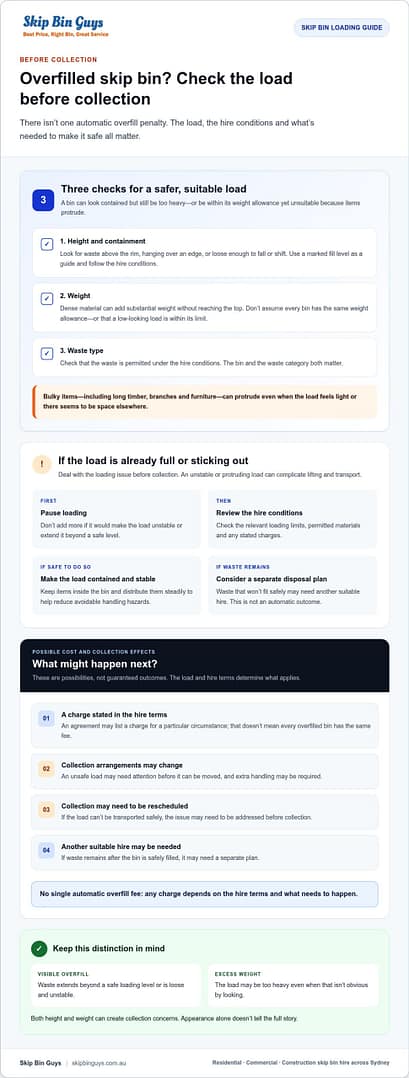
A skip bin can be overfilled even if it doesn’t look packed from every angle. The practical test is whether the waste stays within the bin’s safe loading level and forms a stable, contained load. Rubbish above the rim, hanging over an edge or piled loosely where it could shift are warning signs. If the bin has a marked fill level, use it as a guide and follow the hire conditions.
Capacity also depends on the bin and the type of waste. A light, bulky item can take up space or protrude, while dense material can add substantial weight without reaching the top. Don’t assume every bin has the same weight allowance, or that a low-looking load is within its permitted capacity. A general overview of the container and its uses is available on Skip (container) on Wikipedia.
Visible overfill means waste extends beyond a safe loading level; excess weight is about how heavy the load is and may not be obvious by looking.
How to recognise a load that may be too full
Look for items above the rim, loose waste that could fall out, or a pile that leans or shifts instead of sitting evenly. Long timber, branches, furniture and other bulky objects can extend beyond the bin even when the load feels light or there appears to be space elsewhere. Don’t assume an item sticking out is acceptable just because it seems secure while stationary.
Keep the load contained and stable. If you’re unsure, pause loading and review the hire conditions before adding more.
Why fill limits matter beyond appearance
A skip bin needs to be lifted and transported, so loose, uneven or protruding waste can complicate safe handling. A load that shifts during lifting or travel may spill debris, putting collection workers, nearby people, road users and property at risk. Keeping items inside the bin and distributing them steadily helps reduce these avoidable hazards.
Appearance alone doesn’t tell the full story. A low-looking load of dense material may be heavy, while a high pile of light waste may be unstable. The right capacity depends on both the bin and the waste type. Check the hire conditions for permitted materials and loading limits, and stop adding waste if it would make the load unstable or extend it beyond the safe level. When considering the cost of overfilling a skip bin, remember that the load’s height and weight can create different collection concerns.
How can an overfilled skip bin affect your hire cost?
An overfilled bin doesn’t automatically come with one standard surcharge. What happens next depends on the load, the hire conditions and what’s needed to make the waste safe to handle. Collection arrangements may change, extra handling may be required, or you may need another suitable hire for waste that won’t fit safely. These possibilities can affect your total spend, but none is a guaranteed outcome.
To understand the cost of overfilling a skip bin, distinguish an explicit charge in your hire terms from possible costs involved in resolving an unsafe or unsuitable load. The terms explain any stated charges and conditions. For broader context on hire pricing, the Sydney skip bin hire prices and costs guide outlines the main factors that shape skip bin hire costs.
Possible extra charges versus a fixed overfill penalty
A hire agreement may set out a specific charge for a particular circumstance. That doesn’t mean every overfilled bin attracts the same fee. A load may need attention before it can be moved, and the steps required will vary. Overfilling doesn’t automatically mean the same charge for every hire. Don’t rely on a general fee estimate or assume collection will proceed; the relevant terms and the load itself matter.
When the load could create additional hire or handling needs
If waste remains after the bin is safely filled, you may need a separate plan for that material, such as another suitable hire. If the load can’t be transported safely, collection may need to be rescheduled while the issue is addressed. Neither outcome is automatic, and any related charges depend on the hire terms and what needs to happen.
Keep three questions separate: does the waste extend beyond a safe loading level, is the load within the bin’s applicable weight allowance, and is the waste type permitted? A bin can look contained but still be too heavy, or be within a weight allowance yet unsuitable because bulky items protrude. Both the bin and waste category matter. For Sydney clean-ups, choosing a suitable bin and following its loading conditions can help avoid preventable handling complications.
Review the hire terms for relevant charges and loading conditions, then decide whether the remaining material needs a different disposal plan. This gives you a clearer basis for estimating possible extra spend without guessing at a fee. For a clean-up in Sydney, residential, commercial and construction skip bin hire can help you plan for the waste your project needs to manage.
Overfilled skip bin: which practical option makes sense?
The right next step depends on the issue. Is the load contained but full, sticking out, unusually heavy, or leaving a substantial amount of waste behind? Use this comparison to identify a practical response. It can guide your decision, but it can’t guarantee collection or determine any charge. The bin’s condition and the hire terms still apply.
| Load situation | Practical next step | Possible collection effect |
|---|---|---|
| Contained load, below its applicable limit | Stop loading when safe capacity is reached and check the booked waste category. | The load may be suitable for collection, subject to the hire conditions. |
| Waste protruding or loose | Don’t add more. Only address items if you can do so safely. | Collection may be affected if the load can’t be handled safely. |
| Heavy material | Check the relevant weight conditions instead of judging by height. | The load may need attention even if it sits below the rim. |
| Substantial waste left over | Plan a separate option for the remaining material, such as another suitable hire. | The leftover waste may not fit safely in the current bin. |
If the bin is full but the waste stays below its limit
A level, contained load is different from waste piled above the rim. Once the bin reaches its safe capacity, stop loading rather than trying to squeeze in another item. Check that the material matches the category you booked and meets the hire conditions. For household clean-ups, residential skip bin hire in Sydney can help you plan for the expected volume before work begins.
Consider weight as well as space. Dense building material can be heavy while sitting low, while bulky household items can take up room without adding as much weight. The visible fill level alone won’t tell you whether the load meets the bin’s applicable conditions.
If waste is protruding or the bin seems too heavy
Pause loading. Don’t try to lift or move the bin yourself, and don’t leave loose items where they could fall during handling. If an item needs repositioning, only do so from a stable, safe position. Avoid climbing into the bin or shifting material that could collapse or move unexpectedly.
How to prevent overfill costs before your skip bin is collected
A few decisions made before the bin arrives can help keep your clean-up on track. Estimate the waste, choose a bin that suits its volume and type, load with collection in mind, then reassess before collection. This won’t guarantee a particular collection outcome, but it can help you spot a capacity or safety issue early, rather than when the bin is ready to go.
Estimate the load and choose a suitable hire option
Start with the project: a garden tidy-up, household clear-out and renovation can produce very different waste. Consider large items as well as the overall volume. A couch or dismantled shelving may take up more room than expected, while concrete, bricks or soil can be heavy without filling much space. Match the bin to both the waste type and the amount you expect to dispose of.
If your estimate is close, a larger suitable bin may be a better choice than trying to fit everything into a smaller one. Before putting heavy or unusual material inside, read the accepted waste categories and hire conditions. This helps avoid assuming every material can go into the same bin, or that available space means the load is suitable. For a household clean-up, residential skip bin hire in Sydney can be part of planning the job and its expected waste.
Load with safe collection in mind
As you fill the bin, distribute material steadily and keep items contained. Break down bulky items only where it’s safe and practical; reducing their size can make better use of space, but it won’t make an unstable or overweight load safe. Stop once the safe loading level is reached, even if some waste remains. Don’t pile items above the rim to avoid arranging another disposal option.
Before collection, reassess the load. Check that:
- Waste isn’t sticking out or sitting loosely where it could fall.
- The load is stable and not concentrated heavily to one side.
- The material matches the booked waste category and hire conditions.
- You haven’t assumed weight from the visible fill level.
- Any waste that won’t fit safely has a separate plan.
This check is useful whether the bin is nearly full or appears to have room left. Heavy material can still be a concern below the rim, and bulky items may protrude even when the overall load seems light. If something looks unstable, don’t add more or try to move the bin yourself. Review the hire conditions and address the load safely before collection is due.
Planning the load and choosing a suitable hire option can reduce avoidable collection complications and uncertainty about the cost of overfilling a skip bin. For help organising a residential, commercial or construction clean-up across Sydney, explore skip bin hire options with Skip Bin Guys.
Need help with skip bin hire in Sydney? Plan a safer load
A smoother clean-up starts with a load that’s contained, stable and suited to the bin. If you’re concerned about an overfilled skip, don’t guess at a surcharge or assume collection will go ahead. The hire terms explain applicable charges and loading conditions, while the waste itself determines whether it appears safe and suitable to handle.
Planning ahead can help you avoid last-minute uncertainty. Before arranging a bin, take stock of the project, the amount of waste you expect and the materials you’ll dispose of. Then choose a suitable hire option and keep the load within its safe capacity as you fill it. If the remaining waste won’t fit safely, plan for it separately rather than piling it above the rim.
What to have ready when planning a Sydney skip bin hire
Think through the job before choosing a bin. A home clear-out, garden tidy-up and building project can produce different volumes and types of waste. Note bulky items and materials that may be heavy or unusual, then estimate how much waste the project is likely to generate. These details help match the hire to the job without relying on a guess based on volume alone.
Check accepted waste categories and the relevant hire conditions before loading, particularly if your clean-up includes heavy or unusual material. This helps you plan around what the bin is intended to hold and avoid discovering a mismatch once it’s full. Same-day delivery is available for orders placed before 10:30 am.
A local hire option for a better-planned clean-up
Skip Bin Guys provides residential, commercial and construction skip bin hire across Sydney, with more than 13 years of experience. Friendly support helps make project planning more straightforward, and the hire service includes a satisfaction guarantee. Waste is processed through EPA-approved recycling yards to support responsible processing, while accepted materials depend on the relevant waste category.
Before collection, keep the load contained and stable, and refer to the hire terms for applicable charges. The cost of overfilling a skip bin isn’t one automatic fee, so understanding the conditions and planning for the waste you have can help you make an informed decision.
Ready to plan a safer clean-up? View Sydney skip bin hire options with Skip Bin Guys.
Set your clean-up up for a smooth finish
Before your next clear-out, plan beyond the first load. Think about what you may uncover as you work, where it will go, and whether the waste could change as the project progresses. A little foresight gives you room to adjust your plan instead of making a rushed decision when the bin is nearly full.
If you’re weighing up the cost of overfilling a skip bin, use the hire terms to understand applicable charges rather than relying on assumptions. Base your next step on the actual load and keep collection safety in mind. A well-planned hire can make a busy home, worksite or commercial clean-up more manageable.
Skip Bin Guys provides residential, commercial and construction skip bin hire across Sydney. Explore skip bin hire options across Sydney and plan your clean-up.
Frequently Asked Questions
Can a skip bin be collected if it is overfilled?
Not necessarily. Collection depends on whether the load can be handled and transported safely, as well as the applicable hire terms. For example, a couch cushion balanced above the rim may shift even if the rest of the bin looks settled. Don’t assume the bin can be collected as-is. Review the loading conditions and address protruding or unstable items before collection.
Does overfilling a skip bin always mean an extra charge?
No. An overfilled bin doesn’t automatically attract the same extra charge for every hire. A charge may apply if it’s specified in your hire terms, while other costs could depend on what’s needed to resolve the load or arrange another hire. Refer to the terms for your booking for charge details. General fee estimates may not reflect your particular hire.
What happens if rubbish is sticking out of a skip bin?
Stop adding waste and treat anything protruding as a potential safety and collection concern. A loose length of timber, for instance, could shift or fall during handling, even if it appears wedged in place. Don’t push it down from an awkward position or leave it balanced above the rim. Only reposition it if you can do so safely from stable ground, and follow the relevant hire conditions.
Can heavy waste overfill a skip bin even when it is below the rim?
Yes. Height and weight are separate considerations, so a low-looking load of concrete, bricks or soil may still be heavy. The permitted weight depends on the bin and applicable hire conditions, so don’t infer capacity from the space remaining. Before adding dense material, check the conditions for your hire. If you’re unsure of the load’s weight, stop rather than continuing to fill it.
Can I remove some rubbish from an overfilled skip bin before collection?
You can consider removing waste only if it’s safe to do so from stable ground. Don’t climb into the bin, lean over an unstable pile or try to shift the skip itself. If an item is jammed beneath other material, moving it could cause the pile to collapse. Leave the load alone if it can’t be adjusted safely, and use the hire conditions to guide your next step.
Can I put any type of waste in a skip bin to make more room?
No. Accepted waste categories and hire conditions still apply, even if removing or adding material seems like an easy way to create space. Don’t put hazardous or liquid waste in a bin on the assumption it will be accepted. Separate materials according to the relevant conditions, and keep unsuitable items out. Making room doesn’t make an unaccepted waste type suitable for that hire.
Is a second skip bin cheaper than dealing with an overfilled one?
There isn’t one answer for every clean-up. The cost of overfilling a skip bin depends on the relevant hire terms and what needs to happen with the load; a second bin also depends on its hire conditions and the waste involved. Compare the applicable terms rather than assuming either option will cost less. If substantial waste remains, planning a separate hire may provide a safer way to manage it.