
What if the easiest way to clear old carpet isn’t simply leaving it on the kerb? If you’re searching “how to dispose of old carpet Sydney”, the right option depends on the carpet’s condition, how much you have and what your local council will collect. Rules vary across Sydney, and carpet or underlay can take up more space than you expect.
If you’re managing a renovation or home clean-out, you’ll want a straightforward way to deal with the material. This guide compares reuse, council clean-up and skip bins so you can choose a practical option for your project. You’ll learn how to prepare carpet for collection, why recycling options can be limited for broadloom carpet, and when a skip bin can help bring accepted project waste together. Planning ahead can prevent collection-day surprises and help you choose based on the carpet’s condition and volume.
Key Takeaways
- Start with the carpet’s condition: clean, removable pieces may be suitable for reuse, while damaged or damp carpet is more likely to need disposal.
- Compare council clean-up, council facilities and skip-bin hire to find a suitable route for how to dispose of old carpet Sydney-wide.
- Check your council’s current rules before collection. Accepted items, booking limits and preparation requirements vary between areas.
- Handle carpet carefully: remove fittings with care, separate materials and wear gloves and a dust mask when lifting dusty carpet.
- If carpet is part of a larger renovation or home clear-out, a skip bin can help consolidate accepted project waste.
How to Dispose of Old Carpet in Sydney: Start with Its Condition
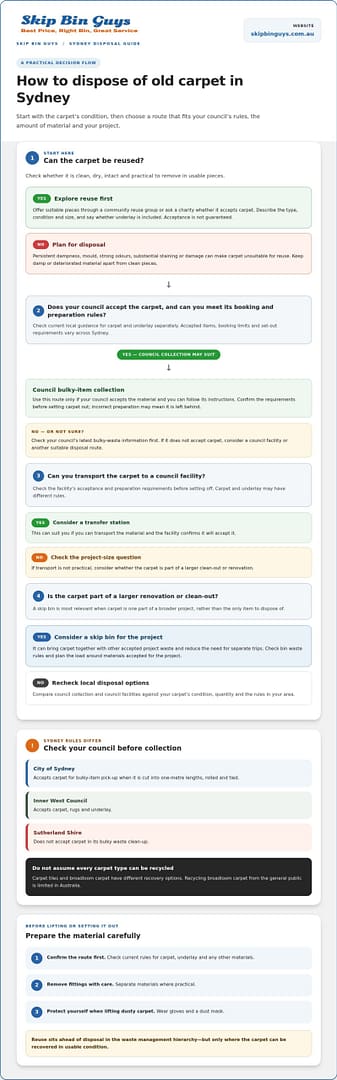
Assess whether the carpet can be reused, then compare council collection, a transfer station and skip-bin hire. Clean, dry carpet that can be lifted without tearing may have a second life. Wet, mouldy, heavily stained or badly damaged carpet is less likely to be suitable for reuse, so focus on an appropriate disposal route. If you’re searching “how to dispose of old carpet Sydney”, start with the condition and quantity of the material.
Carpet and underlay are separate materials, and councils or facilities may have different rules for each. Check acceptance and preparation requirements before transporting anything or setting it out for collection. Carpet tiles and broadloom carpet also have different recovery options. Recycling broadloom carpet from the general public is limited in Australia, so don’t assume every carpet type can be recycled.
Quick decision guide
- Reuse: Consider this for clean, dry, intact carpet that can be recovered in usable pieces.
- Council collection: This may suit eligible carpet, subject to your council’s rules, booking limits and preparation instructions.
- Transfer station: Consider this if you can transport the material, and check the facility’s acceptance requirements before setting off.
- Skip bin: A practical option when carpet is part of a larger clean-out or renovation, alongside other accepted project waste.
Can old carpet be reused or donated?
Reuse is worth exploring if the carpet is clean, dry, intact and practical to remove. You could offer suitable pieces through a community reuse group or approach a charity, but don’t assume they accept carpet. Describe the type, condition and size, and say whether underlay is included when arranging a potential collection. That helps avoid a wasted trip or an unsuitable donation.
This approach reflects the waste management hierarchy, which prioritises reuse ahead of disposal. If the carpet is firmly fixed, fragile or difficult to recover in usable sections, removing it for donation may not be worthwhile.
When is carpet no longer suitable for reuse?
Persistent dampness, mould, strong odours, substantial staining or damage are reasons to reconsider reuse. These conditions can affect whether the material is suitable for someone else or for a recovery option. Separate underlay where practical, and keep damp or deteriorated material apart from clean pieces. Be clear about the carpet’s condition when arranging reuse or disposal.
Once you’ve assessed the condition and quantity, you can compare Sydney collection options. Check the requirements for the route that best fits your carpet and project.
Compare Old Carpet Disposal Options Available Around Sydney
The right option depends on the carpet’s condition, how much you’re removing and how much effort you can take on. Reuse can keep suitable material in circulation. Council collection may suit a smaller amount if your local service accepts it. A council facility gives you more control over drop-off timing, but you’ll need suitable transport and must follow its rules. A skip bin can be convenient when carpet is one part of a larger renovation or clean-out.
Options differ between Sydney local government areas. For example, City of Sydney accepts carpet for bulky-item pick-up when it’s cut into one-metre lengths, rolled and tied. Inner West Council accepts carpet, rugs and underlay, while Sutherland Shire doesn’t accept carpet in its bulky waste clean-up. These examples show why you should check your own council’s current guidance for accepted materials, booking limits, preparation and collection arrangements. Don’t leave carpet on the kerb until you’ve confirmed the collection.
Is Sydney council clean-up suitable for old carpet?
It may be, but council collection isn’t available for carpet everywhere. Eligibility, booking rules and set-out instructions vary, and incorrect preparation can mean your carpet is left behind. Check your council’s latest bulky-waste information before booking, including whether it accepts underlay as well as carpet. If it doesn’t, compare reuse, a council facility or another suitable disposal route.
For a broader look at planning a household clean-out, read this residential skip-bin hire guide. The Carpet Institute of Australia also provides information on carpet sustainability, including reuse and disposal considerations.
When does a skip bin make more sense?
A skip bin is worth considering when removed carpet is part of a larger renovation, rather than the only item to dispose of. It can bring carpet together with other accepted project waste and reduce the need for separate trips. Bin waste rules apply, so plan the load around the materials accepted for the project. Skip Bin Guys provides residential and renovation-related skip-bin hire across Sydney, with delivery, collection and waste processing included.
For practical cost factors, see the Sydney skip-bin price guide. If carpet is part of a broader clean-out, residential skip bin hire can help consolidate accepted project waste in one place.
Prepare Carpet for Sydney Collection or Disposal Without the Guesswork
A useful answer to “how to dispose of old carpet Sydney” includes planning how to handle it, not just choosing where it goes. Confirm the disposal route and its instructions first, then remove fittings carefully, separate materials and arrange collection or drop-off. Preparation depends on whether you’re using a council service, a facility or a skip bin.
- Confirm the route: Check current rules for carpet, underlay and any other materials you’re disposing of.
- Remove fittings safely: Take care with gripper strips, nails and metal edges, which can have sharp points.
- Separate materials: Keep carpet, underlay, fittings and general renovation debris apart where the chosen route requires it.
- Arrange collection or transport: Follow set-out or loading directions, and keep bundles clear of accessways until they’re ready to move.
Wear gloves while handling carpet, and use a dust mask if it’s dusty or deteriorated. Lift carefully, especially if the material is awkward or heavy, and avoid dragging sharp fittings through the carpet pile. If the carpet is damp or mouldy, minimise disturbance and keep it apart from clean material.
How should you cut, roll and bundle old carpet?
Check the collection or facility instructions before cutting. If manageable sections are required, cut the carpet to the specified lengths and contain the pile as you roll each piece. Secure the rolls so they stay together while being lifted and transported. Don’t put tack strips, nails or sharp offcuts inside a carpet bundle. Keep them separate and handle them carefully.
Work at a pace that lets you control each section. If carpet is difficult to lift or cut safely, don’t force it. A smaller, stable roll is easier to manage than an oversized bundle that could shift or come apart.
What should you separate from the carpet?
Set aside underlay, gripper strips, metal fittings and other renovation debris. They may have different acceptance or loading requirements, so don’t assume they can all go out together. Follow the instructions for your council collection, facility or skip-bin arrangement, including any directions for presenting separate materials.
Before collection day, make sure bundles are secure and placed only where and when the chosen service directs. Keep driveways, footpaths and shared accessways clear, and don’t leave carpet kerbside ahead of an approved collection. A quick check of the rules can prevent a missed pick-up or an inconvenient second trip.
A Sydney Step-by-Step Plan for Disposing of Carpet After Renovation
A simple plan can prevent old carpet becoming an afterthought among renovation debris. Start by estimating the amount, then choose a route that suits the carpet and the rest of the waste. Council collection may work for an eligible, limited load. Reuse is worth considering for suitable material. A project bin may be more practical when you have a mix of accepted renovation waste.
- 1. Estimate the load: Note how many rooms of carpet you’ve removed and whether underlay, gripper strips or other renovation waste are included. Consider how bulky the rolled material will be, not just the floor area it covered.
- 2. Choose a route: Set aside clean, usable pieces for potential reuse. For the remainder, compare your council’s clean-up service with a suitable facility or project bin, based on quantity and what each route accepts.
- 3. Check placement rules: If you’re using a kerbside clean-up or placing a bin on public land, read the latest council instructions before setting anything out or arranging placement.
- 4. Prepare the materials: Separate carpet, underlay and fittings where required, then cut, roll and secure bundles according to the chosen service’s directions.
How do you plan for a council clean-up?
Use your local council’s website to check booking windows, accepted items, preparation rules and where to place the load. Look for specific instructions covering carpet, underlay and fittings, as they may be treated separately. Keep the collection area clear and accessible, and put materials out only as directed. If the rules don’t clearly cover your items, resolve that before collection day rather than risk an uncollected pile.
These checks matter across Sydney because clean-up services and requirements vary by local government area. Don’t assume a neighbouring council’s rules apply to your address.
How do you plan disposal alongside renovation waste?
Estimate the carpet alongside timber, packaging and other project materials before choosing a collection approach. Keep materials with different acceptance or processing requirements separate, and don’t assume every item can go in the same bin. For building work, the construction skip-bin guide offers broader planning considerations.
If a bin may need to sit on a nature strip, road or other public land, check local requirements before organising placement. The Sydney skip-bin permit guide explains the council-rule considerations. For a renovation with several waste streams, plan your project skip-bin hire around the materials you need to manage.
Use a Skip Bin for Old Carpet When It Fits the Whole Sydney Project
A skip bin can be a practical choice when old carpet is part of a larger home clean-out or renovation. Rather than organising separate trips for each load, you can use one collection point for carpet alongside other accepted project waste. This can be useful when you’re removing flooring from several rooms while clearing other renovation debris.
Skip Bin Guys provides residential and renovation-related bin hire across Sydney, including delivery, rental and collection. Before planning the load, estimate the overall volume and follow the relevant waste-type guidance. Carpet and underlay can take up substantial room once rolled, so include both in your estimate rather than judging the load by floor area alone. Keep materials with different disposal requirements separate.
What makes skip-bin hire practical for a carpet removal project?
Having a bin on site can simplify a larger clean-out: prepare the carpet, load it with other accepted waste, then have the bin collected. Choose based on the whole project, not just the carpet. A single room’s carpet may suit another route, while flooring from several rooms combined with other renovation waste could make a project bin more convenient. Follow the relevant loading instructions and keep materials with different requirements separate.
If you’re weighing up how to dispose of old carpet Sydney homeowners remove during renovations, consider the time and effort involved in transporting each load. Bin hire can reduce separate disposal trips, while council collection or a facility may suit a smaller load, depending on local rules and your circumstances.
What happens after the waste is collected?
Skip Bin Guys processes waste through EPA-approved recycling yards, where material recovery is maximised where possible. This describes the waste-processing approach, not a promise that carpet or underlay will be recycled. Carpet-specific recovery depends on the material and available options, so don’t assume a particular outcome.
For a smoother project, estimate the carpet and other waste, separate materials as needed, and choose a disposal route that suits the total load. If a bin fits your renovation plans, explore skip-bin hire options and organise the project around the accepted waste and loading guidance.
Choose the Right Route for Your Carpet Clean-Out
The best disposal option depends on the carpet’s condition and the size of the job. Reuse clean, intact pieces where practical, and check your local council’s current rules before booking kerbside collection. For a larger renovation or home clean-out, a skip bin can help bring carpet together with other accepted project waste.
Preparing the material properly can make collection or transport easier: separate carpet from underlay and fittings where required, then follow the chosen route’s instructions. If you’re deciding how to dispose of old carpet Sydney-wide, estimate the total project waste before choosing your next step.
Skip Bin Guys brings over 13 years of industry experience to residential and renovation-related bin hire across Sydney. Waste is processed through EPA-approved recycling yards, with material recovery maximised where possible. Same-day delivery is available for orders placed before 10:30 am.
Plan your Sydney clean-out with Skip Bin Guys and choose a practical way to manage your project waste. With a little preparation, you can clear the space and move your renovation forward with confidence.
Frequently Asked Questions
Can old carpet go in a Sydney council clean-up?
Sometimes, but carpet acceptance and preparation rules vary between Sydney councils. The City of Sydney accepts carpet cut into one-metre lengths, rolled and tied, while Sutherland Shire doesn’t accept it in its bulky waste clean-up. Check your council’s current guidance for accepted materials, booking limits and set-out instructions. Confirm the collection before putting carpet out, as an unbooked or incorrectly prepared pile may be left behind.
Can you put carpet in a skip bin in Sydney?
It depends on the applicable waste rules, so plan the load around the materials accepted for the project. A bin can be a practical option when carpet is part of a larger renovation or home clear-out, alongside other accepted project waste. Follow the waste-type guidance before loading, and estimate the full volume of carpet, underlay and other materials to plan the project.
How do I prepare old carpet for disposal?
First confirm the chosen collection or disposal route and follow its preparation instructions. Remove fittings carefully, separate underlay and sharp metal pieces where required, then cut, roll and tie the carpet into manageable bundles if directed. Wear gloves, and use a dust mask when handling dusty or deteriorated material. Keep bundles clear of accessways and put them out only at the time and location specified for collection.
Can old carpet be recycled in Sydney?
Recycling options depend on the carpet type and available programmes. There isn’t widespread commercial recycling for broadloom carpet from the general public in Australia, so don’t assume it can be recycled. Some manufacturers have take-back schemes for their own carpet tiles. If carpet is part of a skip-bin load, processing through recycling yards doesn’t guarantee carpet-specific recycling or a particular recovery outcome.
Should I remove the carpet underlay before disposal?
Separate underlay if the council, facility or other disposal route requires it. Acceptance rules can differ between materials and across Sydney, so check the instructions for both carpet and underlay before collection or transport. Separating the materials can also help you estimate and organise the load. Keep underlay apart from carpet where directed, and don’t include gripper strips, nails or metal fittings in carpet bundles.
Is it better to hire a skip bin or use council clean-up for carpet?
Choose based on the quantity, your local council’s rules and whether you’re disposing of other renovation waste. Council clean-up may suit a smaller amount if carpet is accepted and you can meet the booking and preparation requirements. A skip bin may be more convenient when carpet is part of a larger home clear-out, helping consolidate accepted project waste and reduce separate disposal trips. Estimate the overall load and follow the applicable waste guidance first.
Can I leave old carpet on the kerb in Sydney?
Only set carpet out when you’ve arranged an eligible council collection and checked its instructions for timing, placement and preparation. Rules differ between Sydney local government areas, and carpet may need to be cut, rolled and tied to specified dimensions. Don’t leave it on the kerb while waiting to book or before confirming the collection. Incorrectly placed or unbooked material may not be collected.