
Filling a skip bin correctly starts before the first item goes in. The biggest headache may not be running out of room, but loading the wrong materials or leaving an unsafe load for collection. It’s easy to be unsure what your booked bin accepts, how to balance heavy waste or where the fill line sits, especially when a clean-up involves several types of rubbish.
A few checks can make loading safer and help prevent collection problems. Confirm the accepted waste types and any load limits for your specific bin. Keep prohibited items out, separate recyclable materials where local options allow, and never let waste rise above the bin’s rim.
This guide explains how to sort waste, load heavier items safely, distribute weight and check the finished load. You’ll also learn what to ask about disposal requirements in Sydney and where to get help if you’re unsure. A little preparation can make your clean-up more organised and help you use the bin responsibly.
Key Takeaways
- Match your waste to the booked bin type, then check its acceptance rules before loading.
- Filling a skip bin correctly means placing heavier items securely, spreading the load evenly and keeping waste below the fill line.
- Sort general rubbish, green waste, construction materials and recyclable hard waste instead of assuming they can all go in one bin.
- Before collection, check that the load is level and stable, the bin is accessible and no unconfirmed items have been added.
- If you’re unsure about a material or weight restriction, ask your provider before loading it.
Filling a skip bin correctly starts with the waste type and safety rules
Before you plan how to use the space, check what the booked bin is intended to take. Correct loading means following the provider’s acceptance rules, placing waste securely and keeping it below the marked fill line. A bin booked for green waste, for example, may have different conditions from one intended for construction material or mixed household rubbish. Don’t assume that materials can be combined just because they fit.
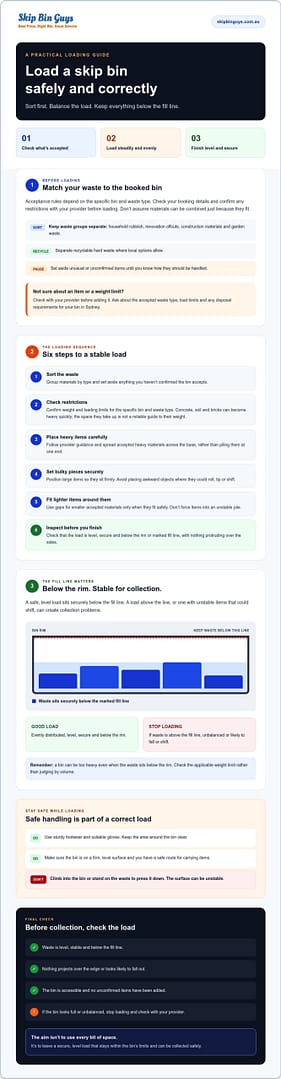
A skip is a movable waste container loaded onto a vehicle for transport. The finished load must therefore remain stable and within the bin’s limits, not just look tidy from the ground. A safe, level load sits securely below the fill line. An overloaded bin rises above it or contains unstable items that could shift during collection.
Check the bin’s accepted waste before you start
Read your booking details and confirm the accepted waste category with your provider before loading. Sort household rubbish, renovation offcuts, construction materials and garden waste into separate groups where the rules differ. If an item is unusual or you’re considering mixing materials, ask before putting it in. Acceptance depends on the specific bin and waste type, so checking first is safer than guessing.
This check can also help you identify materials that need a different disposal or recycling option. Keep uncertain items aside while you confirm the instructions.
Know the fill line and the basic safety rule
Keep waste below the marked fill line. If you can’t identify one, follow your provider’s instructions. Items should sit securely without projecting over the edge or being likely to fall out. Take extra care with heavy or awkward pieces, and don’t stack them where they could roll or shift. If you’re unsure how an item affects the load, check the bin’s restrictions before adding it.
Wear sturdy footwear and suitable gloves, keep the area around the bin clear, and load from outside it. Don’t climb into the bin or stand on the waste to press it down. The surface can be unstable, and climbing in makes it harder to assess the load. Filling a skip bin correctly is about leaving a secure, collectable load, not just using every bit of space.
How to load a skip bin safely: follow this step-by-step order
A consistent loading order can help you use the available space without building an unstable pile. Before you start, check that the bin is on a firm, level surface and that you have a safe route for carrying items to it. Work through these steps and pause if the load becomes difficult to manage.
- 1. Sort the waste. Group materials by type and set aside anything you haven’t confirmed the bin accepts. Check the booking terms or ask your provider before mixing waste streams.
- 2. Check restrictions. Confirm any weight or loading limits for the specific bin and waste type. Concrete, soil and bricks can become heavy quickly, so the amount of space they occupy is not a reliable guide to load weight.
- 3. Place heavy items carefully. Follow your provider’s guidance and spread accepted heavy materials across the base rather than piling them at one end. Even distribution helps keep the load balanced.
- 4. Add bulky pieces securely. Position large items so they sit firmly and don’t prevent you from loading the rest of the bin safely. Avoid placing awkward objects where they could roll, tip or shift as more waste is added.
- 5. Fill gaps with lighter items. Arrange smaller accepted materials around larger pieces where they fit safely. Don’t force items into gaps if this makes the pile unstable or creates a hazard.
- 6. Inspect the finished load. Check that the waste is level, secure and below the rim or marked fill line, with nothing protruding over the sides. If the bin looks full or unbalanced, stop loading and ask your provider what to do next.
Start with heavier accepted materials and build a stable load
Before loading concrete, soil or bricks, check your provider’s instructions. The bin’s volume doesn’t tell you whether its weight restrictions have been reached. A load can be too heavy even when it sits below the rim. Distribute heavy items across the bin rather than concentrating them at one end. If you’re unsure, pause and confirm the applicable limit.
Finish with a level load that stays inside the bin
Take care as you approach the fill line. A final bulky item can push waste above it or leave loose pieces perched where they might fall. Keep the loading area clear, handle items from a stable position and follow the provider’s safety instructions. An even load kept below the rim is easier to secure and supports safer collection.
Stop when the bin is full, unstable or no longer safe to access. Don’t try to squeeze in one last item. If you need to check your booked bin’s loading requirements, ask the Skip Bin Guys team before adding uncertain materials.
Sort waste before loading: what belongs in the booked bin?
Waste streams can have different acceptance rules, even when the materials come from the same clean-up. Check your booking details and confirm what the specific bin can take before loading. The examples below can help you plan that conversation, but they don’t guarantee that every item is accepted.
| Waste stream | Examples to discuss | Check before loading |
|---|---|---|
| General rubbish | Household items and mixed clean-up waste | Confirm which materials are allowed and whether any items need to be separated. |
| Green waste | Garden clippings, leaves and prunings | Ask which garden materials are accepted and whether they must be kept free of other waste. For more on garden disposal, see this Sydney green waste skip bin guide. |
| Construction materials | Renovation rubble, bricks and offcuts | Check the bin’s intended waste category and any material or weight restrictions before adding heavy or mixed loads. |
| Recyclable hard waste | Reusable or recyclable household and renovation items | Ask whether these belong in the booked bin or need a separate bin or handling process. |
Keep different waste streams separate when required
Sorting requirements depend on the bin you booked and the provider’s terms. Garden clippings mixed with renovation rubble, for example, may not suit a bin intended for one waste stream. Don’t assume a material is accepted just because it seems similar to other items already loaded. If you’re unsure whether recyclable materials should be kept apart, ask your provider before disposing of them.
Checking first can help you choose a suitable disposal route and avoid mixing materials that need to be sorted differently. Filling a skip bin correctly starts with knowing what’s going in, not just finding room for it.
Stop and ask about restricted or uncertain items
Skip Bin Guys doesn’t offer hazardous waste disposal or liquid waste removal, so don’t put hazardous substances or liquids in a Skip Bin Guys bin. This includes items such as chemicals. A sealed container doesn’t mean its contents are acceptable. Asbestos also requires specialist advice. Keep these materials separate and verify the appropriate handling and disposal options before doing anything with them.
For guidance relevant to your situation, check current information from the NSW EPA or your local council, and confirm bin-specific rules with your provider. If an item’s contents or classification are unclear, pause and ask rather than guessing. This helps keep waste streams separate and supports responsible use of recycling and disposal options.
Avoid overloading, unsafe access and collection problems in Sydney
A final check can catch problems before collection. Filling a skip bin correctly means checking more than the space left: the load must follow the booking terms, stay stable and leave safe access around the bin. If anything looks questionable, pause and ask your provider instead of pushing waste down or adding more on top.
Use a final loading checklist before collection
- Check the fill line: No material should rise above it or protrude beyond the bin. If there’s no obvious marking, check the provider’s instructions.
- Look for an uneven or unstable load: Loose or awkward items may shift. Don’t climb into the bin to rearrange them. Ask your provider what to do.
- Confirm the contents: Check that everything inside matches the accepted waste category and booking terms. If you’ve spotted an uncertain or incorrectly sorted item, contact the provider for guidance.
- Clear the access area: Move loose debris, tools and other obstacles away from the bin, and keep the approach clear for collection.
An overfilled or incorrectly sorted bin may need provider follow-up. The specific response depends on the bin and its terms. Don’t assume it will be collected as-is, or try to resolve a concern by adding, removing or shifting waste unsafely. If your job involves building materials or renovation debris, consult this construction skip bin hire guide for project-specific context, and confirm acceptance rules for your booked bin.
Check Sydney placement and access requirements separately
Loading rules and placement requirements are separate checks. A clear, level load doesn’t confirm that the bin’s location meets local requirements. If the bin is on public land, such as a road or footpath, ask your local council or provider what applies. Requirements can vary, so don’t rely on another council’s process or assume placement is covered by loading advice. For more detail, see the Sydney skip bin permit guide.
Need to confirm whether your load or access is ready? Contact Skip Bin Guys about your booked bin before collection.
Make your next skip bin load easier with a quick plan
A little preparation can make a clean-up more straightforward. Before your skip bin arrives, identify the main waste types, check what your booking allows, plan how you’ll load the materials and leave time for a final inspection. This helps you spot questions early, rather than discovering them when the bin is nearly full.
Prepare before the skip bin arrives
Sort materials into clear groups and keep your booking details handy so you can quickly check the bin’s accepted waste category and restrictions. Look at the space where the bin will sit, too. Make sure there’s a clear, safe route for carrying waste and enough room to load without creating obstacles around the bin. If access or placement is uncertain, check the arrangements with your provider or council before delivery.
As you load, stick to the agreed waste type and any provider-specified limits. Spread the load evenly, then check before collection that it’s stable, within the fill line and accessible. This gives you a simple routine for filling a skip bin correctly without relying on guesswork.
Ask for help when the load or waste is unclear
Some questions are best answered before an item goes in. Contact your provider if you’re unsure whether a material is accepted, whether separate waste streams can be mixed, or how unusually heavy items affect the load. Describe your project and waste as accurately as you can when arranging a bin. Clear details help the provider advise on a suitable bin type and relevant restrictions for your job.
Skip Bin Guys hires bins for residential, commercial and construction projects across Sydney, as well as green-waste and hard-waste projects. If you’re planning a clean-up and want to check your bin needs or acceptance rules, talk to Skip Bin Guys about your Sydney skip bin needs.
Put your skip bin plan into action
A smoother clean-up starts with a simple routine: confirm what your booked bin accepts, sort materials before loading and distribute the waste carefully. Keep the load stable and below the fill line, then check the contents and access around the bin before collection. If you’re unsure about an item or weight restriction, ask your provider instead of guessing.
Filling a skip bin correctly helps you manage waste with greater confidence and make better use of available recycling and disposal options. Skip Bin Guys hires bins for residential, commercial and construction projects across Sydney, and uses EPA-approved recycling facilities to process waste.
Planning a clean-up? Share your project and waste type so you can check the relevant bin requirements before you begin. Talk to Skip Bin Guys about your Sydney skip bin needs.
Frequently Asked Questions
How do you fill a skip bin correctly?
Start by checking the bin’s accepted waste category and separating materials that may need different disposal. Place accepted heavy items securely and spread them across the bin, then add other waste without creating an unstable pile. Keep everything below the marked fill line and inspect the load before collection. If you’re unsure whether an item or weight is permitted, check with your provider before loading it.
Can you put anything in a skip bin?
No. What you can put in depends on the booked bin and the provider’s acceptance rules. Some items, including hazardous substances and liquids, aren’t suitable for general skip bins. Asbestos and chemicals need specialist advice and verified disposal instructions. Check the booking terms and ask your provider about uncertain materials before loading them. Don’t assume an item is accepted simply because it fits in the bin.
How full can you fill a skip bin?
Keep waste below the bin’s marked fill line or top rim, with no items sticking out or likely to fall. The bin also needs to remain stable and within any provider-specified weight restrictions. Volume alone won’t tell you whether a heavy load is within its limits. If the bin appears full, uneven or difficult to load safely, stop and ask your provider what to do next.
Can you put soil and concrete in the same skip bin?
Only if your provider confirms that both materials are accepted together in your specific bin. Soil and concrete can make a load heavy, so check any applicable weight and material restrictions before loading. Don’t estimate safe capacity by appearance or assume that a bin suitable for one material can take a mixture. Keep the materials aside until you’ve confirmed the correct disposal option and loading instructions.
What happens if a skip bin is overloaded?
An overloaded bin may not be suitable for collection as loaded, and it may require follow-up from the provider. The specific response depends on the bin, load and hire terms, so confirm the requirements before filling it. Keep waste below the fill line and within provider-specified restrictions. If you’ve already overfilled or unbalanced the load, don’t climb in or try to push it down. Contact your provider for safe next steps.
Can you climb into a skip bin to spread the rubbish?
No. Don’t climb into or stand on waste to rearrange or compact it. Loose materials can shift, leaving an unstable surface and increasing the chance of a fall or injury. Load from outside the bin and position items carefully as you go. If the contents are difficult to arrange safely, stop and ask your provider for advice instead of climbing in or reaching across an unstable load.
Do skip bin rules differ between Sydney councils?
Yes, requirements can differ by council, particularly for placing a bin on public land such as a road or footpath. Check with your local council or provider about placement requirements for your location. Council placement rules are separate from the bin’s waste acceptance terms, which you should confirm with your provider. For a bin on private property, check that the planned position still allows safe access and loading.