
That weathered timber pile in your driveway isn’t just ordinary scrap wood; it’s chemical waste masquerading as garden offcuts, which makes the lawful disposal of treated pine Sydney renovators face a matter of strict environmental care. If you’re staring down a stack of heavy, splintered posts and wondering whether they can go into your council green bin, you’re not alone. Sorting through confusing chemical codes like CCA or ACQ while worrying about hefty NSW EPA contamination penalties can easily turn a simple backyard cleanup into an overwhelming chore.
The good news is that clearing your property doesn’t have to mean risking council fines or putting your family’s health on the line. You’ll discover exactly how to safely and effortlessly dispose of treated timber across Sydney without legal headaches or lingering clutter. We’ll walk through current NSW landfill rules, explain why chemically preserved boards must never be mulched or burned, and detail practical local options, from licensed transfer stations to mixed construction skip bins, to get your project cleared with total peace of mind.
Key Takeaways
- Understand why chemical preservatives like CCA and ACQ classify treated pine as regulated solid waste that must never enter garden mulch or backyard fires.
- Master safe handling protocols, including essential personal protective equipment and board identification, before shifting heavy timber stacks.
- Compare local council collection limits against transfer station drop-offs to choose the most efficient pathway for your project.
- Streamline the legal disposal of treated pine Sydney renovations generate by booking the correct mixed construction skip bin rather than a pure green waste container.
- Keep your work site tidy and avoid council contamination penalties with prompt delivery services that route building waste through licensed processing centres.
What is treated pine and why is Sydney disposal regulated?
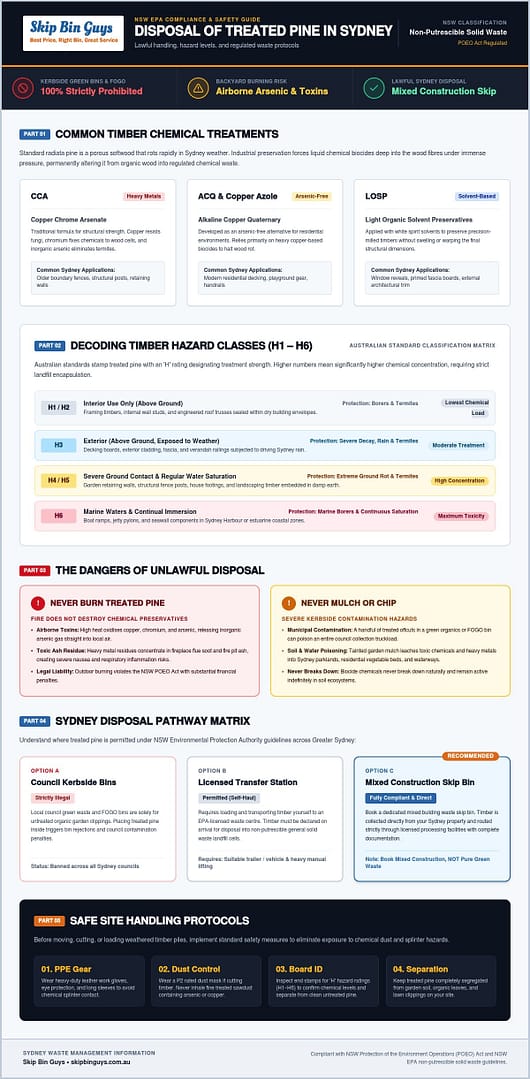
Standard radiata pine is a porous softwood that rots rapidly when exposed to Australian weather and ground moisture. To prevent early structural failure, commercial timber undergoes industrial wood preservation, forcing liquid chemical biocides deep into the wood fibres under immense pressure. This barrier protects structural framing, pergolas, and retaining walls from fungal decay and hungry subterranean termites. However, that chemical infusion permanently alters the timber, transforming an organic material into a regulated product.
Because these chemical preservatives never break down naturally, the NSW EPA classifies treated timber waste as non-putrescible general solid waste. Every Sydney local council strictly prohibits treated pine in kerbside garden bins and Food Organics and Garden Organics (FOGO) collections. Dropping even a handful of chemically treated offcuts into an organics bin can poison an entire truckload of municipal mulch, causing heavy metals to leach into local parklands and soils. Managing the compliant disposal of treated pine Sydney homeowners and builders face starts with identifying the chemical formulations inside the wood.
Common timber treatments: CCA, ACQ, and copper azole
Three main chemical formulations are found across Sydney renovation and building sites:
- Copper Chrome Arsenate (CCA): The traditional standard for heavy outdoor construction. Copper handles fungi, chromium fixes the chemical mixture to the wood cells, and inorganic arsenic eliminates termites. You will spot this frequently in older boundary fences and structural posts.
- Alkaline Copper Quaternary (ACQ) and copper azole: Developed as arsenic-free alternatives for newer residential decking, playground gear, and handrails, relying heavily on copper-based biocides to halt wood rot.
- Light Organic Solvent Preservatives (LOSP): Preservatives applied with white spirit solvents to protect precision-cut architectural timbers, external window reveals, and primed fascia boards without warping the dimensions.
Decoding hazard classes from H1 to H6
Australian standards stamp treated timber with an ‘H’ rating indicating its preservation strength and intended working environment:
Higher hazard levels contain greater chemical concentrations. Consequently, the responsible disposal of treated pine Sydney yards require ensures these potent wood preservatives stay sealed within licensed, non-putrescible landfill cells rather than spreading into local waterways.
The hidden dangers of improper treated pine disposal in NSW
Tossing scrap timber onto a backyard bonfire or running offcuts through a garden chipper might seem like quick weekend solutions, but with chemically preserved wood, both practices carry catastrophic consequences. Under the NSW Protection of the Environment Operations (POEO) Act, disposing of chemically altered materials unlawfully brings massive financial penalties. Beyond the law, improper handling exposes your family and neighbourhood to toxic compounds that linger in the environment for decades. Getting the disposal of treated pine Sydney properties require right the first time avoids severe community hazards.
Why you must never burn treated timber
Setting treated timber on fire does not destroy the chemicals inside. Instead, high heat oxidises copper, chromium, and arsenic, turning solid preservatives into airborne toxins and ultra-fine ash. Research outlining the dangers of CCA-treated timber demonstrates how burning liberates inorganic arsenic straight into the atmosphere, creating immediate respiratory hazards for anyone downwind.
Burning these offcuts in outdoor fire pits, wood braziers, or indoor combustion fireplaces leaves dangerous heavy metal residues concentrated in the bottom ash and chimney flue soot. Inhaling this smoke can prompt acute respiratory inflammation, nausea, and long-term toxicity. Even spreading the leftover fireplace ash over your garden beds will poison the dirt, rendering it unsafe for growing food.
The environmental impact of mulching or chipping
Chipping old fence palings into decorative garden mulch is just as destructive. Once wood fibres are shredded, their surface area multiplies exponentially, allowing rain to strip soluble arsenic and copper salts straight into the topsoil. These heavy metals kill earthworms, eradicate beneficial soil microbes, and wash directly into local waterways via stormwater drains.
Commercial organics processors face the same contamination trap. When treated timber sneaks into council organics or 100% green waste collections, entire multi-tonne batches of compost are ruined and sent straight to landfill. Check our green waste skip bin guide to see why chemically treated wood is firmly excluded from garden recycling. If you’re tackling a backyard teardown, teaming up with Skip Bin Guys for a mixed construction bin keeps your raw garden debris untainted while properly isolating chemical timber.
How to safely handle and prepare treated timber for disposal
Pulling down an old backyard pergola or boundary fence leaves behind piles of splintered, heavy framing that demands careful handling. Preparing for the safe disposal of treated pine Sydney properties require isn’t just about hauling wood into a pile; it requires methodical steps to prevent chemical exposure. By following a structured preparation checklist, you protect your skin, safeguard your lungs, and make the final transport entirely hassle-free.
- Inspect the timber: Look along cut ends and faces for greenish tinting, incised treatment cuts, or ink stamps showing treatment grades before bundling your scrap.
- Suit up in protective gear: Shield yourself completely with puncture-resistant leather gloves, wraparound eye protection, long work pants, and an Australian-standard dust mask.
- Strip old hardware: Knock out rusted nails, back out corroded bugle screws, remove steel brackets, and break away remaining concrete footing chunks from the base of fence posts.
- Cut into manageable lengths: Use a low-speed hand saw or circular saw with a coarse blade to trim long timber into practical pieces under two metres.
- Stack neatly over heavy tarps: Lay down durable canvas or PVC sheeting beneath your cutting and stacking zone to catch rogue sawdust, chips, and chemically treated splinters.
Personal protective equipment (PPE) essentials
Never rely on flimsy paper masks when sawing preserved wood. Wear a properly fitted P2-rated respirator to stop fine chemical dust from reaching your lungs. Splinters from aged treated pine can cause nasty local infections and chemical irritation, so ditch cotton garden gloves for thick, abrasion-resistant leather work gloves. When the teardown is done, wash your dusty work clothes in a standalone cycle rather than mixing them with household laundry.
Preparing long posts, decking boards, and fence panels
Long structural beams are awkward and hazardous to move. Cutting timbers down to lengths under two metres keeps manual lifting manageable and prevents oversized boards from protruding dangerously out of trailers or bins. Pulling out rusted fasteners eliminates puncture risks for anyone loading or handling the timber later.
Sawdust management is equally critical during the disposal of treated pine Sydney renovators tackle. Rather than using an electric leaf blower or dry broom that kicks hazardous particulates into your neighbours’ air, lightly mist the ground with water and sweep up damp debris. Shovel the damp dust, wood shavings, and small offcuts into heavy-duty builder’s bags, then tape them securely shut before disposal.
Comparing treated pine disposal options across Sydney
Once you dismantle an outdoor structure, choosing the right removal method is essential for keeping your project moving. Sydney homeowners and trades encounter three primary routes for the legal disposal of treated pine Sydney wide: booking a kerbside council collection, hauling the load yourself to a transfer station, or ordering a dedicated skip bin. Weighing up physical labour, transport logistics, and strict council rules will point you toward the most practical path.
Sydney council cleanups: Rules and volume restrictions
Kerbside cleanups might seem like a budget-friendly option, but they come with rigorous limitations. Most Sydney metropolitan councils cap cleanup piles at one to two cubic metres and demand that timber be neatly bundled, securely tied, and trimmed to under 1.5 metres. Many local councils strictly exclude building, renovation, and demolition timber from household collections.
Leaving chemically treated posts or deck framing on a nature strip without explicit council collection approval risks significant illegal dumping fines under local bylaws. Before stacking any materials on public footpaths or road reserves, review local council regulations in our guide on Sydney skip bin permits to keep your property fully compliant.
Direct transfer stations vs hiring a skip bin
Hauling timber yourself to a licensed Sydney waste transfer station gives you immediate site clearance, yet the manual effort adds up quickly. You need an adequate ute or hired trailer, heavy-duty ratchet straps, and the energy to load and unload dense timber twice. Transfer facilities charge weighbridge gate fees along with mandatory NSW waste levies, meaning multiple trips across suburban traffic can drain your weekend and your budget.
Hiring a skip bin eliminates the transport headache altogether. Having a container delivered right onto your driveway allows you to toss in heavy, splintered timber along with mixed construction debris at your own pace. Match the right bin capacity to your cleanup by checking out our residential skip bin hire guide. When you want heavy timber removed without double handling, book your residential skip bin hire with Skip Bin Guys for fast, dependable delivery across Sydney.
How to hire a skip bin for treated pine in Sydney with Skip Bin Guys
Managing building debris doesn’t need to slow down your project timeline. When you coordinate the disposal of treated pine Sydney backyards and building sites produce, hiring the right container provides an organised, compliant waste solution. With over 13 years of Sydney waste management experience, Skip Bin Guys ensures your discarded timber is collected smoothly and transferred directly to licensed, EPA-approved sorting yards for responsible handling.
Choosing the correct bin waste type and size
The single most important rule is booking the correct waste stream. Because chemical treatments disqualify pine from organic recycling streams, treated timber must never go into a 100% green waste bin. Instead, select a mixed heavy waste or building waste container.
Whether you’re clearing a short garden edging or tearing down a multi-level deck, container sizes range from 2m³ mini skips right up to large commercial containers. For major structural strip-outs featuring framing timber, concrete footings, and old fixtures, explore our construction skip bin hire options. When loading your bin, lay the longest, heaviest posts flat across the bottom. This prevents awkward air pockets, maximises usable capacity, and ensures the load stays flush below the rim for safe road transport.
Fast, reliable delivery across Greater Sydney
Timelines matter on busy work sites. Booking before 10:30 am secures same-day delivery right across Greater Sydney, letting you clear walkways and maintain a clean, hazard-free property without delay. Our experienced drivers know how to position bins precisely on driveways or tight access areas without damaging pavers or concrete surfaces.
Understanding the pricing elements behind your booking keeps renovation budgets predictable. To see how bin dimensions, weight allocations, and council regulations influence hire rates, read through our comprehensive skip bin hire prices guide. Ready to clear that timber stack safely and legally? Call our friendly local team or book your skip bin online today to keep your disposal of treated pine Sydney project effortless from drop-off to collection.
Clear your property with safe, compliant timber disposal
Getting rid of weathered decking, dismantled fencing, and retaining walls doesn’t need to put your household or the environment at risk. Chemically preserved wood cannot be chipped into mulch or thrown into garden organics collections, making careful separation essential. When managing the disposal of treated pine Sydney property owners and builders can avoid steep council fines and protect local waterways simply by routing timber into the proper heavy waste stream.
Skip Bin Guys takes the heavy lifting and logistical headaches out of your cleanup. Backed by over 13 years of trusted Sydney waste management experience, our team delivers mixed construction skips directly to your site, ensuring all collected waste is routed to licensed, EPA-approved recycling facilities for compliant sorting. Need timber gone quickly? Book before 10:30 am to secure prompt same-day delivery across Sydney. Reclaim your driveway and get your weekend back; book your skip bin online with Skip Bin Guys today for an easy, compliant project finish.
Frequently Asked Questions
Can I put treated pine in my Sydney council green lid bin?
No, treated pine must never go into your council green lid or FOGO bin. Local councils exclusively reserve green bins for uncontaminated organic matter like grass clippings, pruning branches, and untreated garden waste. Because preserved wood contains toxic chemical biocides, adding even small offcuts contaminates the commercial batch. This ruins compost destined for local parks and farms. Larger building offcuts require lawful transfer station disposal or a dedicated mixed waste skip bin.
How do I know if the timber in my Sydney yard is treated pine?
Look for a distinctive pale green or olive tint, regular surface incisions, or end stamps along the timber. Untreated radiata pine quickly silvers and weathers grey, whereas CCA-treated boards retain a greenish hue, and newer ACQ varieties carry a greenish-brown cast. Check the ends of structural framing or posts for ink stamps displaying hazard ratings between H1 and H5. If you spot incised slit patterns across the wood grain, it has undergone industrial chemical preservation.
Can you burn treated pine in an outdoor fire pit or wood stove?
Absolutely not, as burning treated pine is both illegal across Sydney and extremely dangerous to your health. Combustion releases toxic arsenic, chromium, and dioxins directly into the air, creating acute poisoning risks for your family and neighbours. The concentrated ash left behind contains hazardous chemical residues that contaminate your soil. NSW clean air regulations strictly prohibit incinerating chemically treated timbers in residential fireplaces, braziers, and outdoor burn piles. Always opt for approved transfer facilities.
What skip bin waste category should I choose for treated pine?
You should always choose a mixed heavy waste or construction skip bin. For the compliant disposal of treated pine Sydney renovations produce, chemically preserved wood cannot go into 100% green waste containers. Booking a mixed construction or heavy renovation bin with Skip Bin Guys ensures your timber, along with brick, concrete, or drywall, is legally carted. We deliver waste directly to licensed EPA-approved processing yards across Sydney, offering same-day delivery when you book before 10:30 am.
Are there fines for illegally dumping treated pine in New South Wales?
Yes, the NSW EPA and local Sydney municipal councils enforce heavy financial penalties for illegal timber dumping. Under the Protection of the Environment Operations (POEO) Act, on-the-spot fines for dumping chemical or demolition waste reach thousands of dollars for individuals, with even higher penalties issued by courts for corporations. Leaving hazardous timber on public nature strips, bushland, or unauthorised sites triggers strict investigation. Arranging professional skip hire or visiting an authorised transfer station protects you from costly enforcement actions.
Can treated pine sawdust be used for garden composting or animal bedding?
No, treated pine sawdust must never be used for garden compost, mulch, or animal bedding. Shavings and sawdust from pressure-treated timber contain concentrated copper, arsenic, or chemical solvents. Spreading these residues over vegetable patches leaches heavy metals into edible crops and destroys beneficial soil microbes. Using the shavings in chicken coops or pet enclosures exposes animals to toxic dust and chemical poisoning. Always sweep up damp sawdust and seal it inside heavy-duty garbage bags for general waste disposal.
Do Sydney waste transfer stations accept treated pine from DIY renovators?
Yes, licensed waste transfer stations and resource recovery centres across Sydney accept treated pine from DIY renovators. Facilities classify treated timber demolition scrap as non-putrescible general solid waste, which means it bypasses timber recycling chutes and heads into managed landfill cells. If managing the disposal of treated pine Sydney DIY projects generate proves tricky due to trailer hire or weight limits, a residential skip bin simplifies the job by collecting everything on site in one go.